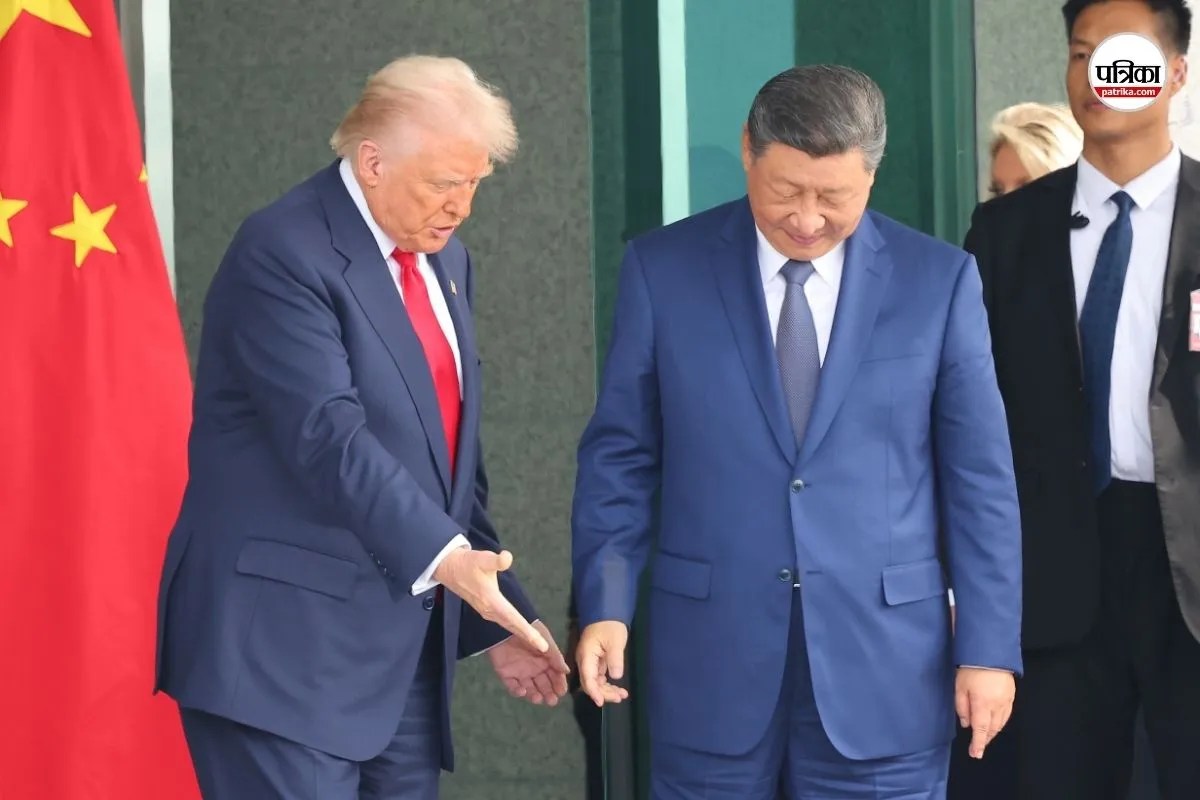
The presence of sixteen high-profile American executives—including Elon Musk and Tim Cook—at the 2026 Beijing summit represents a calculated shift from ideological decoupling to high-stakes transactional realism. While public discourse focuses on the optics of the meeting, the underlying mechanism is an attempt to resolve the Asymmetric Dependency Trap. This phenomenon occurs when American firms require Chinese manufacturing scale and market access, while the Chinese state requires American capital and high-end semiconductor expertise to prevent domestic stagnation. The summit is not a diplomatic courtesy; it is a forced renegotiation of the global supply chain's cost function.
The Triad of Executive Objectives
The delegation represents a trillion-dollar cross-section of the U.S. economy, yet their motivations are not monolithic. They can be categorized into three distinct operational clusters, each seeking specific concessions from the Xi administration.
1. The Critical Infrastructure and Hardware Cohort
For companies like Apple and various semiconductor players, the objective is De-risking without Disinvesting. The cost of relocating a mature supply chain from the Pearl River Delta to India or Vietnam involves a capital expenditure (CapEx) friction that most balance sheets cannot absorb in a high-interest-rate environment. These CEOs are seeking:
- Regulatory Reciprocity: Guarantees that the "Unreliable Entity List" will not target their specific sub-sectors.
- Logistical Continuity: Direct assurances against sudden export controls on rare earth elements necessary for high-capacity batteries and circuitry.
2. The AI and Frontier Tech Cluster
Elon Musk’s involvement extends beyond Tesla’s manufacturing interests; it centers on the Data Sovereignty Paradox. To achieve Level 5 autonomy, Tesla requires the ability to process and export vast quantities of driving data generated within China. The strategic play here is a data-for-market swap: allowing Chinese entities limited access to localized AI training clusters in exchange for the freedom to operate proprietary software stacks without mandatory joint-venture "backdoors."
3. The Institutional Capital Bridge
The presence of financial heavyweights signals a demand for the stabilization of the Risk Premium on Chinese Equities. Foreign direct investment (FDI) in China has faced contraction due to unpredictable regulatory crackdowns. These executives are negotiating for a "Safe Harbor" framework—a predictable legal environment where private equity and venture capital can exit positions without state interference.
The Trumpian Negotiating Framework: Leverage via Volatility
The decision to bring these CEOs to the table reflects a strategy of Integrated National Power. Unlike previous administrations that separated trade policy from corporate interests, this approach uses the American corporate footprint as a physical bargaining chip.
The logic follows a three-step escalation path:
- Threat of Total Tariffs: Creating a baseline of economic pain that makes any deal appear favorable.
- Corporate Validation: Using the CEOs to demonstrate that American "engines of growth" are ready to reinvest if, and only if, structural barriers are removed.
- The Bilateral Carve-out: Moving away from multilateral WTO-style agreements toward a series of specific, enforceable bilateral "handshakes" that favor immediate domestic gains over long-term global norms.
The Cost of Chinese Compliance
For Xi Jinping, the summit is an exercise in Internal Stability Maintenance. The Chinese economy faces a structural "middle-income trap" exacerbated by a shrinking labor force and a property sector crisis. The presence of 16 American CEOs provides a vital psychological signal to the Chinese domestic market that the era of isolation is pausing.
However, the "deal" involves significant concessions that the Chinese Communist Party (CCP) has historically resisted. To secure continued American participation, Beijing must address the Structural IP Rent Gap. For decades, China’s growth was subsidized by the forced transfer of intellectual property. The American demand is now a shift toward a "Pay-to-Play" model where IP is licensed at market rates, and the "Great Firewall" is selectively lowered for enterprise-grade SaaS (Software as a Service) providers.
Measuring the Probability of Failure
Despite the high-octane branding of the summit, three friction points threaten to derail the projected "Grand Bargain."
- The Technology Parity Threshold: The U.S. Department of Commerce maintains strict "red lines" regarding 2nm and 3nm chip lithography. No matter what deal is struck in Beijing, these export controls remain non-negotiable under current U.S. national security statutes. This creates a ceiling on how much "tech cooperation" can actually occur.
- The Subsidy Deadlock: The U.S. CHIPS Act and China’s "Made in China 2025" are fundamentally irreconcilable. Both nations are subsidizing the same industries. A deal that requires China to end industrial subsidies would be viewed as an existential threat to CCP authority.
- The Enforcement Mechanism: The most significant failure of previous trade deals was the lack of an arbitration body with "teeth." If the current deal relies on the good faith of the signatories rather than automated tariff triggers, the markets will likely price the agreement as a temporary truce rather than a structural shift.
Quantifying the Strategic Shift
The transition from "Trade War" to "CEO Diplomacy" indicates that the cost of conflict has finally exceeded the perceived benefit of decoupling.
The Delta between the two lines represents the Incentive Zone where both leaders currently sit. For Trump, the incentive is a revitalized stock market and lower consumer inflation. For Xi, it is the prevention of a hard landing for the Yuan.
The operational reality for the 16 CEOs is one of Managed Dual-Sourcing. They are not returning to the pre-2016 status quo. Instead, they are formalizing a "China + 1" strategy with explicit permission from both capitals. This allows them to maintain their Chinese footprint for "In-China-For-China" production while building redundant systems elsewhere to satisfy U.S. national security hawks.
The immediate tactical move for observers is to track the Sovereign Risk Insurance rates and the Capital Expenditure guidance of the companies involved. If Apple and Tesla increase their China-based CapEx following this summit, it confirms the existence of a private "Non-Aggression Pact" regarding asset seizures. If they remain stagnant while increasing buybacks, the summit was merely a political theatre designed to buy time for a more controlled exit.
The strategic play is the creation of a Bipolar Economic Architecture. We are moving toward a world where a select group of "Systemically Important Corporations" operates with a specialized legal status, allowing them to straddle the divide between Washington and Beijing. This elite tier of American business is effectively negotiating its own foreign policy, using the Trump administration as the enforcement arm to secure terms that were previously unattainable through standard diplomatic channels.
The success of this summit will not be measured by a signed document, but by the movement of the Hang Seng Index and the S&P 500's tech weighting in the forty-eight hours following the delegation's departure. Realism has replaced rhetoric; the bottom line is now the primary metric of diplomacy.