Sri Lankan Minister Bimal Rathnayake recently signaled a stark departure from decades of regional migration norms by announcing the island nation’s readiness to welcome and support refugees fleeing India. While framed as a humanitarian gesture, this move serves as a high-stakes play in a region defined by ethnic scars and shifting power dynamics. By positioning Colombo as a sanctuary for those displaced from its massive northern neighbor, the government is not just offering aid; it is attempting to rewrite the script of Indo-Lankan relations.
The announcement comes at a time when Sri Lanka is still clawing its way out of a crushing economic collapse. On the surface, the idea of a debt-ridden island absorbing refugees from a global economic powerhouse like India seems counterintuitive, if not outright impossible. However, the move is deeply rooted in the complex history of the Tamil diaspora and the internal pressures of the Palk Strait.
The Strategy Behind the Sanctuary
Colombo’s sudden interest in Indian refugees is less about altruism and more about reclaiming moral and political agency. For years, the flow of refugees was unidirectional: Sri Lankans fleeing the civil war sought safety in Tamil Nadu. By reversing this narrative, the current administration is signaling that Sri Lanka is no longer a "failed state" in need of rescue, but a stable democracy capable of providing safety to others.
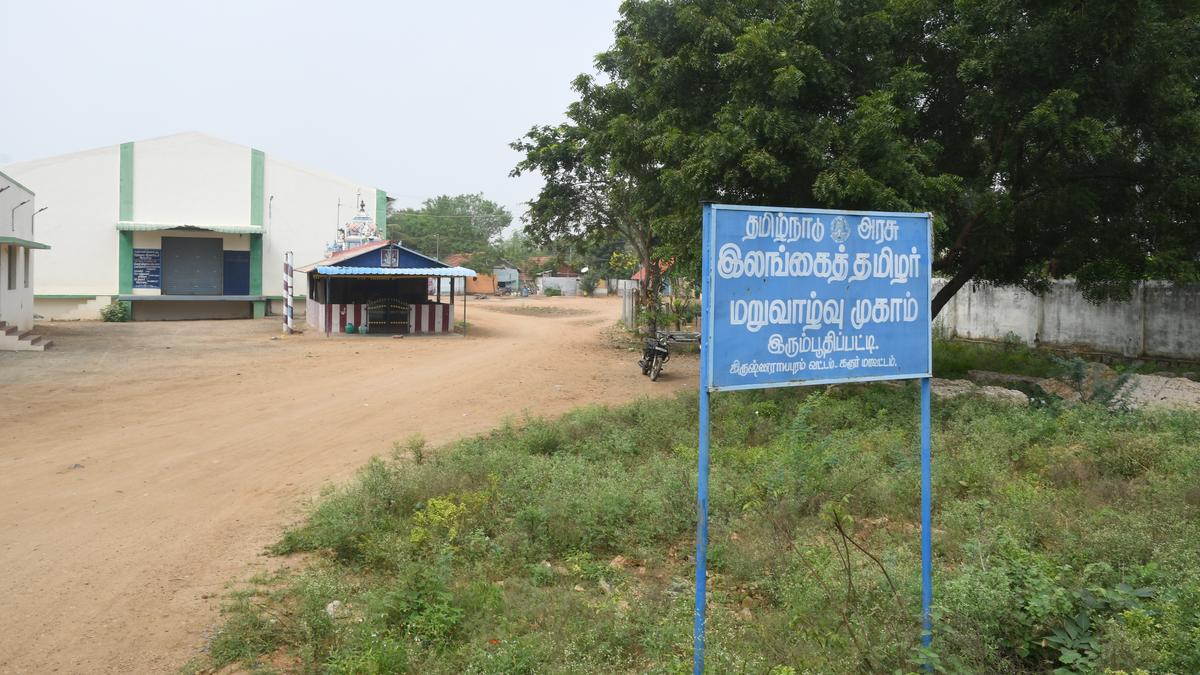
This shift targets the roughly 90,000 Sri Lankan Tamils still living in camps in India, many of whom have been there for decades. By offering a formal framework for return and potential sanctuary for those facing political persecution in India, Rathnayake is tapping into a deep-seated desire for "home" while simultaneously poking at the internal contradictions of India’s own citizenship laws.
India’s Citizenship Amendment Act (CAA) notably excluded Sri Lankan Tamils from its fast-track citizenship process. This left thousands of people in a legal limbo—neither fully Indian nor able to return home safely. Sri Lanka’s new stance effectively calls India’s bluff. It says to the world that if the regional hegemon cannot or will not integrate these populations, the island will.
Economic Fragility Meets Human Demand
One cannot ignore the ledger. Sri Lanka’s economy is a brittle thing. The 2022 default is a fresh memory, and the IMF-mandated austerity measures are squeezing the middle class. Bringing in refugees requires infrastructure, healthcare, and food security—all of which are currently under strain.
How does a country with limited foreign reserves justify this? The answer lies in the remittance economy and international aid. Refugee programs often unlock specific streams of funding from the UNHCR and other global bodies that might otherwise be unavailable. It is a cynical but necessary calculation: human capital can be a bridge to fiscal liquidity.
The Logistics of the Palk Strait
The physical reality of this policy involves the 30-mile stretch of water separating the two nations. Small-scale smuggling and "illegal" crossings have been the norm for centuries. By formalizing a welcome, the government is attempting to bring these shadow movements into the light. This allows for better maritime security and, more importantly, a way to vet those entering the country.
There is a significant difference between a refugee and a returnee. Rathnayake’s comments blur these lines intentionally. He is speaking to the "refugees" in India—people who may have been born there but are legally tied to the island. Bringing them back isn't just a humanitarian act; it's an attempt to repopulate areas in the North and East that were hollowed out by war, potentially revitalizing local agricultural and fishing economies.
The Tamil Nadu Factor
Politics in the South Indian state of Tamil Nadu is often the tail that wags the dog of New Delhi's Sri Lanka policy. Chief Minister M.K. Stalin has long advocated for the rights of Sri Lankan Tamils in India. If Colombo begins a massive, organized repatriation and refugee support program, it strips Tamil Nadu politicians of one of their most potent emotional talking points.
It also creates a new friction point. If Sri Lanka becomes a viable destination for Indian dissidents or those marginalized by central policies in New Delhi, the relationship between the two capitals will sour quickly. India has traditionally viewed the neighborhood as its "backyard." A neighbor that offers refuge to those India might prefer to keep under wraps is a neighbor that is no longer playing by the rules.
Internal Resistance and the Ghost of the Civil War
The most significant hurdle isn't international—it's domestic. The Sinhalese nationalist base, which has long been wary of Tamil influence, may view a "refugee welcome" as a Trojan horse. There is a lingering fear that a mass influx of people from India will shift the demographic balance of the island, reigniting the tensions that led to the 26-year civil war.
Rathnayake must walk a razor-thin line. He has to convince the skeptical Southern electorate that this is a matter of sovereign strength and international prestige, rather than a concession to Tamil interests. If the public perceives this as an open-door policy for anyone crossing the strait, the political backlash could be swift and destabilizing.
A New Model for Regional Migration
The "how" of this plan remains the most opaque element. The government has mentioned "support systems," but what does that look like in a country where the local population is still struggling to afford eggs and fuel?
A hypothetical framework would require:
- Special Economic Zones (SEZs) where returnees and refugees can find immediate employment in construction or textiles.
- Fast-track documentation to integrate children into the Sri Lankan school system, many of whom have only ever known the Indian curriculum.
- Land grants in underutilized regions, which is a lightning-rod issue in post-war reconciliation.
None of these are easy fixes. They require a level of bureaucratic efficiency that the Sri Lankan state has rarely demonstrated. Yet, the mere mention of the policy has already achieved a diplomatic goal: it has forced India to look at Sri Lanka as a peer player in the management of human movement.
The Hard Truth of the Matter
Despite the lofty rhetoric of Minister Rathnayake, the reality on the ground is often harsher than the press releases suggest. Refugees in the region are frequently used as pawns in a larger game of geopolitical chess. When India wants to pressure Sri Lanka, it brings up the "Tamil issue." Now, Sri Lanka is using that same issue to assert its own independence.
The success of this policy won't be measured in the number of people who cross the water. It will be measured in whether or not those people are allowed to build a life that is better than the one they left behind in the camps of Tamil Nadu. If they arrive only to find a country that cannot feed its own, the "welcome" will be nothing more than a change of scenery in a life of displacement.
Sri Lanka is betting that it can use its most painful historical legacy—the displacement of its people—as a tool for future diplomacy. It is a gamble that assumes the economic recovery will hold and that the ethnic peace, however fragile, will not shatter under the weight of new arrivals.
Watch the ports of Mannar and Jaffna. The frequency of the ferries and the nature of the arrivals there will tell you more about the future of South Asia than any communiqué from New Delhi or Colombo. The island is no longer just waiting for instructions from the mainland; it is inviting the mainland over for a conversation on its own terms.
Contact the Ministry of Foreign Affairs in Colombo to track the upcoming legislative framework for the "Right of Return" act, which will provide the legal teeth to these verbal commitments.