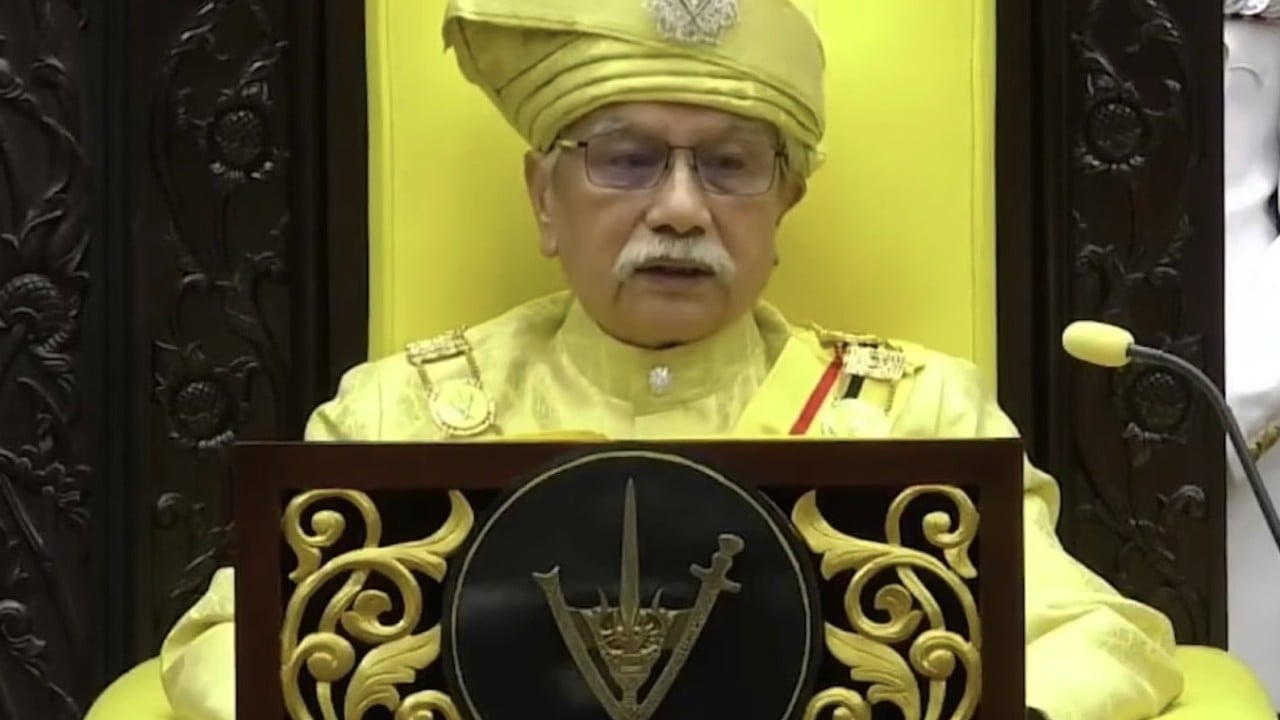
The constitutional friction in Negeri Sembilan serves as a primary case study in the tension between hereditary traditionalism and modern administrative law. Unlike the primogeniture models found in other Malaysian states, Negeri Sembilan operates under an elective monarchy governed by the Adat Perpatih (matrilineal customary law). The current instability originates from a fundamental misalignment between the state’s customary succession protocols and the federal requirements for political neutrality. This structural divergence creates a "legitimacy gap" that affects regional governance and federal-state relations.
The Structural Framework of the Negeri Sembilan Monarchy
To understand the current tension, one must isolate the three distinct tiers of power that constitute the state’s executive architecture. Negeri Sembilan does not function as a monolithic autocracy; it is a federation within a federation. For another perspective, see: this related article.
1. The Undangs (The Electors)
The state is divided into four primary territories (Luak): Sungai Ujong, Jelebu, Johol, and Rembau. Each is led by an Undang. These four individuals hold the exclusive constitutional power to elect the Yang di-Pertuan Besar (the Ruler). This creates an internal political market where succession is a negotiated outcome rather than a biological certainty.
2. The Matrilineal Clan System (Adat Perpatih)
Power flows through the mother’s line. This creates a distributed network of influence across various "perut" (lineages). When a vacancy occurs, the Undangs must navigate these lineages to find a candidate who satisfies both customary requirements and modern suitability. Related insight on this matter has been provided by Associated Press.
3. The Yang di-Pertuan Besar
The Ruler sits at the apex, but his authority is contingent upon the consensus of the Undangs. This creates a check-and-balance mechanism absent in states like Johor or Selangor, where the line of succession is rigid.
The Mechanics of Constitutional Friction
The "tussle" referenced in recent discourse is not merely a personality conflict but a failure of the Dual-Validation Logic. For a Ruler to function effectively, they must achieve validation from two separate sources:
- Customary Validation: Compliance with the Adat and the approval of the Undangs.
- Constitutional Validation: Compliance with the Federal Constitution of Malaysia, which mandates that Rulers act on the advice of the Executive Council (Exco) in most matters.
The friction occurs when the Undangs’ selection process considers factors—such as business interests or political leanings—that conflict with the neutral requirements of the federal framework. In Negeri Sembilan, the absence of an automatic heir-apparent means that every succession event is a potential point of systemic failure. The "market" for a new ruler allows for lobbying, which introduces external political variables into what should be a closed customary loop.
Quantifying the Influence of the Undang
The power of the four Undangs is not purely symbolic; it is a functional bottleneck in the state's legislative process. Under the Negeri Sembilan State Constitution, the Undangs are part of the "Council of Yang di-Pertuan Besar and the Ruling Chiefs." This body must be consulted on matters regarding Malay customs and religion.
The cost of a "disputed" or "weak" election by the Undangs manifests in administrative paralysis. If the relationship between the elected Ruler and the Undangs deteriorates, the state’s ability to pass customary legislation—particularly regarding land tenure, which is heavily tied to Adat Perpatih—stalls. Unlike other states where land is a straightforward administrative matter, in Negeri Sembilan, land is often "Customary Land" (Tanah Adat), requiring the Ruler’s sign-off in conjunction with the Chiefs.
The Economic Impact of Customary Disruption
Economic stability in Negeri Sembilan is directly correlated with the clarity of its customary laws. Investors in agriculture and property development require clear title deeds. When the "tussle" over the monarchy extends into the legitimacy of the Undangs themselves, it creates a cloud over land ownership.
The Land Tenure Bottleneck
- Customary Land Status: Large swaths of fertile land are locked under Adat titles.
- Conversion Requirements: Transitioning this land for industrial use requires high-level customary approval.
- Governance Risk: A fragmented monarchy cannot provide the long-term guarantees required for multi-decadal infrastructure projects.
This creates a "Customary Premium"—an additional layer of risk that developers must account for when operating within the state. If the succession process is perceived as unstable, the capital flight to neighboring states like Selangor or Melaka increases, where land laws are more standardized and less dependent on the consensus of a multi-tiered hereditary council.
The Federal-State Power Dynamic
The Negeri Sembilan model presents a unique challenge to the Malaysian federal government. In other states, the federal government deals with a single royal house. In Negeri Sembilan, the federal government must navigate the "Four plus One" structure (Four Undangs plus the Ruler).
This complexity is heightened during "Hung Parliaments" or narrow state assembly margins. If the state government (the Menteri Besar and Exco) is at odds with the Undangs, the Yang di-Pertuan Besar is placed in an impossible position. He is constitutionally bound to listen to the Menteri Besar but culturally bound to maintain the consensus of the Undangs who elected him.
The second limitation of this system is its lack of transparency. Because the deliberations of the Undangs are private and governed by tradition rather than written statute, the public and the federal government are often left in an information vacuum. This lack of data leads to speculative volatility in the political markets, further destabilizing the state's governance.
Distinguishing Custom from Personality
A common analytical error is attributing the "tussle" to the specific personalities of the current royals. A structural analysis reveals that the personalities are secondary to the Consensus Architecture.
The system is designed for a pre-industrial agrarian society where the pace of change was slow and the stakes were localized. In a modern economy, the requirement for consensus among four autonomous chiefs creates a lag. This lag is often misinterpreted as a "tussle" or "conflict," when it is actually the system functioning as designed—albeit at a speed that is incompatible with modern political cycles.
The Strategic Shift in Monarchical Influence
We are seeing a transition from "Ritual Authority" to "Operational Influence." The Negeri Sembilan monarchy is increasingly using its unique elective status to position itself as a mediator between the people and the state government.
This move is a strategic response to the diminishing power of hereditary institutions globally. By emphasizing their role as "elected" traditional leaders, the Undangs and the Yang di-Pertuan Besar claim a degree of democratic legitimacy that other hereditary rulers lack. This "Hybrid Legitimacy" allows them to intervene in civil discourse with a level of authority that is difficult for purely political actors to ignore.
The bottleneck here remains the legal definition of "advice." If the Ruler interprets "acting on advice" narrowly, he retains significant discretionary power, especially regarding the dissolution of the state assembly or the appointment of the Menteri Besar. In a state where the Rulers' own election was a matter of negotiation, they are more likely to view the appointment of a Menteri Besar as a similar negotiation, rather than a mere formality.
Probabilistic Outcomes of Continued Friction
Given the current structural alignment, three scenarios emerge for the evolution of the Negeri Sembilan monarchy:
- Constitutional Codification: The state moves to strictly codify the Undangs' powers within a written legal framework, reducing the reliance on oral tradition and Adat. This would increase predictability but at the cost of the monarchy's unique cultural identity.
- Executive Dominance: The federal government or the State Executive Council leverages budgetary controls to marginalize the Undangs, effectively turning the "elective" process into a rubber-stamp exercise for the dominant political party.
- The Mediation Model: The monarchy leans further into its role as a "Council of Elders," moving away from political intervention and focusing on the preservation of Adat as a cultural tourism and social cohesion asset.
The current friction is a symptom of the state's transition between these three states. The lack of a clear trajectory creates the "tussle" observed by external commentators.
Strategic Recommendation for State Stability
The resolution of the Negeri Sembilan succession tensions does not lie in choosing "better" candidates, but in the Modernization of the Electorate Protocol.
To stabilize the state’s governance and economic outlook, the following actions are functionally necessary:
- Establish a formal, transparent criteria for "Royal Suitability" that aligns with modern corporate governance standards, ensuring that any candidate selected by the Undangs is capable of navigating complex economic and federal legalities.
- Clearly decouple the administration of Tanah Adat (Customary Land) from the immediate politics of the succession, perhaps through an independent statutory body that includes both customary chiefs and professional land auditors.
- Redefine the "Advice" clause in the State Constitution to provide specific triggers for when the Ruler must act and where his discretion begins, particularly in instances where the Undangs and the Menteri Besar are in deadlock.
Failure to address these structural flaws will ensure that every succession remains a high-risk event, deterring long-term institutional investment and maintaining a state of perpetual constitutional anxiety. The objective is to move from a system based on the "consensus of men" to one based on the "consensus of law," without stripping the institution of its foundational cultural relevance. The path forward requires the Undangs to trade some of their opaque discretionary power for a more secure, codified role in the state's future.