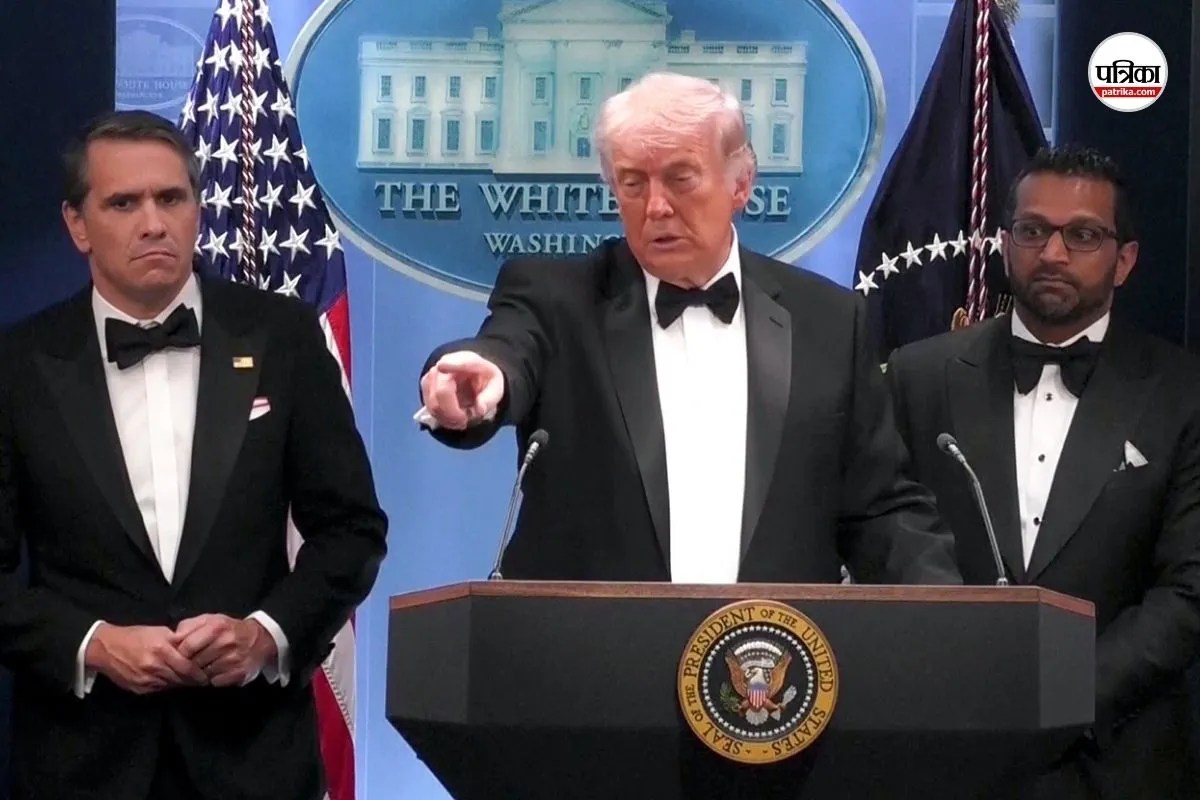
Donald Trump’s public assertions that Iran is desperate for a diplomatic settlement and that global oil prices are on the verge of a structural collapse misread the fundamental drivers of energy markets and state-level brinkmanship. The intersection of US foreign policy, Iranian state survival, and global crude pricing operates on a complex system of economic feedback loops, structural bottlenecks, and risk premiums. Claiming that a conflict can be resolved instantly via unilateral leverage overlooks the deeply entrenched mechanisms that govern both OPEC+ decision-making and Tehran’s domestic imperatives.
To understand why these claims diverge from market realities, analysts must isolate the specific variables driving both oil pricing models and the geopolitical calculations of Middle Eastern actors. The relationship between political rhetoric and actual market equilibrium is rarely linear; instead, it is mediated by a distinct set of structural pillars.
The Three Pillars of Geopolitical Risk Pricing in Energy Markets
Crude oil prices do not fluctuate solely based on current supply and demand metrics. Instead, they reflect a continuous discounting of future supply disruptions, known as the geopolitical risk premium. Trump’s assertion of an imminent, massive drop in oil prices fails to account for the structural floors built into the modern energy market.
The Baseload Supply Floor
Global oil consumption maintains a highly inelastic short-term demand curve. Refineries are calibrated for specific crude assays (light sweet vs. heavy sour), meaning that sudden geopolitical shifts cannot instantly alter procurement channels. Iran’s current export volume, largely directed toward Chinese independent refineries through backchannel financial mechanisms, is already heavily discounted. A formal diplomatic negotiation would not suddenly flood the market with cheap oil; it would merely normalize existing illicit flows into standard transparent trade data. Therefore, the downward pressure on price from a theoretical "deal" is statistically bounded.
OPEC+ Production Quota Discipline
The absolute ceiling and floor of crude prices are heavily managed by the OPEC+ cartel, led by Saudi Arabia and Russia. If US foreign policy successfully forces more Iranian crude into the formal market, the response from Riyadh and Moscow will not be passive. OPEC+ operates on a market-balancing mandate to defend specific state fiscal breakeven oil prices.
- Saudi Arabia requires oil near $80 per barrel to fund its domestic economic diversification projects.
- Russia requires elevated prices to sustain its state expenditures.
- Any unauthorized surge in Iranian volume would trigger a compensatory production cut by other cartel members to defend the price floor.
The Paper Market vs. Physical Market Divergence
Rhetoric influences the "paper market"—the futures contracts traded on NYMEX and ICE—long before it impacts physical crude flows. Speculative traders regularly price in the volatility of political statements, causing short-term price drops. However, these liquid drawdowns are temporary. Once physical traders realize that the actual volume of oil loading onto Supertankers (VLCCs) has not changed, the physical market reasserts itself, correcting the artificially depressed paper price back toward the true supply-demand equilibrium.
The Cost Function of Iranian State Survival
The assumption that Iran is "desperate" for a deal ignores the internal mechanics of authoritarian regime survival and the structure of its resistance economy. Tehran’s strategic decision-making model is not built to maximize GDP; it is optimized to minimize internal regime vulnerability while maintaining external asymmetric deterrence.
The Iranian regime operates under a strict cost function where the primary variable is the preservation of its clerical and military elite (the Islamic Revolutionary Guard Corps, or IRGC). The economic pain inflicted by US sanctions is a secondary concern compared to the existential threat of perceived ideological capitulation.
Regime Vulnerability = f(Economic Deprivation, Ideological Subversion, External Military Threat)
Sanctions have forced Iran to develop a highly sophisticated, parallel economic infrastructure. By utilizing a network of front companies, ghost fleets, and non-dollar denominated clearing systems, Tehran has insulated its core power structures from Western financial pressure. The revenue generated from these discounted oil sales to Asian markets does not enrich the Iranian public, but it provides sufficient liquidity to fund the internal security apparatus and regional proxy networks.
A rapid, unconditional return to the negotiating table by Iran would disrupt this internal equilibrium. For the supreme leadership, the political cost of appearing compliant to Washington carries a greater risk of domestic destabilization than the continuation of economic sanctions. Consequently, any diplomatic approach from Tehran will be transactional, prolonged, and designed to extract structural concessions rather than an act of submission.
The Fallacy of Rapid Conflict Resolution
The assertion that complex regional conflicts can be wound down almost instantly via personal diplomacy ignores the structural friction inherent in international security architectures. The friction points preventing immediate stabilization can be categorized into three distinct bottlenecks.
The Proxy Entrenchment Problem
The conflicts involving Iran are not centralized wars that can be terminated with a signature in Washington or Tehran. Over four decades, Iran has decentralized its security architecture through the "Axis of Resistance" (Hezbollah in Lebanon, the Houthis in Yemen, and various militias in Iraq and Syria). These groups possess their own domestic political agendas, localized revenue streams, and independent command structures. Even if Tehran agreed to a rapid de-escalation framework under economic duress, it does not possess the absolute operational control required to instantly halt proxy operations. A localized strike by a Houthi faction on Red Sea shipping can instantly reinject the geopolitical risk premium into global oil markets, invalidating any diplomatic grand bargain.
The Nuclear Sunk-Cost Dilemma
Iran’s nuclear program is no longer an infant technology that can be easily dismantled in exchange for sanctions relief. The physical infrastructure—including deeply buried enrichment facilities at Fordow and Natanz, advanced centrifuges (IR-6 chains), and accumulated stockpiles of highly enriched uranium—represents a massive sunk cost and a permanent technological capability. Knowledge cannot be sanctioned away. Because Iran has achieved near-breakout capacity, the leverage equation has fundamentally shifted. Tehran will demand irreversible institutional guarantees—such as the permanent removal of primary and secondary sanctions and legal protections against future US withdrawal from a treaty—before altering its nuclear posture. The US political system, characterized by sharp policy swings between administrations, cannot credibly provide these permanent guarantees.
The US Domestic Constraints
Any administration attempting to negotiate a rapid settlement faces severe domestic structural constraints. The US Congress maintains legislative mechanisms, such as the Iran Nuclear Agreement Review Act (INARA), which restrict the executive branch’s ability to unilaterally lift sanctions without prolonged oversight. Furthermore, the political cost of offering major economic concessions to an adversarial state without verifiable, systemic behavioral changes creates a high barrier to entry for any diplomatic breakthrough.
Quantifying the Oil Market Reaction Function
To demonstrate the structural disconnect between political rhetoric and market realities, look at the historical data regarding supply shocks and price responses. The market does not respond to the probability of peace; it responds to the elasticity of supply.
| Event Variable | Immediate Paper Market Impact | Real Physical Market Impact | Medium-Term Price Trend |
|---|---|---|---|
| Aggressive Diplomatic Rhetoric | -5% to -8% (Speculative sell-off) | 0% change in physical barrels | Mean reversion within 14 business days |
| Unilateral US Sanctions Waiver | -3% to -5% (Anticipated volume) | +500k to 700k bpd (Gradual integration) | Defensive OPEC+ production cuts offset volume |
| Physical Disruption (e.g., Strait of Hormuz Chokepoint) | +15% to +30% (Risk pricing) | Actual loss of 15-20 million bpd | Structural upward shift until alternative routes clear |
The table illustrates that political announcements create short-term volatility anomalies rather than structural price trends. A claim that oil prices will experience a sustained collapse based purely on diplomatic posturing ignores the underlying physical realities of global production capacity and shipping logistics.
Limitations of Strategic Leverage
While the United States possesses immense economic leverage through the extraterritorial reach of the US dollar and SWIFT banking network restrictions, this leverage faces diminishing marginal returns. The prolonged use of maximum pressure sanctions has inadvertently driven adversarial economies into an integrated, parallel financial ecosystem.
China, Russia, Iran, and Venezuela have constructed alternative clearing networks that operate outside the jurisdiction of Western regulators. As these networks mature, the efficacy of using access to Western markets as a primary diplomatic cudgel declines. The primary limitation of the current US strategy is the assumption that the target state values economic optimization over regime security. When a state security apparatus successfully decouples its survival from national macroeconomic performance, traditional economic leverage points lose their coercive power.
Strategic Action Plan for Market Participants
Given the structural realities of the energy markets and the low probability of a rapid, binding diplomatic settlement, corporate strategists and institutional investors must ignore the short-term noise of political announcements and focus on the structural metrics that actually dictate market equilibrium.
- Hedge Based on Physical Volatility, Not Rhetorical Dips: Utilize the short-term price drawdowns triggered by political statements to accumulate long positions or call options. The physical market floors defended by OPEC+ ensure that sustained price collapses below global production breakevens are structurally unsustainable under current capacity constraints.
- Track China's Independent Refinery Data (Teapots): Monitor the import volumes, crude blending activity, and clearing currencies used by independent refineries in Shandong province. This data provides the true baseline of Iranian physical export capacity and market penetration, offering a more accurate gauge of sanctions efficacy than official diplomatic readouts.
- Price in a Permanent Geopolitical Risk Premium: Incorporate a structural risk premium ($5 to $7 per barrel) into long-term capital expenditure models for energy procurement. The decentralization of Iranian proxy capabilities means that even in a high-probability negotiation scenario, asymmetric threats to energy infrastructure and maritime chokepoints will persist as permanent operational variables.
