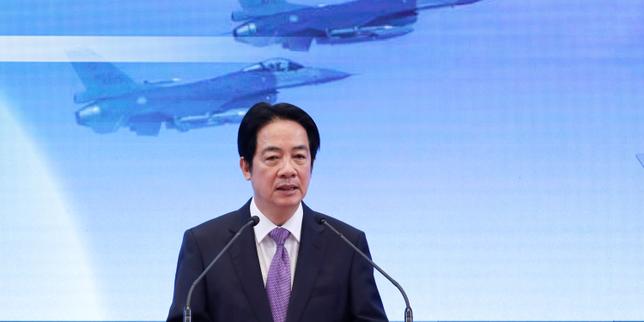
The political theater performing in Taipei right now is exhausting. Following Beijing’s attempts to influence Washington’s cross-strait policy, the Taiwanese leadership issued a predictable, defiant declaration: the island's future "cannot be decided by foreign forces."
It is a beautiful, deeply moving sentiment. It is also an absolute geopolitical fantasy.
For decades, the consensus among Western analysts and Taiwanese officials has been that strategic ambiguity, democratic resilience, and sheer willpower can preserve Taiwan’s self-determination indefinitely. This narrative treats foreign intervention as an external variable—a threat to be managed or a shield to be summoned.
That view is fundamentally wrong. Foreign forces will not just influence Taiwan’s future; they will dictate it entirely. To pretend otherwise is to mistake sovereign rhetoric for actual state power. Taiwan is the ultimate geopolitical fault line, and its destiny is tightly bound to the domestic political calculus of Washington and the economic anxieties of Beijing.
The Sovereignty Illusion in a Bipolar World
Let us strip away the diplomatic niceties. True autonomy requires either absolute self-sufficiency or overwhelming military deterrence. Taiwan possesses neither.
When a small nation sits at the literal inflection point of a cold war between two nuclear-armed superpowers, its domestic desires become secondary to global strategy. The narrative of self-determination ignores the structural realities of international relations. Think-tank experts love to discuss Taiwan's democratic institutions as its ultimate shield. But institutions do not stop ballistic missiles, and democratic values do not sank landing craft.
The harsh truth is that Taiwan’s existence as a de facto independent entity is a function of the American security umbrella. If Washington decides that the economic cost of defending Taipei outweighs the strategic benefit, the status quo evaporates overnight. Conversely, if Beijing decides that its domestic economic pressures require a nationalist distraction, the status quo also evaporates.
Taiwanese politicians can declare their independence from foreign influence as loudly as they want, but every major policy decision they make is a direct reaction to choices made in Washington and Beijing. That is not autonomy. That is highly managed dependency.
The Silicon Shield Is Cracking
The most dangerous consensus in modern geopolitics is the myth of the "Silicon Shield." The argument goes like this: Taiwan produces over 90% of the world’s most advanced semiconductors through TSMC. Therefore, the United States is economically obligated to defend the island, and China cannot afford to destroy the infrastructure it relies on.
I have spent years analyzing global supply chains, and I can tell you that this logic is crumbling before our eyes.
First, a shield only works if your protector doesn't build their own. The United States is actively hollow-outing Taiwan’s semiconductor monopoly through the CHIPS and Science Act, forcing TSMC to build cutting-edge fabrication plants in Arizona. Washington isn't doing this to help Taiwan; they are doing it to hedge against Taiwan's eventual loss. Once the United States secures its own domestic supply of advanced chips, the strategic imperative to defend Taipei drops dramatically.
Second, the Silicon Shield argument assumes Beijing operates purely on rational economic logic. History shows that when authoritarian regimes face internal crises or ideological imperatives, economic rationality goes out the window. If the Chinese Communist Party views reunification as essential to its historical legitimacy, a global chip shortage will not stop them.
By relying on its semiconductor dominance as a security guarantee, Taiwan has inadvertently incentivized the rest of the world to diversify away from it, accelerating the very vulnerability it was trying to prevent.
The Flawed Premises of Cross-Strait Questions
Go to any mainstream foreign policy forum, and you will see the same "People Also Ask" style questions debated ad nauseam. The premises of these questions are fundamentally broken.
Can Taiwan defend itself without US intervention?
No. The question itself is absurd. Taiwan’s military strategy, procurement, and doctrine are entirely dependent on American hardware and intelligence. The island’s defense forces are designed to hold out just long enough for a Western coalition to arrive, not to win a war of attrition alone.
Will China invade Taiwan in the near future?
This is the wrong question. An invasion is the most expensive, high-risk option for Beijing. A much more likely scenario is a comprehensive naval and aerial blockade, combined with cyber warfare to isolate the island. By focusing entirely on an amphibious assault, analysts miss the grey-zone tactics that can strangle Taiwan's economy without China ever firing a shot at an American warship.
Is strategic ambiguity still working?
Strategic ambiguity—the US policy of refusing to say definitively whether it would defend Taiwan—is effectively dead. It has been replaced by strategic anxiety. When Washington signals unpredictability, it does not deter Beijing; it invites miscalculation.
The True Cost of Realism
Admitting that Taiwan’s future is held hostage by foreign powers is uncomfortable. It opens the door to a grim realism that many prefer to ignore.
The downside of this contrarian view is obvious: it strips away the comforting illusion of control. It forces Taiwanese policymakers to acknowledge that their survival depends on the whims of a volatile American electorate and the opaque decision-making of the Politburo in Beijing. It means admitting that Taiwan is a pawn on a global chessboard—a highly valuable, intensely contested pawn, but a pawn nonetheless.
But ignoring this reality is far more dangerous than facing it. When you buy into your own propaganda, you make catastrophic strategic errors. You underfund your conventional military because you assume someone else will save you. You fail to diversify your energy grid, leaving an island that imports nearly 98% of its energy completely vulnerable to a blockade.
Stop Demanding Defiance, Start Managing Dependence
The advice given to Taipei by Western hawkish elites is almost always wrong. They urge Taiwan to posture aggressively, to draw lines in the sand, and to issue fiery statements about self-determination. This is reckless.
Taiwan should not try to prove it is independent of foreign forces. Instead, it must become a master at managing its absolute dependence on them.
- Pivoting the Military Doctrine: Stop buying prestige weapon systems like advanced fighter jets that will be destroyed on the tarmac within the first two hours of a conflict. Invest exclusively in asymmetric, decentralized defense capabilities—sea mines, mobile anti-ship missiles, and civilian defense infrastructure designed to make a blockade or occupation agonizingly painful.
- Acknowledge the American Realpolitik: Recognize that American support is transactional, not ideological. Washington cares about global hegemony and technological dominance; it does not fight wars for abstract democratic solidarity. Taiwan must continuously articulate its value to the US in cold, hard strategic terms, rather than relying on shared values rhetoric.
- Economic Fortification: If Taiwan's energy supplies can be cut off in a week, its advanced semiconductor fabs are useless. True resilience means building massive domestic energy reserves and decentralized power systems, not just celebrating TSMC's stock price.
The future of Taiwan will be decided in the halls of Congress, the Pentagon, and the Zhongnanhai. Every diplomatic speech claiming otherwise is just noise designed for domestic consumption. The island’s survival depends entirely on how skillfully it navigates the foreign forces it claims to ignore. Stop pretending you are driving the bus when you are strapped into the passenger seat during a high-speed chase.