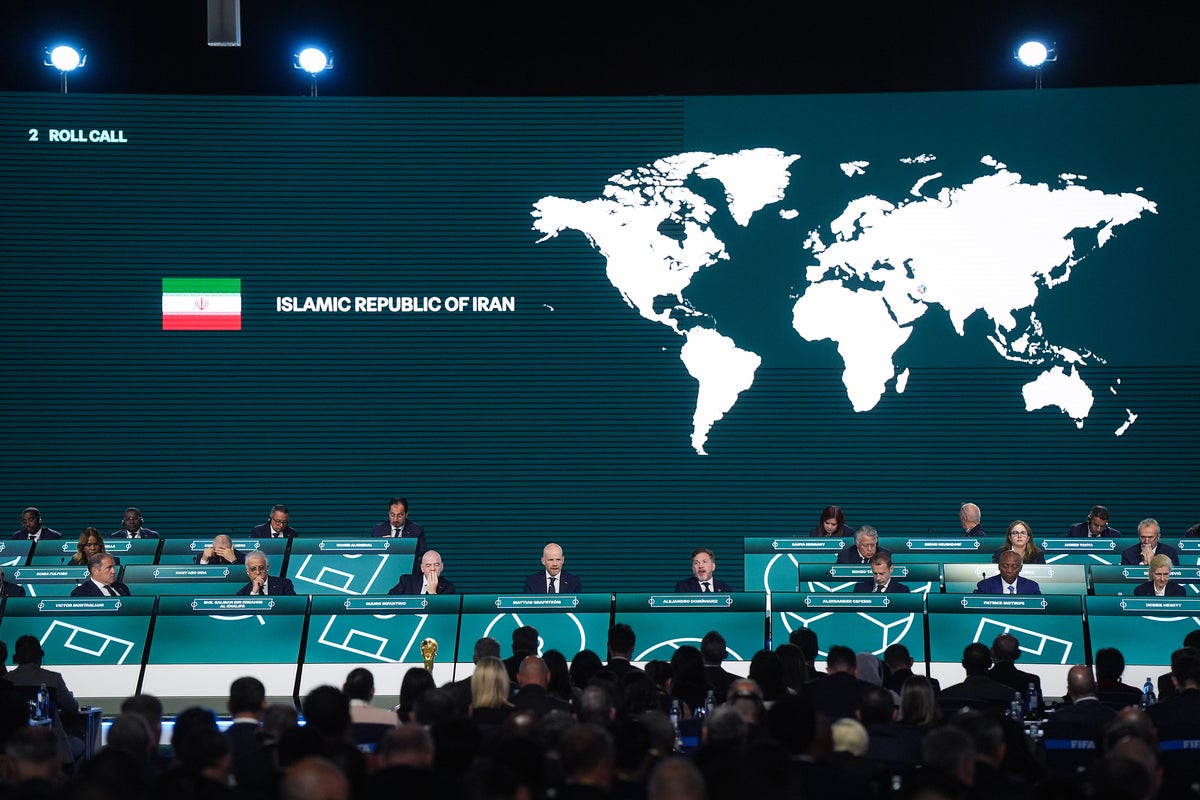
The participation of the Iranian National Team in a U.S.-hosted World Cup is not a matter of athletic readiness but a complex calculation of sovereign risk, diplomatic reciprocity, and visa adjudication logic. When Tehran issues a "definite" intent to participate contingent on "visa assurances," it is signaling a conflict between FIFA’s host-nation requirements and the statutory constraints of U.S. immigration law. The friction exists because the U.S. Department of State operates under a "presumption of immigrant intent" and specific security screening mandates (such as Section 212(f) of the Immigration and Nationality Act) that do not naturally bend for international sporting bodies.
The Tripartite Friction of National Interest
Iranian participation hinges on three distinct pillars of negotiation. If any one pillar collapses, the logistical feasibility of the team's presence evaporates, regardless of FIFA’s internal bylaws.
- The Sovereignty Mandate: Iran views the issuance of visas not as a standard administrative procedure but as a formal recognition of its national legitimacy. Demanding "assurances" before committing to travel is a defensive maneuver to avoid the domestic political fallout of a high-profile visa denial for its athletes or officials.
- The Statutory Constraint: The U.S. executive branch lacks the legal authority to provide "blanket" guarantees for visas. Each applicant must undergo individual vetting. For Iranian nationals, this includes enhanced screening under the Visa Mantis program, which scrutinizes individuals with backgrounds in sensitive technologies or those with ties to sanctioned entities.
- The FIFA Host Agreement Equilibrium: FIFA requires host nations to guarantee entry for all qualified teams. However, these agreements usually contain a "national security" carve-out. The tension lies in whether "national security" is defined narrowly (a specific threat) or broadly (membership in a designated state entity).
Administrative Bottlenecks and the Security Screening Function
The "visa assurances" Iran seeks are functionally impossible under current U.S. administrative law, creating a binary choice for the U.S. State Department: invoke a high-level National Interest Waiver (NIW) or adhere to standard processing times that may exceed the tournament's operational window.
The processing of Iranian visas for a delegation of 50 to 100 individuals—including players, coaching staff, and political handlers—introduces a massive data-processing load. Each individual's history is cross-referenced against multiple databases. The bottleneck variables include:
- Compulsory Military Service Disclosure: Most Iranian men serve in the Islamic Revolutionary Guard Corps (IRGC) or regular military. Since the IRGC is a designated Foreign Terrorist Organization (FTO) by the U.S., any player or staff member who served in that branch faces a "permanent bar" from entry under Section 212(a)(3)(B) of the INA, unless a specific waiver is granted by the Secretary of Homeland Security.
- Political Oversight Presence: The Iranian Ministry of Sport rarely sends a team without "cultural advisors" or security personnel. These individuals are often the primary targets of U.S. sanctions, making their visa approval a non-starter for the Department of State.
- The Interview Geography: Because the U.S. maintains no diplomatic presence in Tehran, the entire delegation must travel to a third country (usually Turkey, Armenia, or the UAE) for interviews. This adds a layer of logistical vulnerability and "spectacle" that the Iranian government finds distasteful.
The Cost Function of Non-Participation
If the "assurances" are not met, the Iranian Football Federation faces a trade-off between political pride and the massive financial and reputational penalties of a World Cup withdrawal.
- The Financial Penalty: FIFA’s disciplinary code mandates heavy fines and potential suspension from future cycles (including the 2030 and 2034 bids) for a late-stage withdrawal.
- The Brand Equity Devaluation: For Iran, the World Cup is a rare moment of global visibility that bypasses economic sanctions. The opportunity cost of missing the tournament is calculated in lost "soft power" and the inability to engage the Iranian diaspora on a global stage.
- The Domestic Pressure Variable: Football is the primary cultural outlet in Iran. A government-ordered boycott or a failure to secure visas would likely trigger domestic unrest, as the blame would be split between U.S. "obstructionism" and Iranian administrative "incompetence."
Diplomatic Reciprocity and the Neutral Ground Precedent
A recurring theme in Iranian sports diplomacy is the demand for a "neutral ground" for administrative functions. Since the U.S. cannot move its border for a soccer tournament, the only available mechanism is the establishment of a Special Purpose Visa Unit.
This unit would theoretically operate out of a neutral embassy to pre-clear the Iranian delegation months in advance. However, even this mechanism fails to solve the underlying legal hurdle: the U.S. cannot legally "assure" a visa before the interview takes place. This creates a logical paradox where Iran demands a result that the U.S. legal system can only provide as an output of a process Iran refuses to enter without a guaranteed result.
Sanctions Overlap and Operational Constraints
Even if visas are issued, the Iranian team operates under a restricted financial environment. Under Treasury Department (OFAC) regulations, any U.S. entity—including hotels, transportation companies, and stadium vendors—providing services to the Iranian delegation must ensure no funds are being moved in violation of the Iranian Transactions and Sanctions Regulations (ITSR).
- The Banking Barrier: Iranian players cannot easily receive per diem payments or prize money while on U.S. soil without triggering bank compliance freezes.
- Vendor Risk: U.S.-based sponsors (e.g., Nike, Coca-Cola) face reputational and legal risks when their branding is associated with a team representing a sanctioned state.
- The "Minders" Problem: If members of the Iranian security apparatus are included in the delegation to prevent player defections, the U.S. government faces a domestic political crisis for "hosting" individuals associated with regional instability.
Strategic Forecast: The Waiver Path
The most likely outcome is a "Tactical Waiver" strategy. The U.S. executive branch will not issue a blanket assurance—as that would be a political gift to Tehran—but will instead utilize a back-channel "Statement of Intent" through a third-party mediator like Qatar or Switzerland.
This statement will promise a "fair and expedited review" rather than a guaranteed approval. The Iranian government will then frame this "expedited review" as the "assurance" they demanded to save face domestically.
The real risk remains the Selective Denial. The U.S. is likely to grant visas to the 26 players but deny them to specific high-ranking officials or "security" personnel. Iran must then decide if a "partial" delegation is acceptable. If Iran refuses to travel because their political handlers are barred, they lose the moral high ground in the international sporting community.
The strategic play for the Iranian Federation is to submit visa applications at the earliest possible date to force the U.S. into a public "yes or no" position. Delaying the application process only benefits the U.S. side, as "administrative processing" becomes a convenient excuse for de facto denials as the tournament start date approaches. The U.S., conversely, will maintain a policy of "strategic ambiguity," refusing to commit to approvals until the final fingerprints are scanned.


