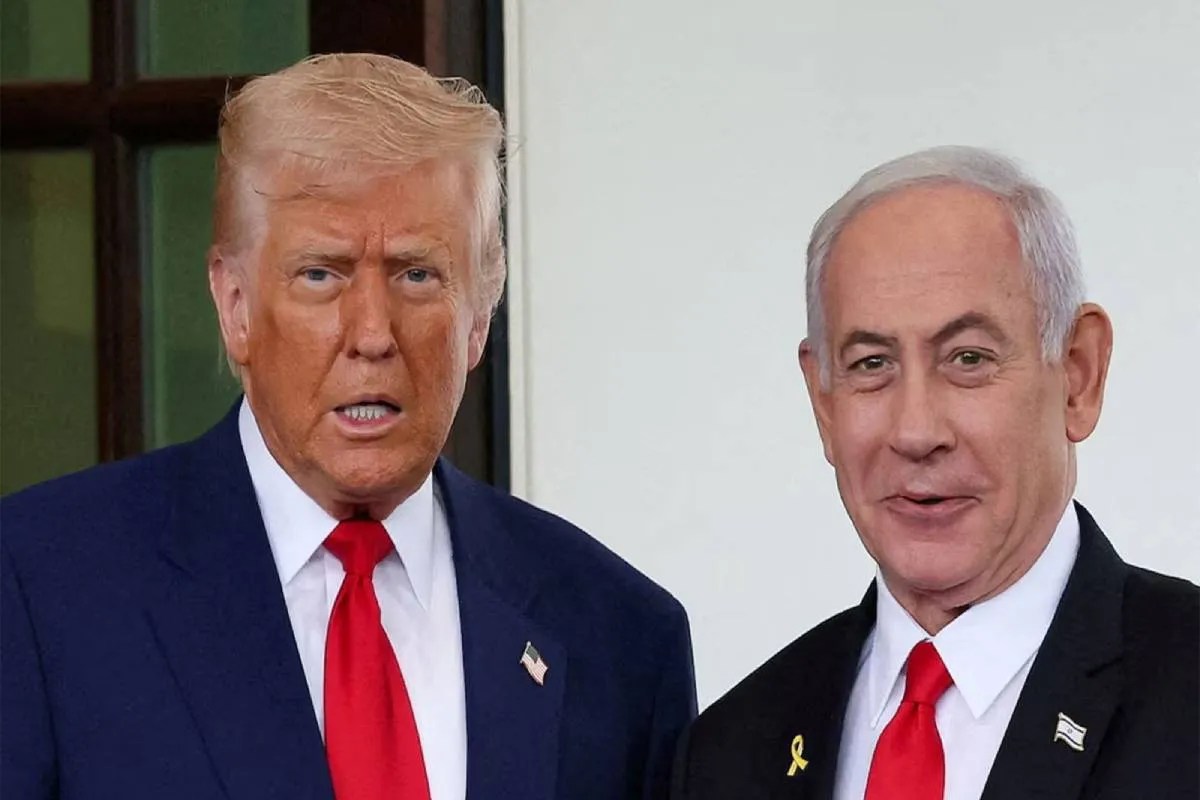
The mainstream media is hyperventilating over a narrative that reads like a cheap soap opera. They see Pakistan’s Army Chief Asim Munir landing in Tehran, overlay it with rumors of Benjamin Netanyahu losing his temper during a phone call with Donald Trump, and conclude that the Middle East is on the brink of an inevitable, catastrophic regional explosion.
They are misreading the entire board.
The lazy consensus insists that these diplomatic movements and leaked outbursts signal an imminent, unhinged escalation—that Israel is itching for an immediate re-run of its strikes on Iran, and Pakistan is rushing to broker a desperate Islamic alliance. This perspective treats seasoned state actors like emotional teenagers. It mistakes performative anger for strategic intent and routine deterrence coordination for wartime mobilization.
Here is what is actually happening behind the curtain.
The Myth of the Unhinged Netanyahu
The press loves the trope of a volatile Israeli Prime Minister driven purely by rage, supposedly "fuming" while talking to Washington. It makes for great headlines. It is also a complete misunderstanding of Israeli strategic doctrine.
When leaks emerge suggesting Netanyahu is furious or throwing tantrums over US-enforced boundaries regarding Iran, it is rarely a genuine emotional breakdown. It is a calculated diplomatic tactic. In international relations, this is a classic application of the "Madman Theory," a concept formally integrated into statecraft during the Cold War. By signaling that leadership is volatile and face-saving parameters are shrinking, Israel forces both its superpower ally and its regional adversaries to take its red lines more seriously.
Israel does not strike Iran because Netanyahu gets angry. Israel strikes Iran when its defense establishment calculates a net positive return on operational risk. Right now, the structural reality dictates restraint, not a reckless repeat assault.
Consider the logistical math that the standard news cycle ignores:
- Air Superiority Fatigue: Running long-range strike sorties across multiple sovereign airspace corridors requires massive asset mobilization, aerial refueling coordination, and a temporary drawdown of domestic air defense readiness.
- The Munitions Equation: Israel remains heavily dependent on American supply chains for interceptors like the Tamir missiles for Iron Dome and the Arrow system. You do not launch a voluntary, massive offensive against a state actor while simultaneously managing active, high-intensity operations on your immediate northern and southern borders without explicit logistical underwriting from Washington.
- The Energy Factor: A full-scale, sustained campaign against Iranian oil infrastructure triggers immediate economic blowback. The global market handles minor disruptions, but a systemic spike in crude prices alienates the very Western coalitions Israel relies upon for diplomatic cover at the United Nations.
The theater of rage is designed to keep Iran guessing and to pressure Washington into maintaining a maximum-pressure sanctions regime. It is leverage, not a war plan.
Pakistan in Tehran is Not an Anti-Israel Alliance
When General Asim Munir travels to Iran, the immediate, lazy interpretation is that Islamabad is picking a side in a broader Middle East conflict. Commentators whisper about a nuclear-armed Pakistan offering a shield or strategic depth to Tehran against the axis of Israel and the United States.
This is structurally impossible.
Pakistan is currently navigating an existential economic crisis, keeping its head above water through delicate balancing acts involving the International Monetary Fund, Western markets, and Beijing. The idea that Islamabad would compromise its relationship with Washington—or its incredibly lucrative, quiet ties with Gulf monarchies like Saudi Arabia and the UAE—to form a hard military pact with an isolated Tehran is a geopolitical fantasy.
So why is Munir actually there?
The Security Vacuum on the Border
The Pakistan-Iran border in Balochistan is a lawless stretch plagued by cross-border militancy. Groups like Jaish al-Adl operate in the fissures, launching attacks that have previously brought both nations to the point of exchanging missile strikes. Munir’s visit is an exercise in fire fighting, not coalition building. The focus is intelligence sharing and keeping a lid on domestic instability, ensuring that local border skirmishes do not spiral into a secondary front that neither country can afford.
The Balancing Act with Riyadh
Pakistan’s military leadership operates under a strict doctrine of neutrality regarding Middle Eastern sectarian and state rivalries. For every step Islamabad takes toward Tehran, it takes two toward Riyadh. Munir’s presence in Iran is a message of reassurance to prevent Tehran from drifting entirely into a hostile posture, while simultaneously acting as a stabilizing force that satisfies Western demands to prevent total regional collapse.
The Flawed Premise of the Foreign Policy Experts
If you read standard geopolitical analysis, the "People Also Ask" sections are filled with variations of: Will Israel destroy Iran's nuclear program tomorrow? or Is Pakistan joining the war against Israel?
These questions are fundamentally flawed because they assume states act on ideological impulses rather than cold, transactional survival metrics.
Let us dismantle the premise of an imminent Israeli total war on Iran. A nation does not announce its intention to launch a devastating, regime-altering strike by leaking a tense phone call between its leader and a US President. True strategic operations of that magnitude require absolute operational security and a element of surprise. The moment a potential conflict becomes the loudest talking point on evening news broadcasts, the strategic window has closed, and the diplomatic posturing phase has begun.
I have spent years analyzing how defense intelligence apparatuses utilize the press. The loudest reports are almost always the most deceptive. When a military intends to strike, it speaks softly and acts with devastating speed. When it wishes to deter without spending blood and treasure, it briefs journalists about how "furious" its leadership is.
The Risks of the Contrarian Reality
To be intellectually honest, challenging the consensus carries its own blind spots. The danger in viewing every move as a masterclass in rational theater is that it underestimates the potential for miscalculation.
History is littered with wars that nobody wanted, triggered by accidents, misinterpreted signals, or low-level commanders acting without authorization on a tense border. While Netanyahu’s anger may be calculated and Munir’s visit may be routine border management, the margin for error in the Middle East is razor-thin. A single stray drone or an unauthorized border skirmish can turn a theatrical posture into an undeniable casus belli.
However, betting on systemic inertia and rational self-preservation remains the smarter analytical play than buying into sensationalist headlines of an apocalyptic escalation.
The Reality of the New Triad
The shifting dynamics between Washington, Jerusalem, and Tehran are not governed by emotional outbursts, but by a cold calculation of leverage under a changing American administration.
| Actor | Public Stance | Strategic Reality |
|---|---|---|
| Israel | Threatening immediate, unmitigated unilateral strikes to dismantle regional threats. | Seeking maximum US diplomatic cover and continuous munitions replenishment before taking any major kinetic action. |
| Iran | Projecting defiance and regional dominance through proxy networks and strategic alliances. | Managing a fragile domestic economy and attempting to prevent direct state-to-state conflict that threatens regime survival. |
| Pakistan | Engaging in high-level regional diplomacy to project influence and foster stability. | Prioritizing border security and economic stabilization while strictly avoiding entanglement in external conflicts. |
Stop reading the leaks as gospel. Stop assuming that diplomatic travel equals military mobilization. The actors on this stage are playing a long, grueling game of positional chess. The anger is scripted, the visits are choreographed, and the real maneuvers are happening in quiet, unpublicized rooms far away from the cameras. Treat the noise as what it is: a distraction from the structural realities of state survival.