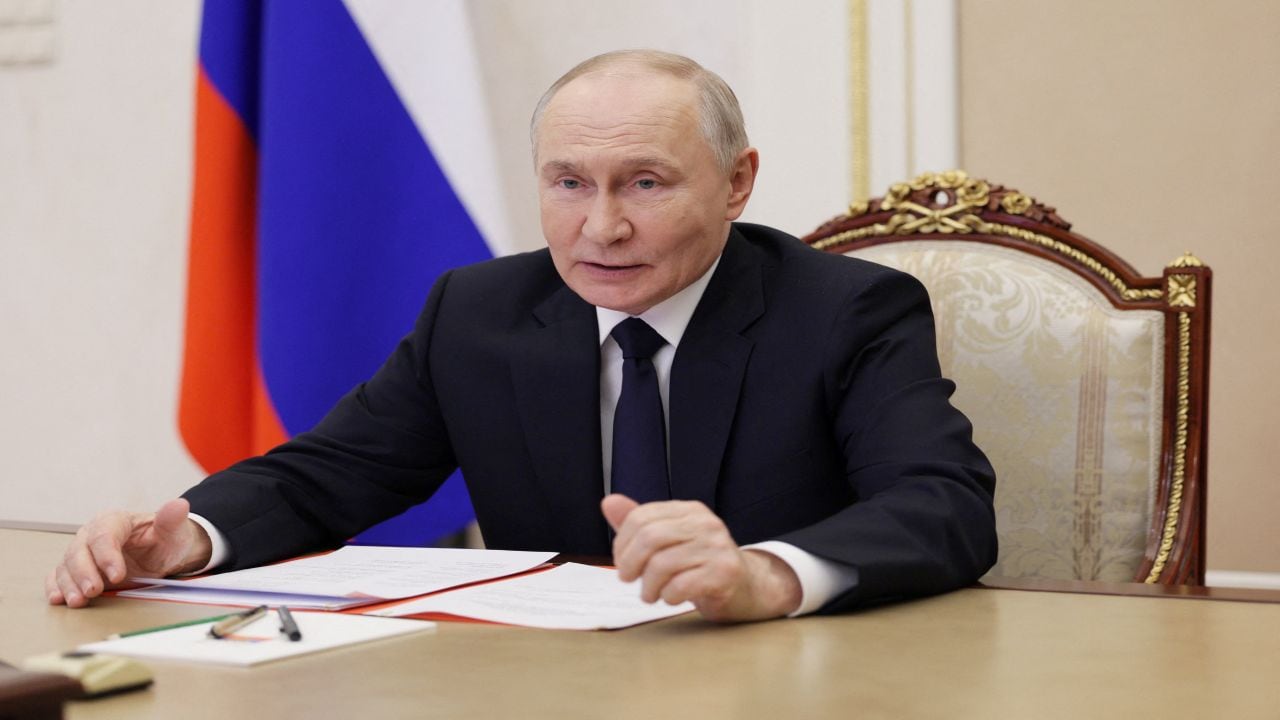
The confirmation by Kremlin aide Yury Ushakov that Russian President Vladimir Putin will attend the BRICS summit in New Delhi on September 12–13, 2026, marks a major step in the structural reconfiguration of the global financial and security architecture. While standard press reporting frames the visit through the narrow lens of bilateral diplomacy, a rigorous analytical assessment reveals that the summit serves as a focal point for three distinct strategic vectors: the institutional consolidation of an expanded BRICS+ footprint, the operationalization of non-SWIFT financial plumbing, and India’s calibrated balancing act between Western security alignments and Eurasian economic dependencies.
This analytical breakdown dissects the underlying mechanics of the upcoming summit, mapping out the incentives, structural constraints, and systematic friction points that will dictate its outcomes.
The Three Structural Pillars of the New Delhi Summit
The 2026 New Delhi summit is the first major leaders' gathering following the integration of Indonesia into the bloc, cementing an 11-nation coalition comprising Brazil, Russia, India, China, South Africa, Egypt, Ethiopia, Iran, Saudi Arabia, the United Arab Emirates, and Indonesia. This expanded entity commands approximately 49.5% of the global population, 40% of global GDP on a purchasing power parity (PPP) basis, and 26% of global trade.
The agenda for the September 12–13 sessions rests on three structural pillars:
- The Dedollarization Cost Function: Minimizing transaction friction caused by G7 primary and secondary sanctions by shifting toward local-currency clearing systems.
- The Multipolar Governance Mandate: Codifying alternate diplomatic tracks that bypass traditional Bretton Woods frameworks, using India's chairship theme of "Building for Resilience, Innovation, Cooperation, and Sustainability" to project Global South leadership.
- Sidelined Bilateralism: Leveraging the multilateral buffer to execute critical bilateral negotiations—specifically the confirmed sideline meeting between President Putin and Chinese President Xi Jinping—without the formal constraints of state visits.
The India-Russia Annual Mechanism and the Diplomatic Cadence
Putin’s arrival in New Delhi will mark his second trip to India within a twelve-month window, following his attendance at the 23rd India-Russia Annual Summit in December 2025. The high frequency of these visits exposes a deliberate operational rhythm intended to shield the bilateral corridor from Western economic containment strategies.
The structural cause-and-effect relationship driving this cadence can be modeled as follows:
[Western Trade Containment & Sanctions]
                  │
                  ▼
[Increased Russian Discretionary Energy Discounts]
                  │
                  ▼
[Surge in Indian Hydrocarbon Imports & Rupee Accumulation]
                  │
                  ▼
[Urgent Systemic Need for Alternative Settlement & Investment Inversion]
                  │
                  ▼
[High-Frequency Executive Summits (Dec 2025 / Sep 2026)]
This sequence creates an inescapable bottleneck. India's heavy accumulation of discounted Russian crude has generated a structural trade imbalance: Russia holds massive, non-convertible rupee reserves that cannot be easily repatriated or utilized due to India's capital account restrictions and limited export capacity in high-value manufactured goods.
The executive summits are required to manage this financial friction. Consequently, the May 2026 preparatory meeting between Russian Foreign Minister Sergey Lavrov and Indian External Affairs Minister S. Jaishankar focused on creating investment vehicles to channel these stuck rupee reserves back into Indian infrastructure and manufacturing, converting a short-term settlement crisis into long-term sovereign interdependence.
Structural Friction and Systematic Risk Mitigation
Despite the projection of a unified front, the BRICS+ expansion introduces severe internal systemic friction that limits its capacity to function as a cohesive anti-Western bloc. The primary vulnerability is the divergent macroeconomic incentives of its key actors.
| Metric / Attribute | Sino-Russian Coaxial Alignment | Indian Strategic Autonomy |
|---|---|---|
| Primary Geo-economic Objective | Systemic revision: Dismantling dollar hegemony and building parallel clearing networks. | Arbitrage maximization: Utilizing multi-alignment to secure cheap energy while retaining Western capital access. |
| Security Architecture | Direct opposition to NATO and Western security architectures. | Active participation in the Quad (US, Japan, Australia, India) to contain maritime expansion in the Indo-Pacific. |
| Institutional Strategy | Rapid expansion of the bloc to dilute Western voting blocks in international bodies. | Phased, criteria-based expansion to prevent the group from converting into an explicitly anti-Western vehicle. |
India’s chairship acts as a stabilizing element that prevents BRICS from tipping into an overt ideological confrontation with the G7. Prime Minister Narendra Modi’s foreign policy framework treats BRICS not as an anti-Western tool, but as a non-Western forum designed to increase bargaining power when negotiating with Western institutions. The analytical reality is that India cannot afford to decouple from Western financial systems, given its reliance on foreign direct investment, technology transfers, and access to the SWIFT network for the vast majority of its export services.
Strategic Play for Global Observers
For international analysts and sovereign strategy groups, monitoring the New Delhi summit requires filtering out the inevitable diplomatic rhetoric and focusing purely on operational deliverables. The real benchmark of success or failure for the summit will be measured across two specific vectors:
- The Interoperability of Central Bank Digital Currencies (CBDCs): Watch for concrete technical agreements regarding the linking of Russia’s digital ruble and India’s UPI/Digital Rupee. True institutional dedollarization cannot occur via volatile local currencies; it requires a blockchain-backed or sovereign digital framework that completely bypasses western correspondent banking networks.
- The Resolution of the Sino-Indian Border Deadlock: The planned sideline meeting between Putin and Xi Jinping will test Russia's ability to act as a quiet diplomatic bridge between New Delhi and Beijing. If Russia can facilitate a formal de-escalation protocol along the Line of Actual Control (LAC), BRICS will transition from a loose economic forum into a powerful, functional security arbiter within Eurasia.
The definitive trajectory for the remainder of 2026 will be set during these September sessions. If the bloc fails to announce a formalized, scalable alternative to dollar-based trade settlements, it will remain an economic talk-shop burdened by internal contradictions. If, however, the digital infrastructure is codified, it will signal the permanent balkanization of the global financial market.


