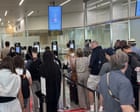
Aviation networks require absolute precision to function, but a quiet crisis is unfolding across European runways as commercial aircraft depart with blocks of empty seats. This operational failure is not driven by a sudden drop in consumer demand. Instead, rigid digital border frameworks, infrastructure bottlenecks, and systemic processing friction are stranding passengers in terminal queues while their flights take off without them. Airlines are caught in an impossible squeeze between strict airport slot rules and slow-moving international immigration checkpoints, forcing carriers to fly half-empty jets to preserve their operational schedules.
The Mechanics of a Silent Bottleneck
For decades, international aviation relied on predictable passenger flows. A standard short-haul airliner turnaround takes less than an hour, a tight window where ground crews clean the cabin, fuel the tanks, and board passengers. For an alternative look, check out: this related article.
That window is shattering.
The introduction of upgraded digital border systems across the Schengen zone requires extensive data collection for non-EU passport holders. Travelers must now navigate a multi-layered verification process involving facial scans and digital fingerprinting at their initial point of entry. Further insight on this matter has been published by National Geographic Travel.
When a system requires ninety seconds per passenger instead of fifteen, the math fails. A single wide-body flight carrying three hundred passengers suddenly demands hours of cumulative processing time. If three such aircraft land simultaneously, the immigration hall transforms into a human logjam. Passengers stuck in these lines cannot reach their connecting gates, leaving airlines with a brutal choice. They can delay the flight, missing their departure slot and triggering a chaotic domino effect across their entire regional network, or they can close the cabin doors and fly with empty seats.
They are choosing the empty seats.
Why Digital Upgrades Create Physical Gridlock
The core issue stems from a profound disconnect between software policy and physical infrastructure. Digital border initiatives look highly efficient on paper, aiming to replace manual passport stamping with automated databases that track entry and exit compliance across the continent.
The reality on the ground is far more chaotic.
Many historic European airports were built in an era when international travel volumes were a fraction of what they are today. Expanding the physical footprint of an immigration hall to accommodate rows of biometric kiosks is structurally impossible without massive, multi-year capital expenditure projects.
Consequently, airports are forcing modern, data-heavy security protocols through physical spaces designed for basic visual inspections. The result is immediate gridlock. When automated gates suffer software glitches or fail to read a traveler's biometrics accurately, manual intervention by border officers becomes necessary. This entirely defeats the purpose of automation, lengthening wait times and causing passengers to miss their boarding windows in historic numbers.
The Financial Toll of Flying Air
Operating a commercial airliner is an exercise in razor-thin margins. The fixed costs of a flight remain largely identical whether every seat is filled or the cabin is half empty.
- Fuel consumption drops marginally with a lighter passenger load, but the baseline burn rate required to move an aircraft across borders remains immense.
- Flight crew salaries, maintenance allocations, and navigation fees are completely fixed.
- Airport landing slots must be paid for regardless of the passenger count.
When a flight departs half full, the revenue from those missing passengers is lost forever, but the operational costs remain locked in. Airlines cannot simply absorb these losses indefinitely. To compensate for the lost revenue per flight hour, carriers are forced to adjust their pricing models, driving up the cost of tickets for everyone else.
The industry is also grappling with the rigid enforcement of airport slot rules. Under European regulations, airlines must utilize a high percentage of their allocated takeoff and landing slots or risk losing them to competitors in the next season. This policy was designed to prevent anti-competitive behavior, but in a fractured border environment, it produces a perverse incentive. Carriers are compelled to fly near-empty planes purely to protect their long-term access to major hub airports.
The Friction Point of Carrier Liability
Airlines face immense pressure beyond schedule maintenance. Under international immigration laws, carriers are hit with severe financial penalties if they bring a passenger to a border without the precise digital documentation required for entry.
These carrier liability fines can reach thousands of euros per passenger. To mitigate this financial risk, airlines have transformed their check-in counters and boarding gates into secondary border checkpoints. Ground staff must meticulously verify digital entry permits and travel authorizations before allowing anyone onto the aircraft.
This shift has moved the border checkpoint directly to the departure gate. The extra layer of scrutiny adds minutes to the boarding process for every single traveler. If a passenger's digital authorization fails to clear the airline's internal check system due to a regional database sync delay, that passenger is denied boarding on the spot. The seat remains empty, the airline avoids a government fine, and the traveler is left stranded at the gate.
Regional Pressure Zones and Third Country Realities
The friction is not distributed evenly across the continent. The most acute disruptions occur at major transit arteries separating Schengen states from external nations.
Following its departure from the European Union, the United Kingdom has become a primary source of this operational strain. Millions of British travelers who previously moved through expedited European lanes are now processed as third-country nationals. Every passport must be scanned against multiple international security databases, and every traveler must be questioned regarding the duration and purpose of their stay.
Major hubs like London Heathrow, Paris Charles de Gaulle, and Amsterdam Schiphol operate at near-total capacity on a good day. When you introduce a systemic slowdown to their primary passenger demographic, the entire system buckles. The issue cascades down to smaller regional airports that lack the staffing flexibility to handle sudden, unexpected processing delays. A single delayed morning flight from an external hub can disrupt an aircraft's schedule for the rest of the day, causing a series of empty-seat departures across multiple domestic routes.
The Illusion of a Quick Fix
Resolving this crisis requires more than just updating server software or hiring a few dozen extra border guards. The challenge lies in the fundamental architecture of modern international transit.
Governments refuse to compromise on border security, viewing digital tracking systems as non-negotiable tools for regional sovereignty and risk management. Meanwhile, the aviation industry operates on a commercial reality that demands speed, predictability, and volume. These two priorities are currently in direct opposition.
Incremental adjustments, such as introducing mobile smartphone applications for pre-registration, offer some hope of relief, but these digital tools still require physical verification at the final gate of entry. Until international border policies are designed in tandem with physical airport logistics, airplanes will continue to burn fuel moving empty aluminum tubes across the sky.