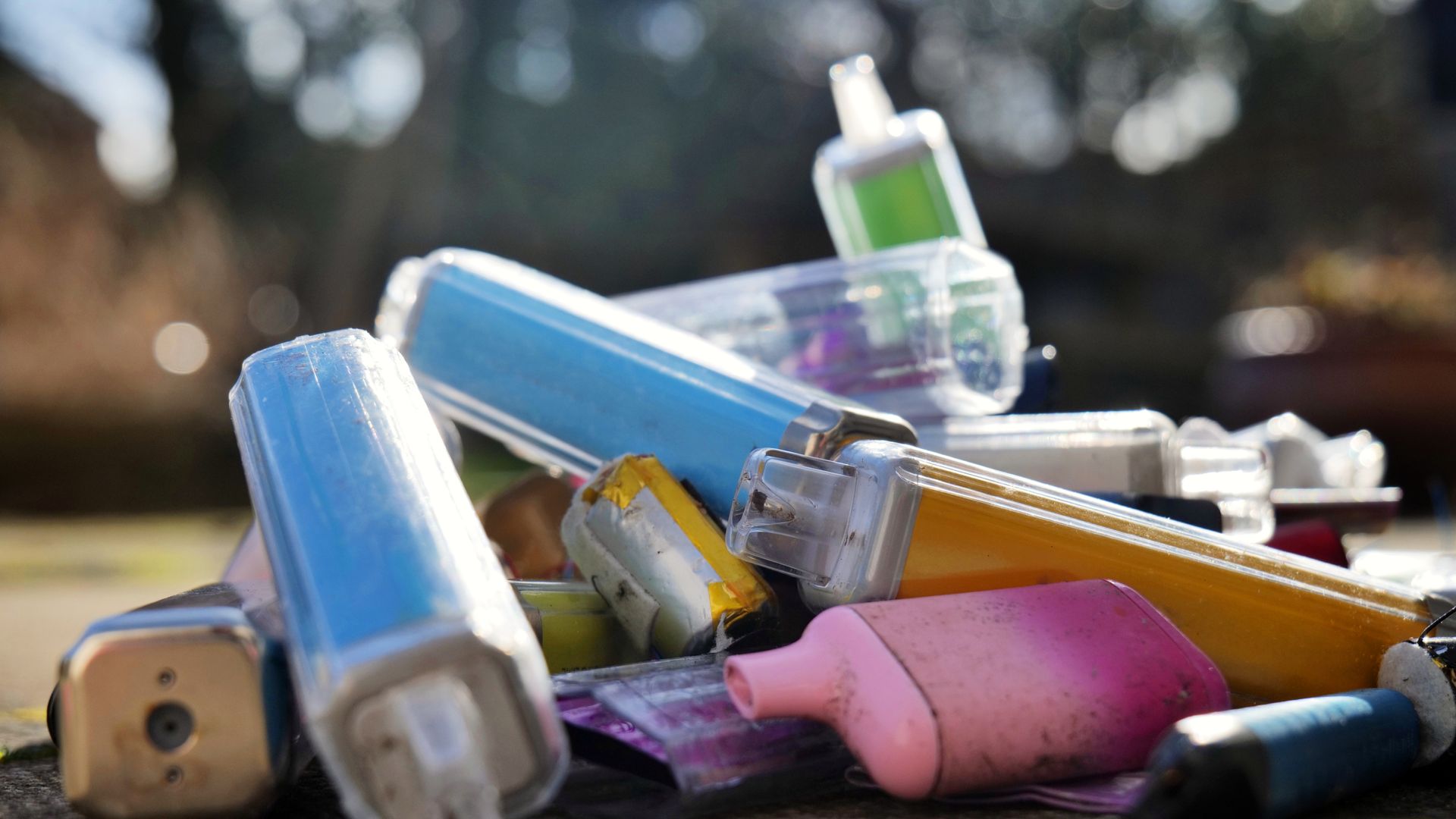
Walk past the concrete steps outside any high school at 3:30 PM, and you will notice something missing. The air used to smell like artificial strawberries and chemical cotton candy. It was a thick, cloying fog that hung over huddles of teenagers, trailing behind them like a neon exhaust fume.
Now, the air is just cold. Clear. You might also find this connected story interesting: The Diplomatic Delusion Why Demanding Restraint in Lebanon Prolongs the Conflict.
Twelve months after the ban on disposable e-cigarettes took effect, the data tells a story of sweeping success. Government spreadsheets celebrate a sharp, historic drop in youth vaping rates. The bright plastic shells that used to litter gutters like techno-debris have largely vanished. On paper, a public health victory has been decisively won.
But statistics are flat. They lack a pulse. To understand what is actually happening, you have to look at the quiet shifts in behavior, the hidden anxiety of parents, and a black market that thrives in the shadows of enforcement. The ban worked, but the problem merely changed shape. As reported in detailed reports by Associated Press, the implications are significant.
Let us look at a hypothetical example to understand this shift. Consider Chloe, a sixteen-year-old who, this time last year, could not study, walk to the bus, or wake up without a brightly colored plastic bar glued to her palm. For Chloe, the ban did not magically erase a chemical dependency. It changed the logistics. When the shops stopped selling her preferred brand, she did not celebrate a triumph of public policy. She panicked.
The human brain does not respect legislation. When a habit is deeply ingrained, a restriction simply forces a pivot.
The Arithmetic of the Underground
The drop in numbers is real. Official surveys show a massive decline in casual users—the teenagers who picked up vaping simply because it was cheap, brightly packaged, and sitting on the counter of every corner shop. For this group, friction was an effective deterrent. When the colorful displays disappeared, so did their interest.
But public health advocates are watching a different line on the graph. The line that represents the core users.
Public health campaigns often treat addiction as a retail issue. They assume that if you remove the product from the shelf, you remove the desire from the person. The reality is far more complex. For dedicated users, the ban did not stop the supply; it merely shifted the economy.
Consider what happens next when a mainstream product goes underground. Prices rise. Regulation disappears. Quality control becomes nonexistent.
In the wake of the ban, illicit trade networks filled the vacuum almost immediately. Peer-to-peer selling via encrypted messaging apps became the new corner shop. Teenagers who once bought verified, tested products over a counter are now meeting strangers in parking lots or buying unbranded, unregulated devices imported through illicit channels.
The stakes became invisible, but they became significantly higher.
The Illusion of the Quick Fix
We love a definitive ending. We want to believe that a single piece of legislation can erase a complex social issue with the stroke of a pen. It gives us a sense of control.
But behavioral shifts are rarely that clean. When we look at the decline in disposable vapes, we must also look at what is filling the void. In households across the country, parents are reporting a different kind of tension. The physical evidence—the charging cables, the empty pods—might be gone, but the irritability, the academic dip, and the secretiveness remain.
The habit has gone internal. It is harder to spot a child using a stealthier, refillable device, or turning to traditional tobacco out of sheer desperation for nicotine.
This is where the victory lap ends and the real work begins. Campaigners are raising alarms not because they are pessimistic, but because they understand human nature. They know that a drop in sales figures is not the same thing as a cure. If we content ourselves with clean statistics while ignoring the underground market, we are simply sweeping the smoke under the rug.
The Weight of the Unseen
Step back from the data and look at the landscape of a community adjusting to this new reality. The bins outside schools are no longer filled with lithium batteries. That is a tangible, ecological, and social good. The casual, trend-driven usage has cratered. We should acknowledge that.
Yet, true health is not merely the absence of a statistic. It is the presence of support.
The young people who struggled most with dependency are still struggling, only now they do so with the added weight of criminality and shame. They are navigating a black market that does not check IDs, does not test for heavy metals, and does not care about their well-being.
The air outside the school gates is clear today. The strawberry fog has lifted. But beneath that clean air lies a quiet, stubborn reality that legislation alone cannot fix. The cloud has vanished, but the craving remains, waiting in the dark.