The ink on the special entry permits was barely dry when the silence set in.
For months, immigration officials and tournament organizers had huddled in brightly lit boardrooms, mapping out a bureaucratic masterpiece. They anticipated a tidal wave. Hundreds of thousands of football fans, flags draped over their shoulders, singing songs in languages the border towns hadn't heard in decades, pressing toward the turnstiles.
To prevent a logistical nightmare, Canada did something unprecedented. They smoothed the asphalt. They slashed the red tape. They opened a fast lane straight through the heart of their notoriously rigid customs system, specifically tailored for the World Cup crowd. The message was loud, clear, and desperate: Come in. We made it easy for you.
Then, the gates opened.
Nothing happened.
Well, not nothing. A trickle arrived. A few dedicated fan clubs. Some corporate sponsors in tailored suits. But the expected human deluge, the chaotic, beautiful, economic engine of global fandom that cities bet their futures on? It never crossed the line.
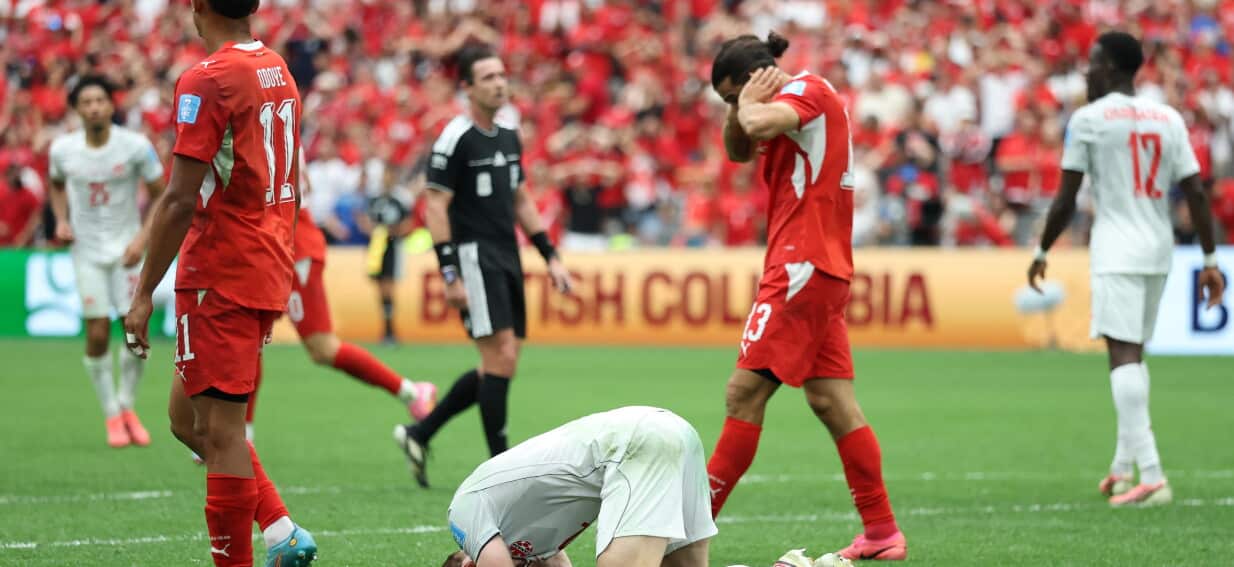
The stadiums remained half-empty, echoing with the lonely sounds of plastic seats snapping shut and vendors shouting into the void.
The Illusion of Friction
We tend to look at borders as walls. We think that if you lower the wall, water will naturally flow over it. It is a classic boardroom delusion, the belief that human behavior is entirely dictated by administrative ease.
Consider a hypothetical fan named Mateo. Mateo lives in Bogota. He sleeps in a vintage jersey. He has watched every single qualification match, screaming at a flickering television screen until his throat is raw. When his team qualifies for the grandest stage of them all, Mateo doesn’t immediately look up visa wait times on a government portal.
He looks at his bank account.
He looks at the price of a single night in a mid-tier hotel room in Vancouver or Toronto, a price that has miraculously quadrupled the moment the match schedules were announced. He looks at the cost of a flight that requires three layovers and costs more than three months of his salary.
When Canada announced its streamlined border policies, bureaucrats congratulated themselves on removing the friction. But they removed the wrong friction. They fixed a paperwork problem in a world that was suffering from an existential economic crisis. A passport stamp is free. A bed to sleep in is not.
The reality of modern international travel is that the border crossing itself is rarely the true barrier. The real border is the price of admission to the country itself.
The Disconnect in the Boardroom
Walk through any major city preparing for a mega-event and you will see the same pattern. Local governments lease out public spaces. They print glossy brochures. They project massive tourism revenues that look spectacular on a spreadsheet.
During the planning phases for this tournament, the narrative was entirely focused on security and throughput. How quickly can we process twenty thousand people arriving at an airport terminal within a two-hour window? The answers were technologically impressive. Biometric screening. Dedicated lanes for ticket holders. Temporary visa waivers. It was a marvel of modern logistical engineering.
But spreadsheets cannot measure desire. More importantly, they cannot measure exhaustion.
By the time a fan buys a ticket through an agonizingly convoluted online lottery system, secures time off work, and navigates the hyper-inflated aviation market, their tolerance for risk is entirely depleted. If they then hear rumors of astronomical local costs, the ease of the border crossing becomes entirely irrelevant.
It is like building a flawless, high-speed escalator that leads directly to a brick wall. The ride up is smooth. But nobody wants to go there.
The True Cost of Fandom
Fandom is a form of madness, but it is a calculated madness.
The people who power the atmosphere of a World Cup are not the ultra-wealthy who occupy the hospitality suites. The atmosphere is built by the working class, the die-hards, the people who save for four years, skipping meals and sacrificing comforts to witness ninety minutes of history.
When a host nation caters its entire strategy toward administrative efficiency while ignoring market gouging, it prices out the very soul of the tournament. The hotels remained vacant because they asked for thousands of dollars a night for spaces that usually cost a hundred. The restaurants sat quiet because the average fan couldn't afford a burger near the fan zones.
The empty seats were not a failure of immigration policy. They were a protest.
A quiet, unintentional protest born from the stark reality of empty pockets. The fans didn't stay away because they couldn't get in. They stayed away because, once inside, they realized they wouldn't be able to afford to breathe.
The stadiums stood under the gray northern sky, magnificent and hollow. The grass was perfect. The lights were blindingly bright. The border guards stood ready, smiling, waiting at empty booths for a crowd that had already decided to stay home and watch the game on TV.