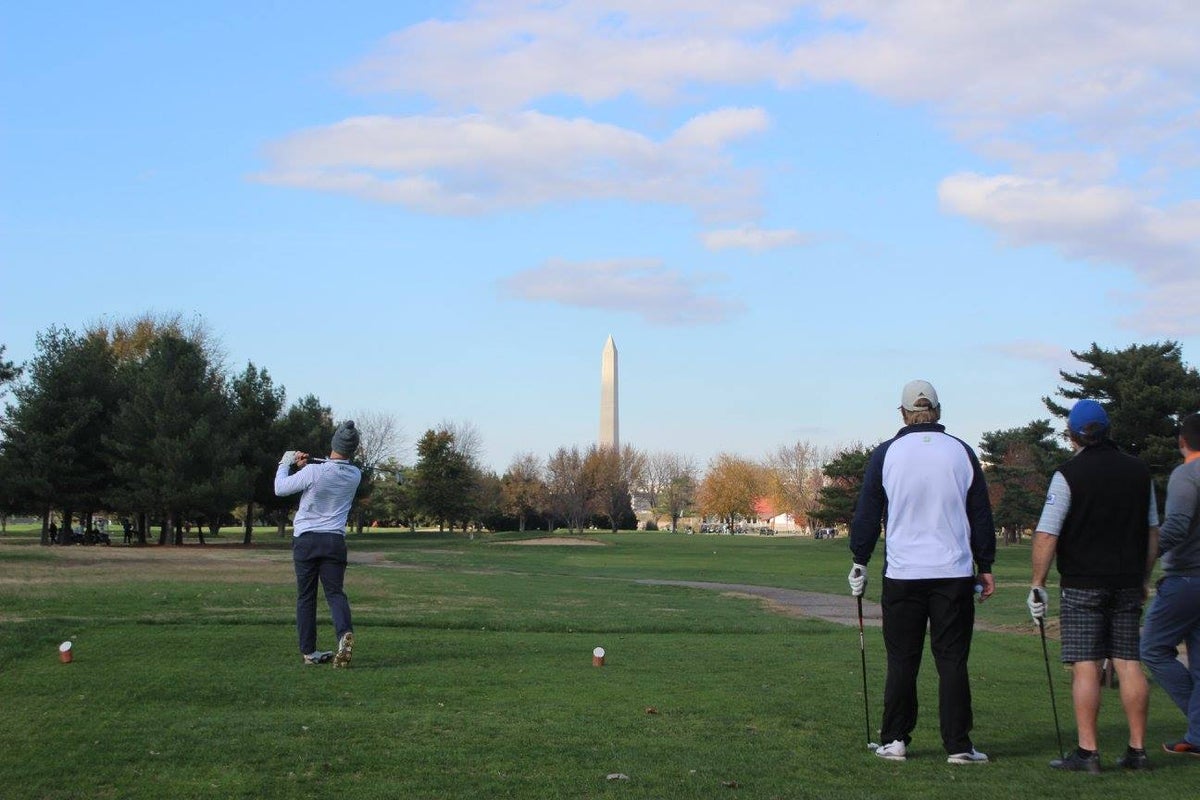
The morning air at a public golf course usually smells like damp grass and cheap coffee. It is a place of sanctuary for the weekend warrior, the retiree looking for a bit of sun, and the kid learning that a straight drive is a rare gift from the gods. But recently, a different scent has begun to drift over the fairways of certain public lands—the acrid, metallic tang of a construction site that doesn't belong.
In a world of velvet ropes and gold-plated fixtures, the Mar-a-Lago ballroom project was meant to be the pinnacle of luxury. However, luxury has a messy underside. While the elite clink glasses in renovated halls, the skeletal remains of the old walls have found a new, unceremonious home. They aren't in a hazardous waste facility. They aren't in a secured landfill. They are sitting in the dirt where everyday people spend their Saturday mornings.
The Weight of What We Discard
When you tear down a wall in a historic or high-end estate, you aren't just moving drywall. You are unearthing decades of chemical history. Old paint layers hide lead. Insulation fibers hold onto asbestos like a toxic grudge. Electrical components leak PCBs. In the industry, this is known as "construction and demolition debris," a sterile term for a cocktail of materials that require precise, expensive disposal methods.
The reports filtering out regarding the dumping at the West Palm Beach golf course suggest a shortcut was taken. Imagine a fleet of trucks moving under the cover of routine maintenance, carrying the pulverized remains of a billionaire’s ballroom. Instead of paying the high fees required to process toxic material, the debris was allegedly integrated into the landscape of a public facility.
Consider a hypothetical golfer named Arthur. He’s seventy-two, has a bad knee, and plays nine holes every Tuesday. He doesn't know that the mound of "fill dirt" near the fourth green contains lead-based paint chips from a world he will never enter. He doesn't see the microscopic dust settling on his shoes. To Arthur, it’s just a renovation project. To the environment, it is a slow-motion invasion.
The Invisible Ledger
There is a specific kind of arrogance in the belief that the public commons can serve as a private trash can. It is a redistribution of cost. By avoiding the fees of a certified waste site, the project saves money. That saved money stays in private pockets, while the cost—the actual, physical cost of environmental degradation and potential health risks—is billed to the public.
We often talk about "externalities" in economics. It sounds like a boring, academic concept. But an externality is exactly what happens when the poison from a private party ends up in a public park. It is the shifting of a burden from those who can afford to carry it to those who have no choice but to live with it.
The stakes are not just about a few piles of rubble. They are about the integrity of the soil and the water table that sits beneath it. Florida’s geography is a porous thing. The limestone beneath the grass acts like a sponge. When you dump heavy metals and toxic particulates onto the ground, you aren't just creating an eyesore. You are injecting a toxin into the circulatory system of the local ecosystem.
The Geography of Neglect
Why a public golf course? Because it is hiding in plain sight. These spaces are often underfunded and desperate for "improvements." A gift of free fill dirt can look like a blessing to a park manager trying to level a fairway on a shoestring budget. It is a predatory kind of generosity.
The contrast is staggering. On one side of the city, there is a ballroom gleaming with fresh paint and polished marble, a monument to a specific brand of American opulence. On the other side, the discarded skin of that ballroom sits in the rain, leaching into the grass where children walk.
This isn't just a failure of regulation. It is a failure of empathy. To see a public space and view it as a convenient hole in the ground requires a total detachment from the community. It suggests that the people who use that course—the Arthurs of the world, the high school golf teams, the families out for a walk—are less important than the profit margin of a construction budget.
The Persistence of Dust
The problem with toxic debris is that it doesn't stay still. It moves with the wind. It travels with the rain. It hitches a ride on the tires of maintenance golf carts. Once the "ghost" of the old ballroom is let out of the bag, you can't just put it back.
If you’ve ever stood on a dry golf course when the wind picks up, you’ve seen the fine silt rise from the bunkers and the bare patches of earth. Now, imagine that silt is laced with the remnants of a mid-century renovation. You breathe it in. It settles on your skin. It becomes a part of you.
We like to think of our lives as separate from the structures we build, but we are intimately connected to the materials of our environment. When a developer decides that the rules for waste disposal are suggestions rather than mandates, they are making a medical decision for every person in the vicinity.
The Cost of Looking Away
Local authorities are now faced with a grim task. They have to determine the extent of the contamination, which means digging up the very ground they were supposed to be improving. It is a double cost: the cost of the original deception and the cost of the eventual cleanup.
The irony is thick enough to choke on. The very people who pay taxes to maintain public lands are now the ones who will likely foot the bill for the remediation. It is a cycle of exploitation that relies on the hope that no one is paying attention.
But people are paying attention. The silence of the fairways has been broken by the sound of soil samples being taken and reports being filed. The "luxury" of the Mar-a-Lago ballroom has been revealed for what it is: a gleaming facade built on a foundation of discarded responsibility.
The next time you walk through a public park or stand on a local green, look at the mounds of earth. Look at the way the grass grows—or doesn't. We are living in the leftovers of a gilded age, and the dust is starting to settle in all the wrong places.
The ballroom is finished. The lights are on. The music is playing. And out in the dark, on a public course a few miles away, the rain is falling on the lead-filled ruins of the past, washing the sins of the elite into the common ground we all share.