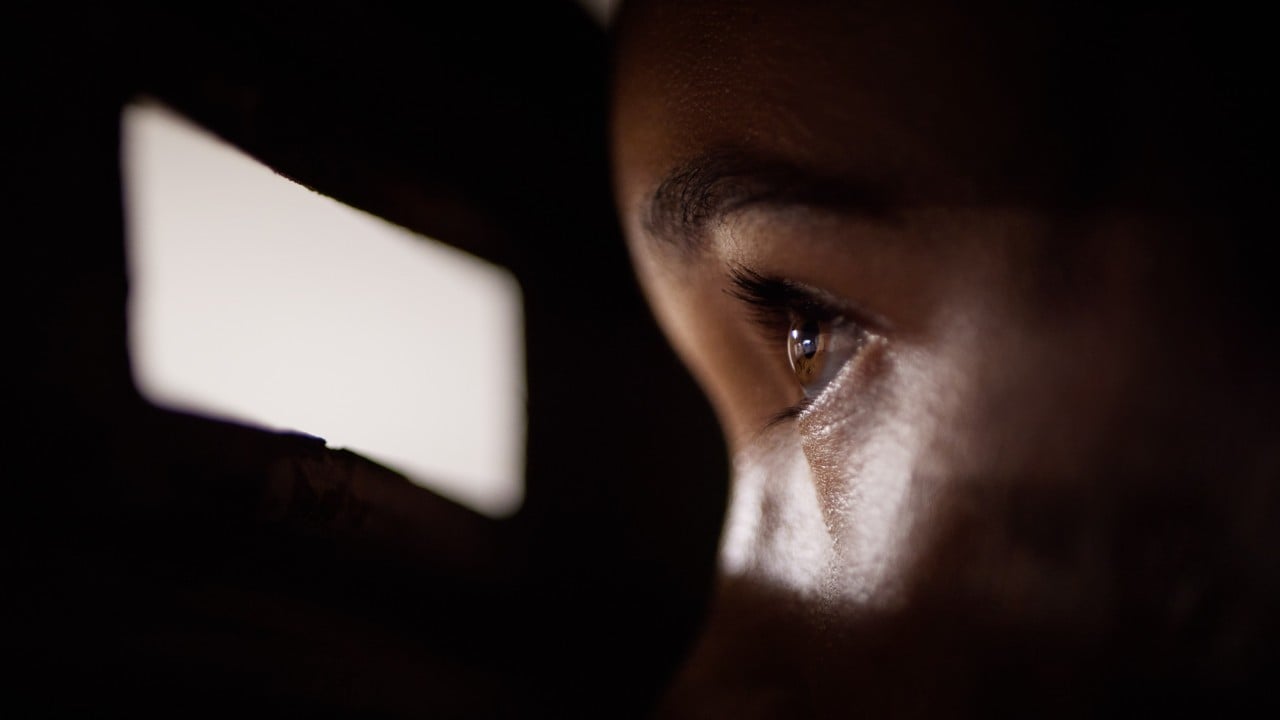
A young woman adjusts her headscarf in the reflection of a shop window on Vali-e-Asr Street. She is not thinking about geopolitics. She is thinking about her dinner plans, the heat of the afternoon, and the slight slip of silk against her hair. She doesn't see the small, dark dome tucked under the eaves of the pharmacy across the street. She doesn't see the way the lens pivots, a mechanical iris tracking the exact moment her hijab falls an inch too far.
In that second, she isn't just a pedestrian. She becomes a data point.
For years, the Iranian government has been weaving a digital shroud over its cities. It started with traffic safety. Then it became "social management." Now, it is a sprawling, interconnected web of Chinese-made cameras equipped with facial recognition software sophisticated enough to pick a single face out of a thousand-strong protest. This is the domestic front—a high-tech panopticon designed to ensure that the state is always in the room, even when the room is a public square.
But there is a secondary life to these images. Data is fluid. It leaks. It is stolen. And in the shadow war between Iran and Israel, the very tools used to suppress a population have been repurposed into a lethal roadmap for assassination.
The Architecture of the All-Seeing
The Iranian authorities didn't build this alone. They bought the hardware from global giants, primarily firms like Hikvision and Tiandy, companies that have perfected the art of "smart" surveillance. These cameras are not the grainy CCTV units of the nineties. They are high-definition, AI-powered observers capable of identifying individuals in low light, through masks, or from the specific gait of their walk.
Imagine a central nervous system where every camera is a nerve ending. When a "person of interest"—perhaps a student activist or a woman flouting mandatory veiling laws—passes a sensor, a silent alert pings a command center. The system doesn't just watch; it catalogs. It builds a pattern of life. It knows where you buy your bread, which bus you take, and whose house you visit at 9:00 PM on a Tuesday.
This was the intended use: absolute internal control. By making the cost of dissent visible and immediate, the state hoped to paralyze the impulse to rebel. If you know the camera sees your face at a protest, you know the knock on the door is coming. The psychological weight of the lens is often more effective than the baton.
The Great Data Breach
The flaw in building a massive, centralized digital infrastructure is that it creates a single point of failure. If you can see everything, so can anyone who picks your pocket for the keys.
Over the last several years, Iranian infrastructure has been hit by a series of devastating cyberattacks. Some were flashy, like the 2021 hack that crippled gas stations across the country. Others were quiet, surgical, and far more dangerous. Intelligence agencies, most notably Israel’s Mossad, realized that they didn't need to put boots on the ground to map out the movements of Iranian IRGC commanders or nuclear scientists.
They could simply ride the back of the Iranian regime's own surveillance cameras.
Consider the 2020 assassination of Mohsen Fakhrizadeh, the country's top nuclear scientist. It wasn't a team of operatives with snipers. It was a remote-controlled machine gun, operated via satellite, that waited for his car to pass a specific point on a quiet road outside Tehran. To do this, the attackers needed more than just a satellite image. They needed his exact timing, his speed, and the unique signature of his vehicle.
The Invisible Marksman
The technology we’re talking about is a double-edged sword that cuts deepest into the hand that holds it. Iranian intelligence agencies built this network to catch their own people. They didn't realize they were building a targeting system for their greatest enemy.
When Israel or its proxies need to track a high-value target in a city like Isfahan or Tehran, they no longer need to tail them with cars. They can tap into the local networks. They can use the same facial recognition algorithms—often the very same Chinese software—to identify their mark. Once the target is tagged, the entire city’s infrastructure becomes a weapon.
One camera tracks the target leaving his apartment. Another sees him enter a grocery store. A third notes the license plate of his black SUV. This creates a "track" that is as precise as a GPS coordinate.
This is the invisible marksman. It doesn't need to be in the country. It only needs to be in the network. The result is a terrifying asymmetry: the Iranian state is watching its citizens, while a foreign power is watching the state watching its citizens.
The Human Cost of Data
For the average Iranian, this is a nightmare of two halves. On one side is the morality police, using the cameras to issue fines and summons for "incorrect" hijabs. This is the daily, grinding erosion of privacy and autonomy. On the other side is the specter of a high-tech war being fought over their heads, using their own streets as a laboratory for remote warfare.
The data being harvested is not just about political loyalty; it's about the fundamental rhythm of human life. When you know where everyone is at all times, the concept of a "safe" space disappears. This isn't science fiction. It is the current reality of urban life in a surveillance state that has been outmaneuvered by its own tech.
But the real problem lies elsewhere. It’s in the assumption that we can build these systems and keep them under our thumb. Technology doesn’t have a side. It doesn't have a flag. It is a tool of pure utility, and its utility is information. If that information is out there, it will be used.
The Mirror of Surveillance
We are seeing a new kind of battlefield emerge. It’s one where the "front line" is a fiber-optic cable and the "soldier" is a piece of code that recognizes a chin or a forehead. This is the future of conflict: a silent, digital hunt where the prey doesn't even know they're being watched until the moment the sky falls on them.
The Iranian regime wanted to build a fortress of glass so they could see everything. They forgot that glass is transparent from both sides.
They wanted to ensure that no one could hide. They succeeded. The only problem is that now, even their own leaders have nowhere left to go.
The woman on Vali-e-Asr Street finishes her dinner and walks home. She doesn't know she's part of a global chess match. She just knows that every time she looks up, there's a camera. She pulls her scarf a little tighter, not out of piety, but out of a reflexive, human need to be invisible. She doesn't realize that the scarf, the street, and her own face have already been archived, indexed, and made ready for a purpose she can barely imagine.
The camera blinks. The lens resets. The data flows.