The rain in The Hague doesn’t fall; it drifts sideways off the North Sea, slicking the massive glass panels of the International Criminal Court. From the outside, the building looks like a hyper-modern fortress of virtue. It was designed to be transparent, a literal architectural metaphor for universal justice. But walk through the security checkpoints today, past the quiet guards and the echoey, polished concrete corridors, and the air feels different. Heavy.
Justice is a grand concept when chiseled into marble. It is terrifyingly fragile when reduced to human bureaucracy.
For over two decades, the International Criminal Court (ICC) has operated on a singular, audacious premise: that the world’s most powerful monsters can be brought to heel by a piece of paper. It is the court of last resort for genocide, war crimes, and crimes against humanity. But right now, the crisis threatening to tear this institution apart isn't coming from defiance by rogue nation-states or warlords hiding in the jungle.
The threat is internal. The architecture is fracturing from within.
Following the unprecedented suspension of its chief prosecutor amid escalating institutional paralysis, the ICC is staring into a black hole of credibility. When the person weaponizing the law is suddenly stripped of power, the entire machine grinds to a halt. The victims waiting in camps from eastern Congo to the shattered borders of Ukraine are left holding a broken promise.
The Weight of the Gavel
To understand how a court suffocates, you have to look at the people who keep the lights on. Not the judges in their flowing robes, but the mid-level investigators, the translators, the legal clerks who spend fourteen hours a day staring at satellite imagery of mass graves.
Imagine a young investigator named Elena. This is a composite of the dedicated professionals currently working under an cloud of profound uncertainty inside the ICC. For three years, Elena has lived out of a suitcase, interviewing survivors of unspeakable atrocities in conflict zones. She has breathed the dust of refugee camps. She has looked mothers in the eye and promised them that their suffering matters, that the international community has a ledger, and that names are being written down.
Elena returns to the pristine safety of The Hague, her hard drive filled with encrypted testimonies, only to find that the political ground beneath her feet has dissolved.
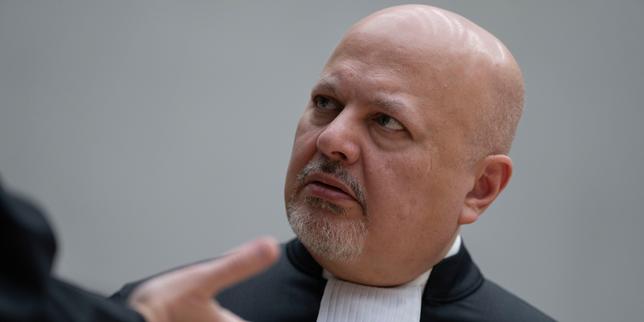
The chief prosecutor—the apex of the legal pyramid, the one individual with the sole authority to sign off on arrest warrants—is gone, suspended under a fog of internal investigations and administrative warfare.
Suddenly, Elena’s spreadsheets mean nothing. The legal filings are frozen. The grand mechanism of international accountability is paralyzed because the bureaucratic gears have jammed. The feeling inside the cafeteria isn't anger; it’s a profound, hollow exhaustion. The institution has turned its gaze inward, obsessed with its own survival, leaving the actual victims of global crimes entirely stranded.
When the Shield Becomes the Sword
The current crisis did not materialize out of thin air. It is the logical conclusion of a fundamental flaw built into the court's DNA: the assumption that international law exists in a vacuum, insulated from politics.
International justice is not like domestic law. If a person robs a bank in Paris, the police arrest them. The court has a monopoly on violence to enforce its will. The ICC has no police force. It has no army. It relies entirely on the moral authority of its mandate and the voluntary cooperation of its 124 member states.
Consider how this fragile system functions. It is a delicate web of diplomatic favors, funding packages, and extradition treaties. When the court targets a leader, it is playing a high-stakes game of geopolitical chess. But when the court's own leadership becomes embroiled in scandal, the entire house of cards collapses.
The suspension of a prosecutor isn't just an HR issue. It is a blood-in-the-water moment for every authoritarian regime that has ever criticized the court. For years, detractors have dismissed the ICC as a neo-colonial tool or a toothless tiger. Now, those same detractors are using the court’s internal civil war as proof that the institution is fundamentally corrupt.
The real tragedy is that the law is being used as a weapon not against criminals, but against the court itself. Internal leaks, whispered allegations in the corridors of The Hague, and strategic administrative delays have effectively decapitated the prosecution. The machinery of accountability has been weaponized to achieve total gridlock.
The Invisible Ledger of Inaction
What does institutional crisis actually cost? It doesn't show up on a corporate balance sheet. It is measured in the silent expiration of arrest warrants that will never be executed.
Every day the court spends defending its own administrative decisions is a day it isn't investigating the leveling of cities or the systematic use of sexual violence as a weapon of war. The budget of the ICC—hundreds of millions of euros contributed by taxpayers worldwide—is being diverted into independent review panels, internal audits, and crisis management public relations firms.
Meanwhile, the docket grows longer. The backlog of preliminary examinations is turning into a graveyard of forgotten conflicts.
But the real problem lies elsewhere. The deepest damage is being done to the concept of deterrence. The entire psychological weight of the ICC relies on the idea that justice is inevitable, even if it takes decades. When a dictator looks at The Hague today, they don't see an inevitable reckoning. They see a bureaucratic labyrinth eating itself alive. They see an institution that cannot even govern its own staff, let alone hold global superpowers accountable.
The deterrence value has dropped to zero. The message being sent to the world's battlefields is terrifyingly clear: if you commit crimes on a massive enough scale, the international system will eventually blink.
The Human Cost of Bureaucratic Silence
Let’s step away from the legal briefs and look at the real world. Six thousand miles from the glass offices of The Hague, a man sits in a temporary shelter, listening to the radio. He lost his entire family to a state-sponsored militia five years ago. He knows about the ICC. He was told that the court was his final chance at seeing the men who destroyed his life face a judge.
He does not understand the nuance of internal regulations, or the specific articles of the Rome Statute governing the suspension of a prosecutor. He only knows that the news from the radio is bad. He knows that the people in Europe are arguing among themselves again.
This is the true cost of the crisis. It is the definitive murder of hope for those who have nothing else left.
The legal community will continue to debate the systemic fixes required to save the ICC. Experts will publish white papers on reforming the election process for prosecutors, increasing oversight, and restructuring the internal governance of the court. They will talk about "strengthening frameworks" and "ensuring institutional resilience."
None of that matters to the man listening to the radio.
The rain continues to slide down the glass facade in The Hague, blurring the line between the sky and the cold sea. Inside, the lights stay on late into the night as lawyers draft memos to defend other memos. The building remains beautiful, imposing, and pristine. But the foundation is shifting. If the international community cannot find a way to rescue the court from its own internal paralysis, the grand experiment of global justice will not end with a dramatic confrontation or a defiant veto from a superpower. It will end quietly, buried under a mountain of paperwork, in a room where everyone was too busy defending their own position to notice that the world had stopped watching.



:max_bytes(150000):strip_icc():focal(665x0:667x2)/gettyimages-50733149-2000-8b129a2475974982a915418ce92a73d8.jpg)