The bass from the flatbed trailer vibrates right through the soles of your shoes before you even see the glitter.
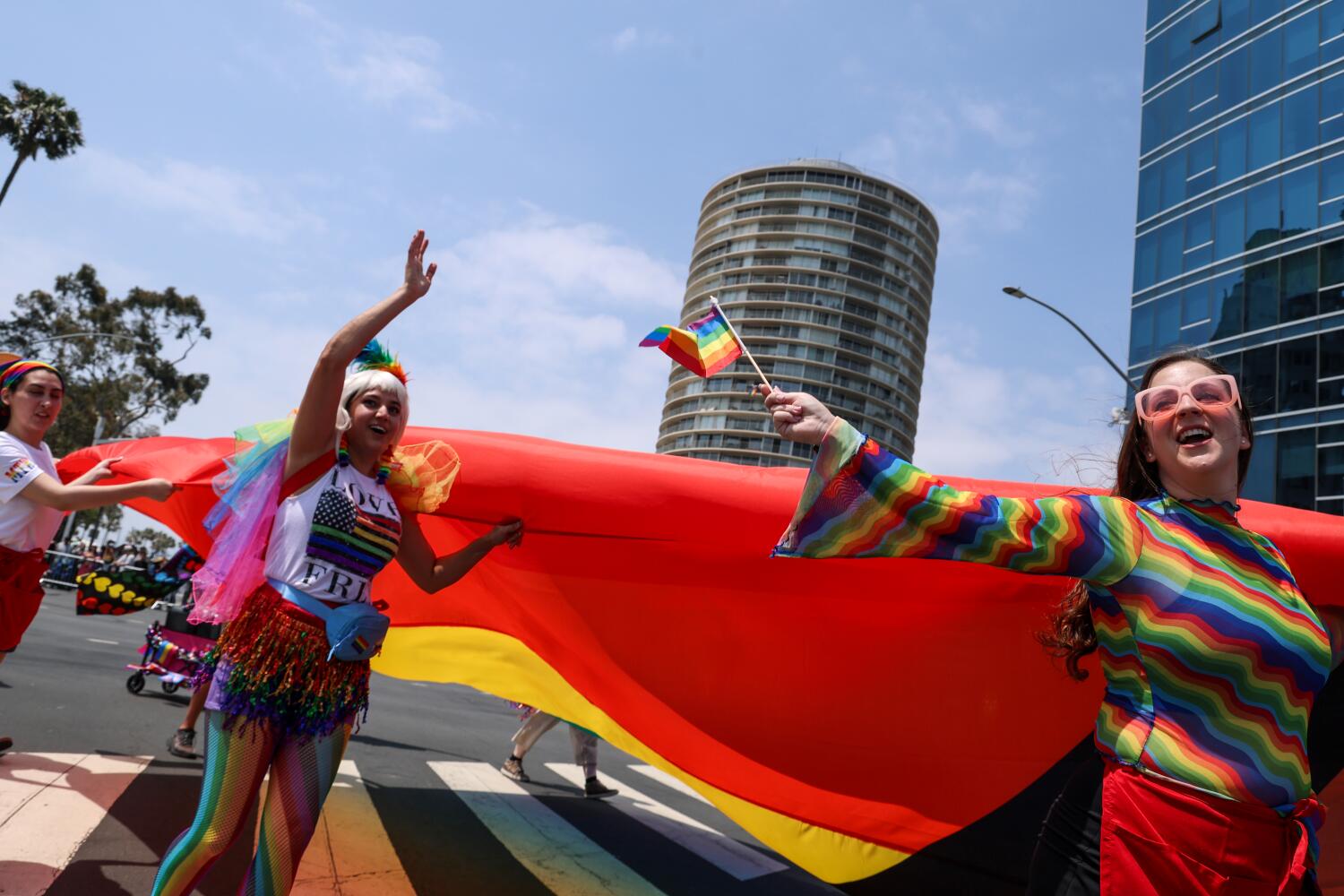
It is a crisp morning in Long Beach, California. Ocean Boulevard is lined four-deep with people who have waited all year for this specific shade of midday sun. When the first dancers move past—all neon fringe, sweat, and unapologetic volume—the crowd roars. A grandmother in a lawn chair waves a miniature rainbow flag. Next to her, a teenager with dyed green hair leans over the barricade, catching a thrown necklace of plastic beads. For a few hours, the street belongs to them. The air smells of street tacos, sunscreen, and the salty, sharp breeze blowing in from the Pacific. For a more detailed analysis into this area, we suggest: this related article.
It feels like a victory. It looks like a sanctuary.
But if you step back from the barricade and walk just a few blocks down toward Marina Green Park, the music begins to fade. The crowd thins out. The vibrant noise of the parade collapses into a strange, heavy silence. Where there should be a massive festival stage, food trucks line-ups, and thousands of people dancing under the coastal sky, there is only an empty field. Chain-link fences block off the grass. A lone security guard sits on a folding chair, watching a stray wrapper tumble across the dirt. To get more background on this development, in-depth analysis is available on Reuters.
The contrast is dizzying. The morning was a triumph; the afternoon is an eviction.
This is the reality of Long Beach Pride this year. The historic parade marched on, filled with its usual defiance and joy, but the massive two-day festival that traditionally serves as the heartbeat of the celebration was abruptly canceled. To understand how a community can simultaneously throw the party of the year and find itself locked out of its own house, you have to look past the tinsel. You have to look at the ledger sheets, the broken promises, and the quiet erosion of spaces that took decades to build.
The Anatomy of an Empty Field
To appreciate what an empty park means, you have to understand what it feels like when it is full.
Let us look at Marcus. Marcus is a hypothetical composite of three different business owners who have set up booths at Long Beach Pride for the last fifteen years. For Marcus, the festival is not just a weekend of high sales; it is the financial anchor for his entire year. He sells custom apparel—t-shirts with slogans that celebrate queer identity, handmade jewelry, and art prints.
In a normal year, Marcus spends five months preparing for this weekend. He buys inventory, hires extra help from local queer youth who need short-term employment, and maps out his booth layout down to the inch. The revenue from these two days pays his commercial rent through the slow winter months. It allows him to keep his brick-and-mortar shop open on Broadway, the historic heart of the city’s LGBTQ+ community.
When the festival was canceled just weeks before the gates were set to open, Marcus was left holding ten thousand dollars in specialized inventory.
"The parade is beautiful," he says, staring at a stack of boxes in his garage. "But you cannot sell art to someone walking at three miles per hour down Ocean Boulevard. The festival is where we sit down. It is where we talk, where we connect, where we spend money that stays right here in the neighborhood. Without the festival, the parade is a movie trailer for a film that got canceled."
The official explanation from the organizers cited rising production costs, logistical hurdles, and a sudden shortfall in corporate sponsorships. It is a familiar refrain in the post-pandemic world. Everything costs more. Security is more expensive. Insurance premiums have skyrocketed. Permits require more red tape than ever before.
But to the people who rely on this space, those explanations feel cold. They feel like corporate code for a failure of stewardship. Long Beach Pride has been a cornerstone of the Southern California community since 1984. It survived the darkest years of the HIV/AIDS epidemic. It survived economic recessions. To see it stumble now, in an era where LGBTQ+ visibility is supposedly at an all-time high, feels like a betrayal of history.
The Invisible Infrastructure of Belonging
There is a common misconception that Pride events are purely celebratory—that they are just an excuse to wear rhinestones and dance in the street.
That view misses the entire point.
For a teenager growing up in an unsupportive household in the Inland Empire or a rural pocket of the state, the Long Beach festival is often the first place they see an older version of themselves living happily. It is a massive, sprawling laboratory of human validation.
Consider the structure of the festival grounds. It is never just a dance floor. There is always a health pavilion where local clinics offer free, anonymous HIV testing and monkeypox vaccinations. There are booths for legal aid organizations specializing in transgender rights. There are tables covered in pamphlets for youth shelters, addiction recovery groups, and senior housing initiatives.
When you cancel the festival, you do not just cancel the headlining pop star. You dismantle the largest physical directory of social services these communities have access to all year.
The human cost of that loss is impossible to quantify. A kid might walk into that park looking for a funnel cake and walk out with a phone number for a crisis hotline that saves their life three months later. An older lesbian who has felt isolated since her partner passed away might sit at a picnic table and meet a group of peers who invite her to a weekly coffee meetup.
These are the invisible stakes. This is what vanishes when the gates stay locked.
The anger simmering along the parade route this year was not born out of a desire for entertainment. It was born out of grief for a lost temporary home. As the floats moved down the street, many attendees held signs that read Save Our Festival and Where Did the Money Go? The joy of the parade was real, but it was laced with an undeniable undercurrent of outrage. The community felt showcased, but not supported.
The High Cost of Corporate Sunset
For decades, the narrative of Pride has been one of increasing corporate acceptance. Major banks, global airlines, and multinational beverage companies competed for the loudest, brightest floats in the parade. Their logos were plastered across festival stages.
But corporate affection is notoriously fickle. It operates on a quarterly clock, tied strictly to market research and risk aversion.
In recent years, as political rhetoric surrounding LGBTQ+ rights has grown increasingly polarized, some major brands have quietly stepped back. They have scaled down their sponsorships, adjusted their marketing budgets, and retreated to safer, less controversial territory. When the political winds get rough, the corporate banners are the first things to be taken down.
This leaves local organizations in a brutal predicament. If an event has grown reliant on massive corporate checks to cover the soaring costs of modern city permits and security, what happens when those checks stop coming?
The answer is visible on the empty grass of Marina Green Park.
The mistake, perhaps, was allowing a community institution to become so dependent on outside validation in the first place. Long Beach Pride began as a grassroots rebellion. In its early years, volunteers painted signs by hand, local bars chipped in to buy kegs, and the entire operation was run on sweat and survival instinct. It was small, it was gritty, and it belonged entirely to the people who built it.
Over the decades, as the event grew into a multi-million-dollar production, the power shifted. The grassroots gave way to boards of directors, marketing consultants, and high-priced event coordinators. The celebration became an industry. And like any industry, it proved vulnerable to market fluctuations.
"We traded our independence for production value," says Elena, a longtime activist who marched in the 1985 parade when counter-protesters threw rocks from the sidewalks. "We wanted the big stages and the famous singers. We thought it meant we had made it. But now we see that when the big money leaves, we are left with nothing but an empty park. We forgot how to build things from the ground up."
The Street Belongs to the Feet
The sun begins its slow descent over the Pacific, casting long, amber shadows across Ocean Boulevard. The parade is over. The street sweepers are already moving in, their giant rotating brushes clearing away the mountain of discarded confetti, crushed soda cans, and stray feathers.
The corporate floats have parked. The executives have gone back to their hotels.
But something interesting happens as the official event ends. The people do not leave.
Denied a festival park, the crowd spills into the surrounding neighborhoods. They pack into the small, queer-owned bars along Broadway. They gather on the sidewalks outside of taco stands. Someone sets a Bluetooth speaker on top of a trash can, and suddenly thirty people are dancing on a street corner, their laughter echoing off the brick walls of an apartment building.
They are creating their own festival on the asphalt.
It is a stubborn, beautiful display of resilience. It proves that the spirit of the community does not require a ticket or a wristbands to exist. It cannot be canceled by a cash shortfall or a logistical failure. The desire to gather, to be seen, and to hold space for one another is an elemental force that refuses to be contained by a chain-link fence.
Yet, this spontaneous joy should not absolve the organizers of their failure. The street corner is a beautiful protest, but it cannot provide a free health screening. It cannot offer a safe space for a vulnerable teenager who needs a structured environment to feel secure. It cannot help Marcus pay his commercial rent.
The bittersweet nature of this year's celebration leaves Long Beach at a critical crossroads. The community has shown that its heart is still beating, loud and clear. But the institutions designed to protect and celebrate that heart have broken down.
As the twilight deepens and the neon signs of the bars flicker to life, the music continues to play from that small speaker on the trash can. The dancers keep moving, their silhouettes sharp against the darkening sky. They have survived worse than an empty park. They will rebuild what was lost, because they have no other choice. But the memory of the empty field will linger long after the last drop of glitter is swept from the street.