The scent of melted asphalt always comes first. Long before the bass from the flatbed trucks starts to rattle the windows of the local coffee shops, the heat of a June morning in Los Angeles bakes the street into a giant canvas. If you stand at the corner of Hollywood and Highland early enough, the silence is almost eerie. A lone street sweeper hums in the distance. The faded pink stars of the Walk of Fame sit quietly underfoot.
Then, the first drop of glitter hits the pavement.
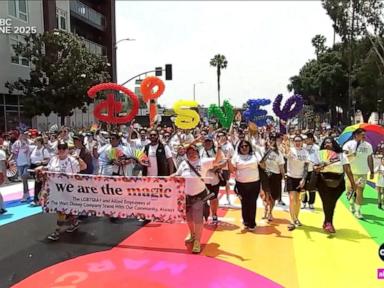
To the casual observer watching a thirty-second news preview on a phone screen, the Los Angeles Pride Parade looks like a monolith of pure celebration. It is a kaleidoscope of rainbows, corporate logos, stilt-walkers, and deafening pop music. It looks effortless. It looks like a party that simply materialized out of thin air because the calendar turned to June.
But parties do not require city permits for thousands of marchers. Parties do not draw over a hundred thousand people to line the barricades. What happens on these streets is something else entirely. It is a living, breathing ritual, a hard-fought claim on public space that started decades ago when merely standing on this pavement with your hand held out to the person you loved could get you thrown in the back of a police cruiser.
Consider Maya. She is a hypothetical composite of the dozens of college students who volunteer every year to string garland across the sides of the community floats, but her nervous energy is entirely real. Her hands are stained with purple dye. It is her first time attending, let alone organizing. She keeps checking her watch, worried the sound system will fail, worried the crowd won't show, worried that the world outside this designated route is getting colder, not warmer.
Maya’s anxiety is the hidden engine of the entire event. The preview clips on the nightly news never show the Mayas of the world checking the zip-ties on a banner at four in the morning. They show the peak of the crescendo, not the quiet, grueling work it takes to build the mountain.
The geography of this march is no accident. For years, the parade took a detour, migrating to the relative safety of West Hollywood, an incorporated city that carved out a sanctuary for the LGBTQ+ community. West Hollywood was a haven of sidewalk cafes and rainbow crosswalks, a place where the shield of local government offered a collective sigh of relief. But a few years ago, the march made a deliberate, conscious decision to return to its roots.
Back to Hollywood Boulevard. Back to the grit. Back to the place where the very first permitted Pride parade in the world took place in 1970.
That first march was not an exercise in corporate sponsorship. It was an act of defiance organized by activists Christopher Larkin, Bob Humphries, and the Reverend Troy Perry. The police chief at the time, Tom Reddin, famously remarked that he would rather grant a permit to a pack of thieves than to the organizers of a homosexual march. The police commission tried to saddle the organizers with exorbitant fees—demanding hundreds of thousands of dollars in modern currency for police protection and insurance. The courts had to step in. The marchers had to fight just to walk.
When you understand that history, the current preview of the parade changes entirely. The massive floats sponsored by tech giants and local supermarkets are no longer just commercial symbols; they are the bizarre, complicated evidence of a cultural shift. The presence of city officials waving from the backs of convertibles is not just a photo-op; it is a stark contrast to a past where those same offices actively engineered the erasure of the people on the street.
The transition from a protest to a celebration is never clean. It is messy. It causes friction.
Many older regulars who remember the raw edge of the early days look at the current sea of matching corporate t-shirts and feel a pang of alienation. They wonder if the soul of the movement was traded for a spot in a prime-time broadcast. They look at the barricades and see a barrier, not a protection.
Conversely, younger attendees look at the massive crowds and see a validation they desperately need. For a teenager who drove two hours from a conservative suburb in the Inland Empire, stepping off the metro into a crowd of a hundred thousand people who are cheering for their right to exist is a transformative shock to the system. It is the moment they realize they are not isolated. They are part of an ocean.
The magic of the Los Angeles parade lies in this uncomfortable, beautiful collision of generations and intentions. It is a place where a seventy-year-old veteran of the Stonewall era can stand shoulder-to-shoulder with a sixteen-year-old wearing their first rainbow cape, neither fully understanding the other's world, but both sharing the same strip of sun-baked asphalt.
As the midday sun hits its peak, the music finally drops. The bass creeps up through the soles of your shoes before you even hear the melody. The crowd responds instantly, a collective roar that ripples down the boulevard, bouncing off the brick facades of historic theaters and the glass fronts of new luxury developments.
The floats begin to roll.
There is a specific art to watching a parade from the pavement. If you look only at the center of the street, you see the spectacle. If you look at the faces in the crowd, you see the story. You see the parents holding signs offering free hugs, their arms growing tired but refusing to drop. You see the couples holding hands with a grip so tight their knuckles turn white, a quiet assertion of safety in numbers. You see the tourists who stumbled out of their hotels looking for the Chinese Theatre, completely bewildered, slowly catching the rhythm and starting to clap along.
This is the antidote to the dry logistics of traffic closures and transit detours that dominate the local news updates. The city closes the streets not to inconvenience drivers, but to allow a community to breathe. For a few hours, the car-centric, fragmented reality of Los Angeles evaporates. The city becomes a pedestrian village, unified by a singular, loud, unapologetic heartbeat.
By late afternoon, the energy shifts. The major television crews pack up their tripods. The headliners finish their sets. The grand marshals step down from their rides to nurse their blisters.
What remains is the debris of a beautiful chaos. Discarded hand-fans, empty water bottles, and feathers from dozens of feather boas drift across the lanes like tumbleweeds in a neon desert. The street sweepers wait at the edge of the perimeter, their yellow lights flashing patiently, ready to reclaim the boulevard for the evening commute.
But the glitter sticks.
Anyone who has ever tried to clean up after a major event knows that glitter is permanent. It wedges itself into the cracks of the sidewalk. It hides in the grooves of the pavement. Weeks from now, long after the banners are stored in warehouses and the extra transit trains have returned to their normal schedules, a commuter rushing to catch the bus at Hollywood and Vine will look down and see a single, metallic green speck catching the California sun.
That speck is a receipt. It is proof that for one afternoon, the stories mattered more than the statistics, the people outweighed the politics, and a community took a piece of the city and made it theirs. The parade is never just a preview of a weekend event. It is a reminder of what happens when people refuse to be invisible, standing together on the hard, hot ground, waiting for the music to begin.