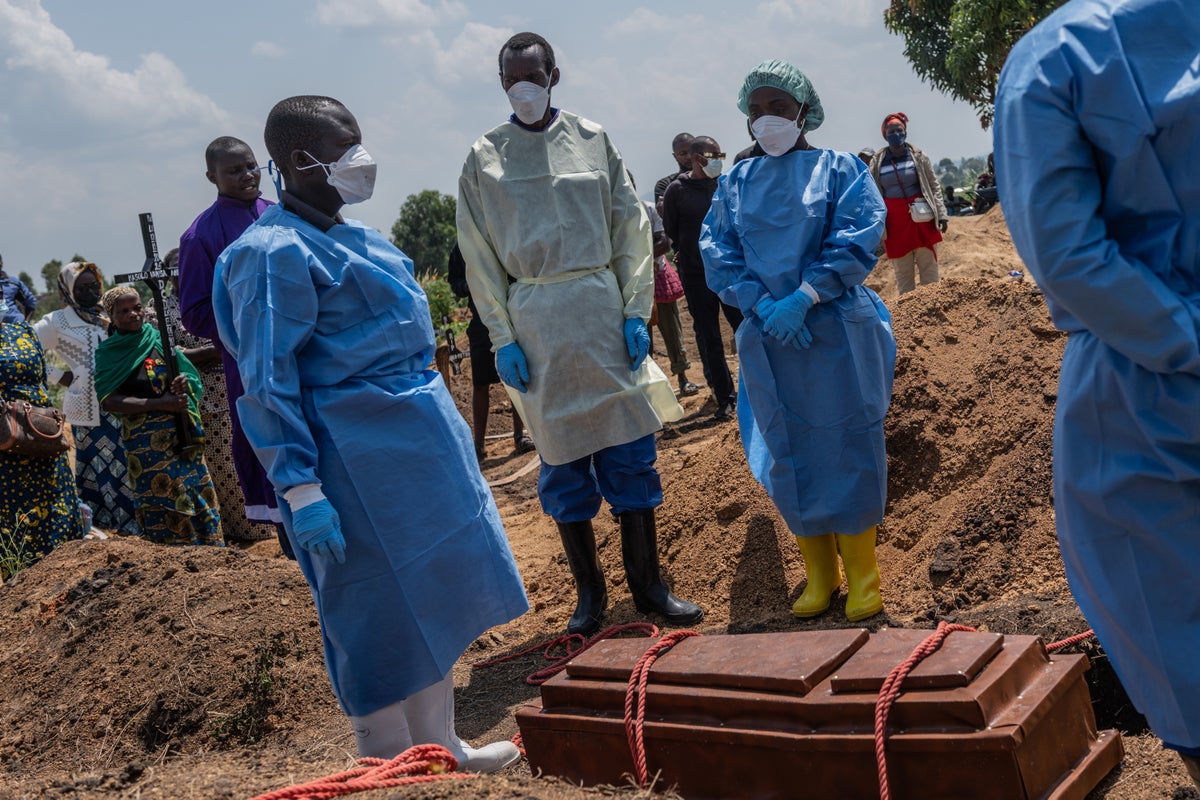
The headlines write themselves. A six-month-old infant dies in a Congolese orphanage, and Western media immediately spins a narrative of an unstoppable plague ripping through vulnerable populations. It invokes a familiar, comfortable pity. It drives clicks.
It is also completely wrong.
When mainstream outlets hyper-focus on Ebola outbreak narratives in the Democratic Republic of Congo (DRC), they are not just misreporting; they are actively distorting global health priorities. Focusing on Ebola as the primary threat to Congolese children is like worrying about a lightning strike while standing in a burning building. It ignores the structural reality of public health in central Africa.
We need to stop treating Ebola as an existential boogeyman and start looking at the numbers.
The Math of Misdirected Outrage
Every single child's death is a tragedy, but international health policy cannot be driven by optics. It must be driven by data.
Ebola is terrifying because of how it looks. It causes hemorrhagic fever, it has a high case-fatality rate, and it makes for dramatic television. But in terms of sheer numbers, it is a rounding error in the DRC’s annual mortality statistics.
Consider the actual threats to a six-month-old child in Goma or Kinshasa.
According to data from the World Health Organization and UNICEF, the real killers of Congolese children are mundane, predictable, and entirely preventable:
- Measles: In recent years, measles outbreaks in the DRC have quietly claimed thousands of children's lives—far outstripping the death toll of any concurrent Ebola outbreak.
- Malaria: A constant, unrelenting tax on youth. Malaria remains one of the leading causes of under-five mortality in the region.
- Malnutrition and Diarrheal Diseases: Driven by poor sanitation and lack of clean water, these conditions kill dozens of children for every one lost to an exotic virus.
When an Ebola case hits an orphanage, the international community floods the zone with specialized isolation units, experimental therapeutics, and high-ranking bureaucrats. Meanwhile, the clinic down the street runs out of standard rehydration salts and basic antibiotics.
This is not effective resource allocation. It is crisis theater.
The Orphanage Industrial Complex Meets Viral Panic
I have spent years analyzing health infrastructure delivery in conflict zones. If you want to understand why a virus spreads in an orphanage, you don't look at the virus. You look at the supply chain and the institutional design.
Orphanages in eastern DRC do not exist in a vacuum. They are often underfunded, overcrowded transit hubs that operate on the fringes of an broken social safety net. When a pathogen enters these facilities, the vulnerability isn't a failure of viral containment; it’s a failure of basic hygiene infrastructure.
If a child dies of Ebola in an orphanage, the immediate reaction from global donors is to fund "Ebola preparedness training."
What a waste.
Train a worker to wear personal protective equipment (PPE) all you want, but if the facility lacks running water, reliable electricity, or a consistent food supply, that worker cannot maintain a sterile environment. The fix isn't specialized viral intervention. The fix is boring, unglamorous infrastructure.
Dismantling the Premise of the Plague Narrative
Let’s address the standard questions that inevitably pop up whenever these tragic stories break.
Why can't we just eradicate Ebola in the DRC?
The premise of this question is fundamentally flawed. You cannot eradicate a virus that has a robust animal reservoir. Ebola lives in fruit bats and non-human primates. It will always spill over into human populations when economic desperation drives people deeper into the forest for bushmeat or charcoal production.
The goal should not be eradication; it should be resilience. We have highly effective vaccines now, such as Ervebo. The challenge is no longer scientific; it is logistical and political.
Isn't any Ebola outbreak a global security threat?
This is the fear-mongering angle used to unlock Western funding. The truth is that Ebola is actually quite difficult to catch compared to airborne pathogens like influenza or measles. It requires direct contact with bodily fluids of a symptomatic individual. It does not "rip through" communities unless those communities are completely devoid of basic barrier nursing supplies like gloves and soap.
By framing Ebola as an imminent global threat every time a localized cluster occurs, we desensitize the public and misinform donors about where the real dangers lie.
The Cost of the Ebola Premium
There is a dark side to our obsession with exotic diseases. It creates what I call the "Ebola Premium."
International NGOs and local health workers know where the money is. If a local clinic brands itself as an Ebola monitoring post, it gets funding, vehicles, and satellite phones. If it focuses on maternal health and routine immunizations, it gets ignored.
This creates a perverse incentive structure:
- Brain Drain: The best local doctors and nurses leave the general public health system to work for high-paying, short-term Ebola response teams.
- Neglect of Routine Care: During the major 2018–2020 Ebola outbreak in eastern DRC, routine vaccination rates for other diseases plummeted because resources and personnel were diverted. More children died from the resulting measles outbreak than from Ebola itself.
- Community Distrust: When locals see millions of dollars flowing in to fight a disease that affects a tiny percentage of the population, while they still die of dirty water and malaria, they become suspicious. This distrust fuels resistance to medical interventions.
Stop Funding the Panic
If you want to save the next six-month-old child in a Congo orphanage, pull your funding from the specialized Ebola emergency funds.
Redirect those dollars into baseline health systems. Fund the drilling of water wells. Fund the cold chain logistics required to keep standard childhood vaccines from spoiling. Support initiatives that pay local healthcare workers a consistent, living wage so they don't have to chase the circus of international disaster response.
Stop consuming the tragedy porn that weaponizes individual deaths to validate a flawed, reactive global health model. The kid in Goma didn't just die of a virus; they died because the world prefers funding a high-profile war on a pathogen over the quiet, systematic eradication of poverty.