A fisherman named Chen wakes up before the sun in Keelung, his joints aching with the damp salt air that defines life on the edge of the Pacific. He doesn't check the international headlines first. He checks the wind. He checks the tide. But lately, there is a third variable he must calculate before he even unties the lines of his boat: the heavy, metallic rhythm of the horizon.
On a Tuesday that felt like any other, the Ministry of National Defense in Taipei released a brief, clinical update. They recorded six aircraft from the People’s Liberation Army (PLA) and eight vessels from the People’s Liberation Navy (PLAN) operating around the island’s territory within a twenty-four-hour window. To a reader in London or New York, these are just digits. Six and eight. Numbers small enough to forget by lunch.
For Chen, and for the twenty-four million people living on this leaf-shaped island, these numbers are not statistics. They are a pulse.
The Weight of a Shadow
Imagine standing in your backyard while a neighbor circles your fence line with a running chainsaw. They haven't crossed the gate. They haven't shouted a threat. They are simply there, the mechanical whine vibrating in your teeth, reminding you that the barrier between peace and chaos is as thin as a property line.
This is the "gray zone."
It is a state of perpetual almost-conflict. By sending six fighter jets and eight warships, Beijing isn't launching an invasion, but they are conducting a rehearsal. One aircraft crossed the median line of the Taiwan Strait, entering the southwestern Air Defense Identification Zone (ADIZ). In military terms, this is a tactical maneuver to test response times. In human terms, it is a psychological sandpapering.
Every time a radar screen in Taipei blips with a new contact, a chain reaction begins. Young pilots, some barely out of their twenties, are scrambled to their cockpits. They leave half-eaten meals and interrupted phone calls with parents. They bolt toward the sky to play a high-stakes game of chicken at Mach 1. This isn't a movie. There is no soaring soundtrack. There is only the cockpit's cramped heat and the sight of a "neighbor's" wingtip just a few hundred yards away.
The Arithmetic of Attrition
The math of this standoff is brutal. Taiwan’s military must respond to every single incursion. If they don't, the silence is interpreted as a surrender of sovereignty. If they do, they burn fuel. They wear out engines. They exhaust their human capital.
Consider the eight PLAN vessels. A warship is a massive, complex organism of steel and electronics. To keep a fleet at sea is an exercise in staggering logistical expense. By maintaining a constant presence of eight ships around the island, the mainland is effectively "checking the pulse" of Taiwan’s naval readiness. They are waiting for a skip in the beat. They are waiting for a mechanical failure or a tired captain to make a mistake.
This constant friction creates a strange, bifurcated reality for the Taiwanese public. In the night markets of Taipei, the scent of stinking tofu and grilled squid still fills the air. The neon lights of Ximending flicker with the same frantic energy they always have. People argue over the price of eggs or the latest K-pop scandal. Life continues because it must.
Yet, beneath the surface of the mundane, there is a quiet, collective hardening. You see it in the way people discuss the extension of mandatory military service. You see it in the surge of civil defense classes where office workers spend their weekends learning how to apply tourniquets and stop catastrophic bleeding. They are preparing for a day they hope never arrives, triggered by a number that might one day jump from six to six hundred.
The Invisible Stakes
Why does the world care about six planes and eight ships?
The Strait is one of the busiest shipping lanes on the planet. It is the jugular vein of global commerce. If that vein is pinched, the ripples aren't felt just in Taipei or Beijing. They are felt in a car dealership in Ohio that can’t get a microchip. They are felt in a hospital in Berlin waiting for medical components.
But the economic argument is a cold way to look at a warm-blooded problem. The real stake is the right to exist in a specific way.
Taiwan has spent decades building a society that functions on the messy, loud, and beautiful principles of self-determination. It is a place where you can criticize the president, marry who you love, and scroll through an unfiltered internet. When those six planes cross the median line, they aren't just piercing an imaginary boundary in the sky. They are poking at the idea that a small group of people should be allowed to decide their own future.
The pressure is designed to be invisible to the outside observer. If a bomb drops, the world screams. If a ship merely sails, the world yawns. The "gray zone" strategy relies on this boredom. It bets on the idea that eventually, the international community will tire of hearing about "six and eight." It bets on the hope that the Taiwanese people will eventually find the vibration of the chainsaw too exhausting to endure.
The Silence After the Scramble
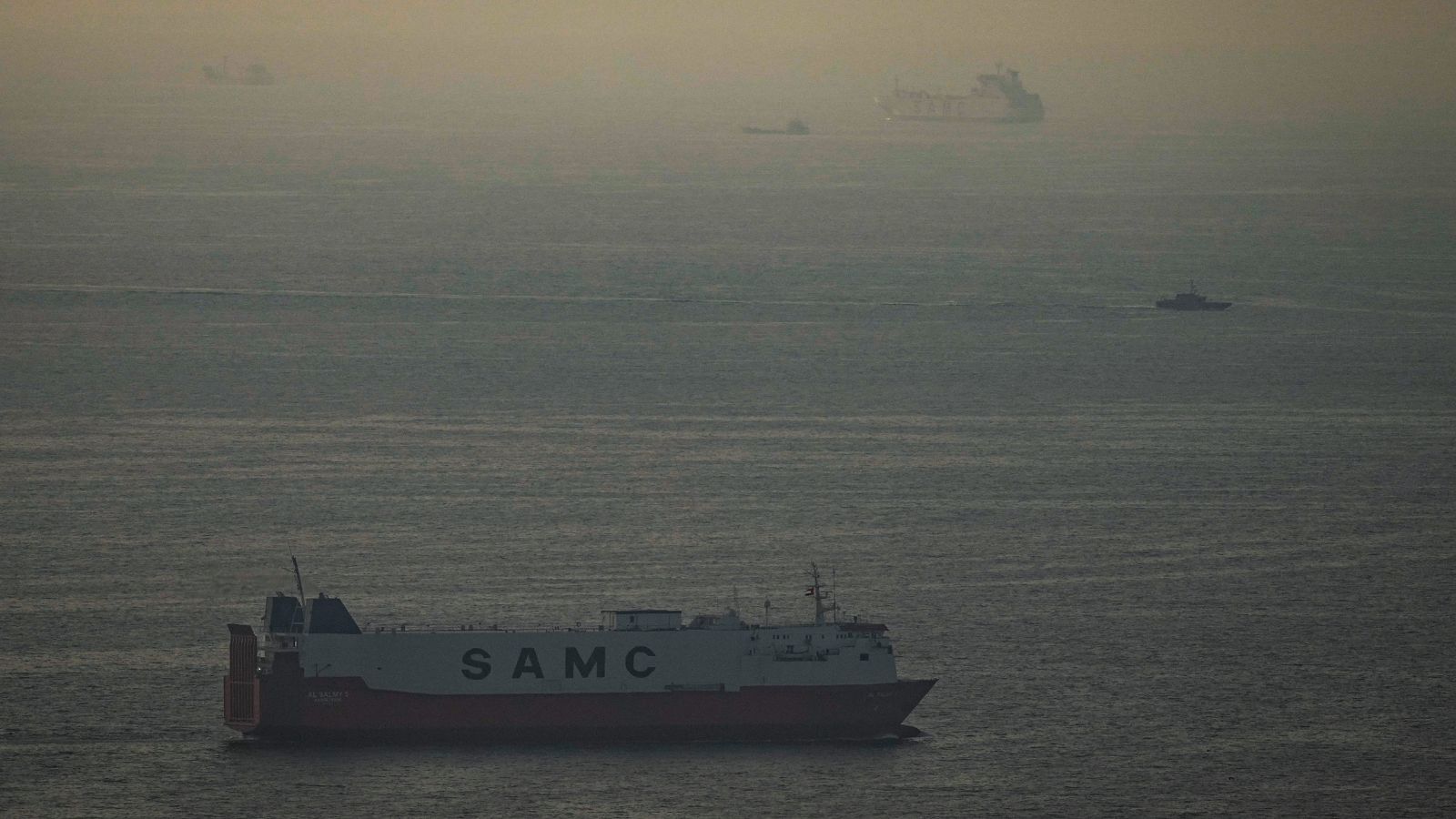
Back in Keelung, Chen watches a gray silhouette on the horizon. It is too far to identify, just a smudge against the transition where the lead-colored sea meets the hazy sky.
He knows that somewhere, in a darkened room lined with monitors, a technician is logging that smudge. It will be added to a spreadsheet. It will be turned into a press release that says "8 PLAN vessels."
The news cycle will move on within hours. There will be a new celebrity trial or a fresh political scandal to dissect. The dry facts of the Tuesday incursion will be buried under a mountain of digital noise.
But for the people on the island, the noise doesn't go away. It is the background radiation of their lives. It is the father looking at his son and wondering if he will have to wear a uniform. It is the tech worker wondering if her stock options are worth anything if the port closes. It is the fundamental uncertainty of living in a house where the neighbor never stops circling the fence.
The numbers aren't the story. The story is the endurance of the people who live within them. Every day that the night markets stay open, every day that the schools remain full, every day that the fishing boats go out despite the smudges on the horizon, is an act of quiet, defiant persistence.
Chen pulls the starter cord on his engine. It sputters, then roars to life, a small sound in a very large ocean. He steers his boat out of the harbor, heading toward the deep water, refusing to let the shadows dictate where he casts his net.
Would you like me to analyze the specific types of aircraft used in these incursions and what their presence reveals about modern electronic warfare?