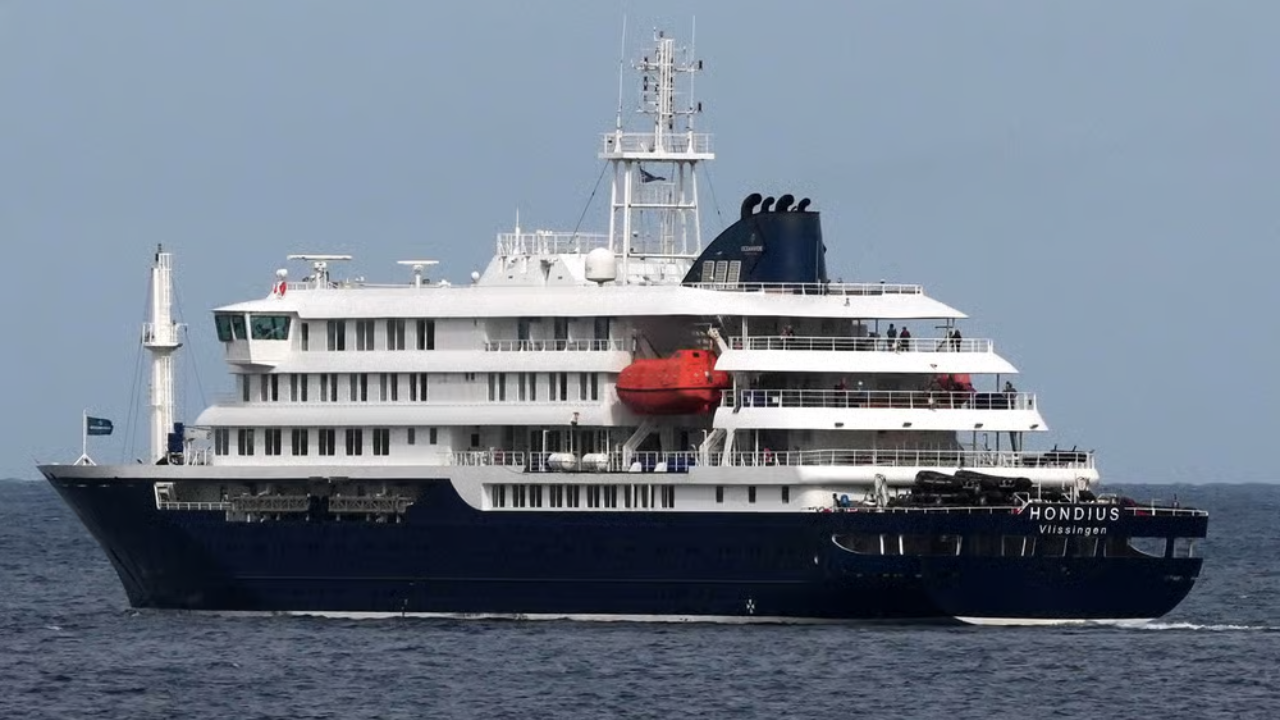
The travel headlines are screaming about a "scare" aboard the MV Hondius. Two British passengers self-isolating. Fears of a Hantavirus outbreak on a polar expedition vessel. The media is doing what it does best: taking a rare, localized medical event and inflating it into a maritime plague narrative. It sells ads, but it makes you a stupider traveler.
If you’re worried about catching Hantavirus on a cruise ship, you don’t understand Hantavirus. More importantly, you don’t understand how risk actually functions in the travel industry. While the press hyper-focuses on two people in a cabin, they’re ignoring the systemic reality of expedition cruising. This isn't a story about a virus; it’s a story about the failure of public health literacy.
The Rodent in the Room
Hantavirus is not COVID-19. It is not the flu. It is not even the dreaded norovirus that usually haunts the buffet lines of mega-ships. To suggest an "outbreak" on a ship like the MV Hondius—a rugged, well-maintained expedition vessel—is to ignore the fundamental biology of the pathogen.
Hantaviruses are primarily spread by contact with the urine, feces, or saliva of infected rodents. Specifically, in the Americas, we worry about the Sin Nombre virus carried by deer mice. In Europe and Asia, different strains exist, but the transmission vector remains the same: you have to breathe in aerosolized droppings or have direct contact with the source.
Here is the reality the breathless reporting misses: Cruise ships, particularly high-end expedition vessels, are some of the most aggressively sanitized environments on the planet. They are not hay barns in rural Montana. They are not abandoned sheds in the Andes. For a Hantavirus "outbreak" to occur on a ship, you would need a sustained, undetected rodent infestation in the ventilation or food storage areas. On a ship that undergoes constant inspection and relies on its reputation for polar safety? That is a statistical absurdity.
The "scare" isn't about the virus. It’s about the optics of isolation.
The Self-Isolation Theater
When you see reports of passengers self-isolating, you aren't seeing a medical necessity. You are seeing a legal and PR maneuver.
I’ve worked in and around the travel logistics industry for over a decade. I’ve seen how "precautionary measures" are deployed. When a passenger reports a vague symptom that aligns with a high-profile keyword—like Hantavirus—the cruise line has two choices:
- Treat it as a standard cold and risk a massive lawsuit if it turns out to be serious.
- Trigger a "containment" protocol that looks impressive to regulators and keeps the lawyers happy.
The MV Hondius situation is a classic example of Choice 2. By isolating these passengers, the operator isn't necessarily stopping a spread—because Hantavirus doesn't spread person-to-person (with the extremely rare exception of the Andes virus strain in South America, which is not the context here). They are performing safety. It’s security theater, but with thermometers.
The Math of Actual Danger
Let’s look at the numbers the "news" won't give you. The CDC and various international health bodies record Hantavirus Pulmonary Syndrome (HPS) cases in the dozens per year, not the thousands. It is a disease of extreme bad luck and specific environmental exposure.
Compare this to the actual risks of a polar expedition:
- Slip and fall injuries on icy decks or during Zodiac landings.
- Cardiovascular stress from extreme cold and physical exertion.
- Norovirus, which actually is highly contagious and can be spread via a single contaminated door handle.
By fixating on Hantavirus, travelers are practicing "availability bias." Because the word sounds scary and the situation feels exotic, they weight the risk far higher than it actually is. You are more likely to be struck by lightning while winning the lottery than you are to contract Hantavirus from a clean cabin on a Dutch-operated expedition ship.
Why the Press Loves a "Scare"
The word "outbreak" is doing a lot of heavy lifting in these articles. An outbreak implies a fire spreading through a building. Hantavirus is more like a single faulty wire in a basement.
The media uses these stories because they tap into the post-2020 collective trauma regarding "quarantine" and "isolation." They know that if they put "British passengers," "isolation," and a "deadly virus" in a headline, you’ll click. They don't care that they are misrepresenting the infectiousness of the disease.
This isn't just lazy journalism; it’s a disruption of the travel economy. When these scares go viral, insurance premiums for operators spike. Nervous travelers cancel bookings. It creates a feedback loop of fear that has zero basis in clinical reality.
The Professional’s Guide to Risk Assessment
If you are planning an expedition or any high-end cruise, stop reading the "scares" and start looking at the mechanics of the ship.
- Vessel Age and Maintenance: Modern expedition ships like the Hondius are built to Polar Code standards. These are high-tech machines, not rusted hulks. The likelihood of a rodent infestation—the only way Hantavirus gets on board—is virtually nil.
- Medical Facilities: Instead of worrying about the virus, look at the ship’s infirmary. Does it have a dedicated doctor? What are the evacuation protocols? You should be more concerned about how they handle a fractured ankle than a one-in-a-million respiratory virus.
- The "Human Factor": The biggest risk on any ship is other people. Not because they are breathing viruses on you, but because their panic can derail your $15,000 trip. The real threat in the MV Hondius case wasn't the virus; it was the potential for the ship to be diverted or the itinerary ruined by administrative overreaction.
The Dirty Secret of Travel Health
Here is the truth nobody admits: The most dangerous part of your cruise was the flight to the port.
Statistically, you were in more danger sitting in the airport lounge, surrounded by thousands of people from different geographic hubs, than you ever were on an expedition ship in the middle of the ocean. But "Man Catches Flu at Heathrow" doesn't get the clicks. "Hantavirus Scare on Cruise Ship" does.
We have reached a point where we prioritize the narrative of the threat over the evidence of the threat. We see two people isolated and we imagine the movie Contagion. We should be imagining two people with a mild cough and a cruise line that is terrified of a Twitter PR disaster.
Stop Being a Victim of the Headline
The "Status Quo" in travel reporting is to assume that every isolated passenger is the harbinger of a pandemic. It’s a boring, repetitive, and ultimately false way to view the world.
If you want to be a savvy traveler, you have to learn to filter the noise. Hantavirus on a cruise ship is noise. It is a statistical anomaly being used as a cudgel to generate engagement.
The MV Hondius is fine. The passengers are likely fine. The only thing that is sick is our inability to distinguish between a genuine public health crisis and a routine precautionary measure.
The next time you see a "virus scare" headline, ask yourself: Is this virus actually capable of doing what the headline suggests? In the case of Hantavirus on a cruise ship, the answer is a resounding no.
Pack your bags. Go to the Antarctic. Stop letting the fear-industrial complex dictate your itinerary.
The real danger isn't the virus; it’s the fact that you almost believed the hype.


