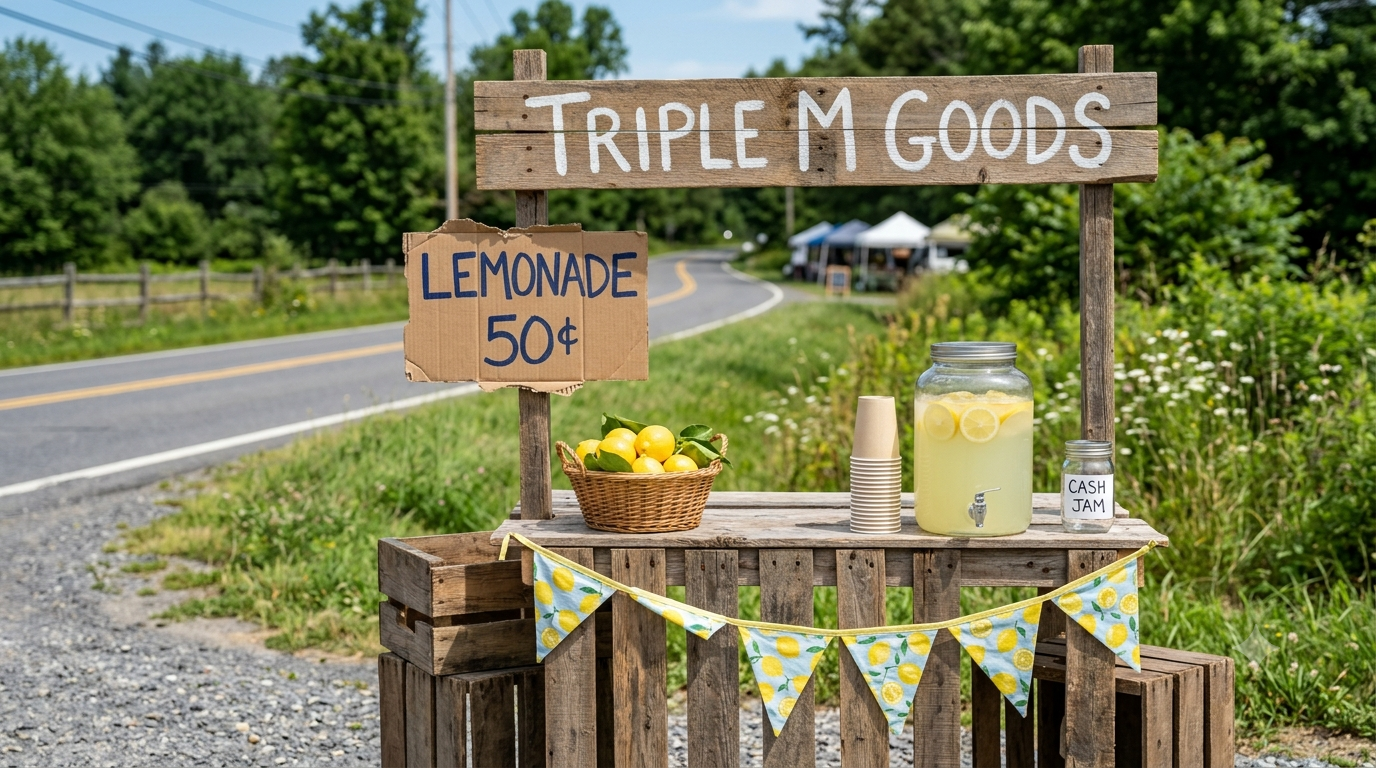
The ice melts fast under a July sun in Michigan. It clinks against the sides of a plastic pitcher, a bright, rhythmic sound that, for generations, has signaled the ultimate symbol of childhood ambition.
Three brothers stood behind a makeshift wooden table. They had a simple plan. Squeeze lemons, stir in sugar, add ice, and pour it into paper cups for fifty cents a pop. It was a lesson in work ethic, a way to earn a few dollars for summer treats, and a harmless neighborhood staple.
Then the clipboard arrived.
It turns out that in the eyes of local bureaucracy, a cardboard sign and a pitcher of citrus juice aren't a childhood rite of passage. They are an unlicensed food establishment operating in direct violation of municipal codes. To keep pouring, the brothers were told they needed permits, inspections, and fees totaling nearly four hundred dollars.
Think about that math. At fifty cents a cup, they would have to sell eight hundred glasses of lemonade just to break even on the paperwork. They hadn't even factored in the cost of the lemons.
This is not just a story about a bureaucratic oversight or a overzealous code enforcement officer. It is a glimpse into a quiet crisis creeping across local communities, where the barrier to entry for the simplest human endeavors is wrapped in layers of red tape.
The Day the Stand Stood Still
When you are young, the world feels wide open. The brothers—running their stand with the kind of chaotic efficiency only siblings can manage—were learning how to count change and talk to neighbors. They were participating in the local economy at its most foundational level.
The arrival of a compliance notice changes things. It introduces a cold, intimidating reality into a space that used to be defined by imagination. The document outlined a dizzying array of requirements. Food service licenses. Temporary vendor permits. Health department clearances.
To a kid, four hundred dollars might as well be a million. The message was clear: shut down, or face the consequences.
Bureaucracy operates on a logic of standardization. It doesn't look at the size of the cup or the age of the person pouring it. It sees a transaction, and where there is a transaction, there must be a regulation. The rules designed to keep massive commercial kitchens safe from outbreaks are applied with the exact same weight to a card table on a suburban sidewalk.
The stand went dark. The pitcher went back into the fridge.
The Invisible Stakes of Small Ambitions
Imagine a neighborhood where every interaction requires a license. If a teenager offers to shovel a driveway for ten dollars, do they need a commercial business registry? If a neighbor bakes an extra loaf of sourdough and trades it for some tomatoes next door, are they violating agricultural codes?
This isn't a hypothetical slippery slope. It is the friction that millions of micro-entrepreneurs face every single day. When we make it impossible for children to test the waters of business, we choke off the exact traits we claim to value: independence, resilience, and resourcefulness.
The brothers could have accepted the shutdown. Most people do. The sheer weight of navigating city hall, filling out multi-page forms, and waiting in lines is designed to make people give up. It is a war of attrition where the weapon is paperwork.
But the brothers decided to ask a simple question. Why?
They started looking into the rules. They talked to their parents, who helped them understand that laws are not written in stone; they are written by people, and people can change them. They discovered that their tiny venture was caught in a net meant for big fish, and the system had no mechanism to let the little ones go.
Pushing Back Against the Paperwork
The fight wasn't loud. It didn't involve protests or dramatic standoffs. Instead, it was a slow, steady insistence that common sense should prevail over rigid compliance.
The brothers took their case to the people who make the rules. They showed up. They explained the absurdity of the math. They made the officials look at the human cost of their regulations. It is easy to enforce a rule when it is just a line in a codebook. It is much harder when you have to look three young boys in the eye and tell them that their summer project is a public hazard.
The community rallied. Neighbors who had bought those fifty-cent cups realized that losing the stand meant losing a piece of what made their street feel like a community. The story began to ripple outward, catching the attention of advocacy groups and lawmakers who recognized that this wasn't an isolated incident. Across the country, similar battles were quietly being fought against regulations that criminalize kids' business ventures.
Consider what happens next when momentum shifts. The pressure forced city officials to re-examine the scope of their ordinances. They had to admit a truth that is often buried under administrative ego: the law was broken, not the lemonade stand.
The Sweet Taste of a Common Sense Victory
The regulations were eventually amended. The brothers won the right to pour their juice without a mountain of debt before their first sale. They created a buffer zone for youth-run businesses, ensuring that future kids wouldn't have to face down a compliance squad just to learn how to run a business.
When the stand reopened, the ice clinked a little louder. The fifty cents a cup tasted a little sweeter.
This victory matters because it reminds us that institutions serve the people, not the other way around. The next time you see a makeshift sign on a street corner, written in crayon or marker, you aren't just looking at a drink for sale. You are looking at a fragile ecosystem of human ambition. It deserves to be protected, not permitted into oblivion.
The brothers didn't just sell lemonade. They taught an entire town how to stand its ground.