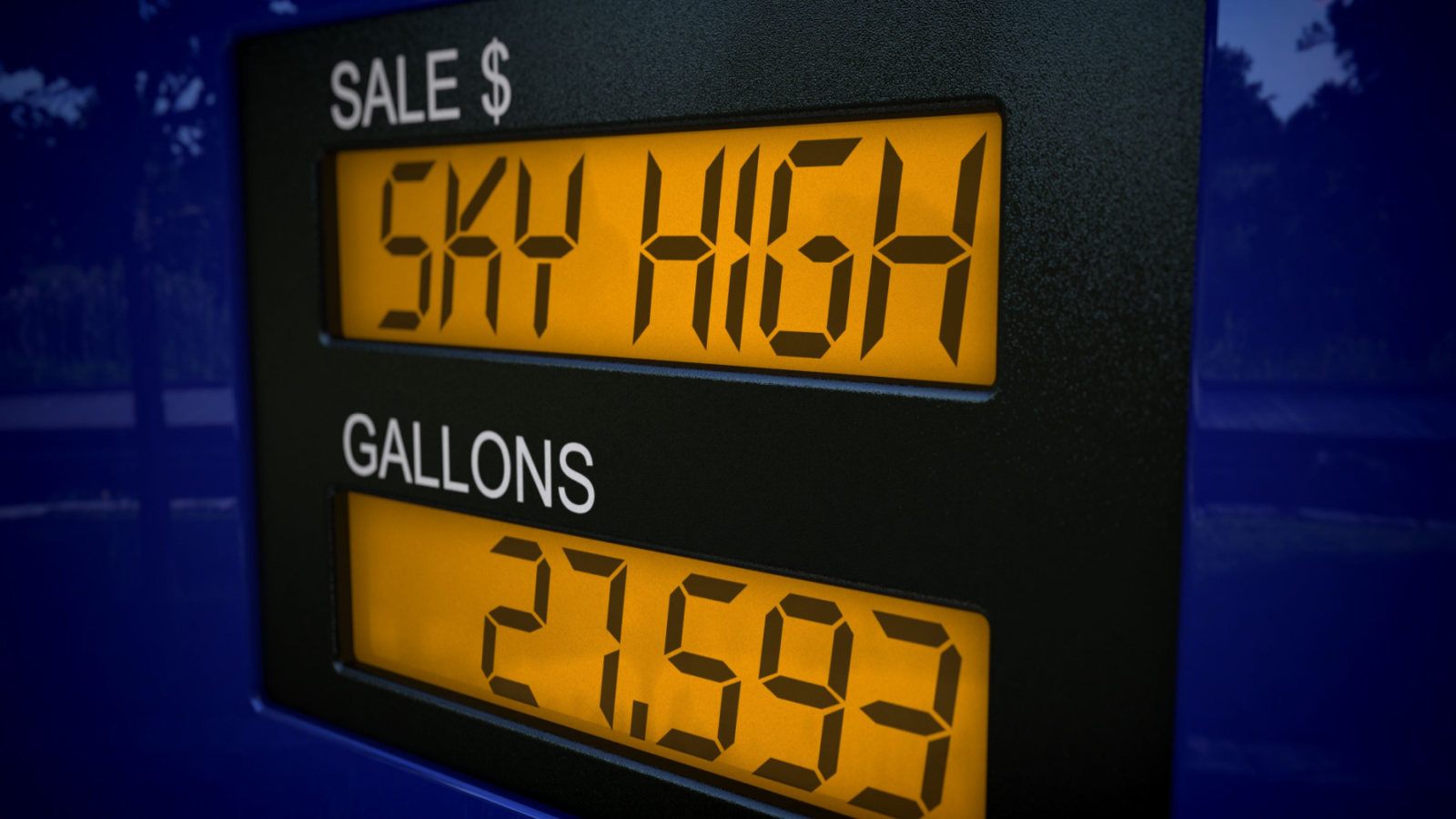
Gas station signs are doing the talking for us. When you see those numbers climb, it isn’t just a hit to your wallet. It’s a signal that the old way of moving around is dying. We’ve seen this movie before, but this time the ending is different. Every time the oil market loses its mind, whether from geopolitical flares or supply chain hiccups, a few more thousand people decide they’ve had enough. They stop looking at internal combustion engines and start looking at plugs.
The volatility of oil isn't a bug in the system. It’s the system itself. Crude prices are a roller coaster that nobody asked to ride, and the electric vehicle (EV) market is the only exit ramp that actually leads somewhere new. We aren’t just talking about a slight shift in consumer preference. We’re witnessing a massive, structural divorce from fossil fuels.
The End of the Gas Price Gamble
The math for the average driver has shifted from "maybe someday" to "right now." When oil prices swing wildly, it creates a sense of profound insecurity. You can’t budget for a 40% jump in your commuting costs over a single month. Electric cars offer something that oil never could: price stability. Even if your local electric utility raises rates, it’s rarely the overnight spike you see at the pump.
Most people don't realize that the "fuel" for an EV is essentially a commodity that can be generated from a dozen different sources. Sunlight, wind, nuclear, or natural gas—it doesn't matter. This diversification acts as a shield. When a pipeline shuts down or a shipping lane gets blocked in the Middle East, the electrons in your home charger don't care. You're effectively decoupled from the chaos of global energy politics.
Why This Spike Is Different from the 1970s
Skeptics love to point to the oil shocks of the past. They’ll tell you that we always go back to gasoline once the heat dies down. They’re wrong. In 1973 or 1979, we didn't have a viable alternative. You could buy a smaller, more fuel-efficient car, but you were still tied to the pump. You were just buying a smaller leash.
Today, the technology is ready. Battery energy density has improved to the point where "range anxiety" is mostly a ghost story told by people who haven't driven an EV in five years. According to data from BloombergNEF, battery pack prices have dropped by nearly 90% over the last decade. We've reached a point where the total cost of ownership for an electric sedan is often lower than its gas-powered equivalent, even without government subsidies.
This isn't just about being green. It’s about being smart. The efficiency of an electric motor is roughly 85-90%, while a gasoline engine wastes about 70-80% of its energy as heat. When you look at those numbers, sticking with oil feels like using a typewriter in the age of fiber-optic internet. It’s clunky. It’s loud. It’s obsolete.
Logistics and the Hidden Force of Fleet Conversion
While individual buyers get the headlines, the real supercharger for this shift is happening in the world of logistics. Amazon, FedEx, and UPS aren't switching to electric delivery vans because they want to save the planet. They’re doing it because it saves them a fortune.
A fleet manager looks at a vehicle as a tool. If that tool costs $0.05 per mile to fuel with electricity versus $0.20 per mile with diesel, the decision is a total no-brainer. These companies are placing orders for hundreds of thousands of units. This demand creates a massive "economies of scale" effect that drives down costs for the rest of us. When the biggest players in the global economy decide that oil is too expensive and too risky, the infrastructure follows. We’re seeing a rapid build-out of charging networks because the big money demands it.
The Geopolitical Survival Instinct
National security is a hell of a motivator. European nations, particularly since 2022, have realized that relying on imported oil and gas is a massive strategic liability. It’s a leash that can be pulled by hostile regimes at any moment. The push for EVs is now a matter of sovereign defense.
When a country invests in its own power grid and switches its transport sector to electricity, it’s effectively "onshoring" its energy production. You can’t "import" wind or sun from a dictator. This realization is accelerating policy changes faster than any environmental treaty ever did. We’re seeing bans on the sale of new internal combustion engines in places like the UK and various EU states, not just because of carbon targets, but because they want energy independence.
The Charging Infrastructure Myth
You’ll hear people complain that there aren’t enough chargers. It’s a common talking point, and it’s increasingly out of date. While the US still has "charging deserts," the growth rate of DC fast-charging stations is explosive. Tesla’s opening of its Supercharger network to other brands was a massive moment. It basically turned the most reliable charging system in the world into a public utility.
Most people do 90% of their charging at home anyway. If you have a plug in your garage, you have a gas station in your house. The convenience of never visiting a grimy pump again is a lifestyle upgrade that people don't fully appreciate until they experience it.
The Myth of the Dirty Battery
Let’s address the elephant in the room. You’ll often hear that EV batteries are just as bad for the environment because of mining. It’s a popular "gotcha" for people who want to keep their V8 engines. While lithium and cobalt mining have real environmental and human rights costs that need to be managed, the "equivalence" argument is total nonsense.
An internal combustion engine burns thousands of gallons of fuel over its life. That fuel is gone forever, leaving behind toxic exhaust. An EV battery is a circular asset. At the end of its life in a car—usually 10 to 15 years—it can be used for stationary grid storage or recycled. Companies like Redwood Materials are already proving that we can recover over 95% of the metals from old batteries to make new ones. You can’t recycle burned gasoline.
Making the Switch Without the Headaches
If you’re looking at the chaos in the oil markets and thinking about jumping ship, don't just run to the nearest dealer. You need a strategy. Start by auditing your daily mileage. If you drive less than 40 miles a day, even a used EV with a degraded battery will handle your needs perfectly.
Next, check your home’s electrical panel. Installing a Level 2 charger (240V) is the single best investment you can make for an EV. It changes the experience from "managing a battery" to "having a full tank every morning." Look into state-level rebates, not just federal ones. Many utility companies offer massive discounts on charger installations or even cheaper "time of use" rates for charging at night.
Stop waiting for oil prices to drop. Even if they do, they’ll just go back up again. That’s the nature of the beast. The only way to win the game is to stop playing it. Check your local listings for a used Bolt, a Model 3, or an Ioniq. The technology is here, the infrastructure is catching up, and the oil market is giving you every reason to walk away. Take the hint. Move your money out of the pump and into something that actually lasts.