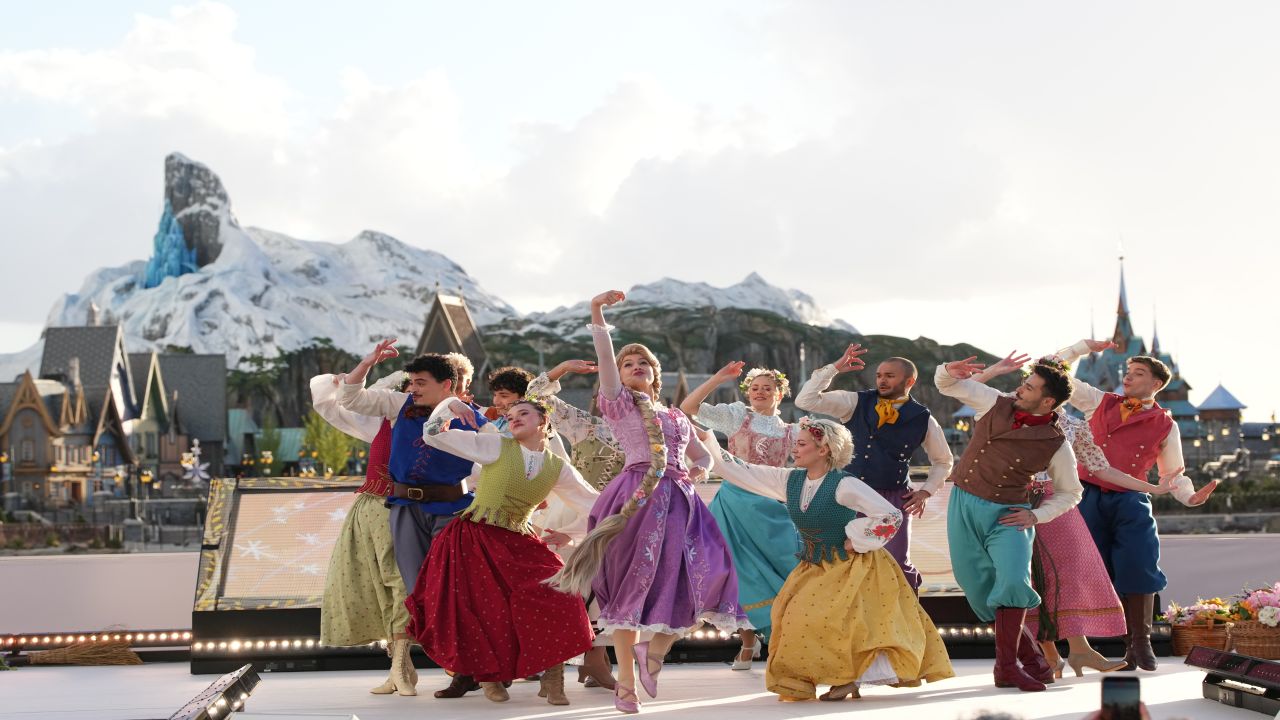
The €2 billion expansion of Disneyland Paris is not just about building a new land. It is a desperate, multi-year attempt to fix a fundamental flaw in the resort’s DNA. By anchoring this massive investment in the World of Frozen, Disney is betting that a single hit film can stabilize a property that has spent much of its thirty-year history struggling to balance French cultural expectations with American commercial aggression. This is the largest injection of capital since the park opened in 1992, and it signals a shift away from the generic "magic" of the past toward a model of immersive, single-intellectual-property environments that force guests to spend more time—and significantly more money—within the resort walls.
The expansion centers on a meticulously recreated Arendelle, situated around a new 70,000-cubic-meter lake. This water feature serves as the literal and metaphorical heart of the project, connecting the existing park structures to the new, highly themed zones. While the public focus remains on the "Frozen Ever After" attraction and the meet-and-greet opportunities with Anna and Elsa, the real story lies in the infrastructure. Disney is not just building a ride; they are constructing a self-contained ecosystem designed to keep visitors on-site for a third or fourth day, a metric that has long eluded the Paris location compared to its counterparts in Florida and Tokyo.
The Financial Necessity of a Frozen World
For decades, Disneyland Paris was the problem child of the Disney portfolio. It suffered from high debt loads, labor disputes, and a local audience that initially viewed the park as a cultural "Chernobyl." The 2017 buyout, where The Walt Disney Company took full control of the resort, paved the way for this €2 billion overhaul. They are no longer content with being a weekend destination for Parisians. They want the international traveler who stays for a week.
The choice of Frozen is calculated. Unlike some of Disney’s more niche acquisitions, the adventures of Anna and Elsa have demonstrated a rare, decade-long staying power across European demographics. The ROI on this project is built into the high-margin retail and dining experiences that surround the main attraction. In Arendelle, the architecture itself is a sales tool. Every Norwegian-style facade is designed to funnel guests into gift shops where the price point of merchandise is significantly higher than in the main park’s general stores.
Breaking the Seasonal Curse
One of the biggest hurdles for the Paris resort has always been the weather. Unlike the year-round sun of Anaheim or Orlando, Marne-la-Vallée deals with grey skies and biting winters. By leaning into a franchise defined by ice and snow, the design team has turned a regional liability into a thematic asset. The "World of Frozen" looks just as "correct" under a drizzly November sky as it does in July. This is a strategic move to bolster attendance during the off-peak months, ensuring that the park remains a viable destination when the temperature drops.
The lake, known as Adventure Bay, will also serve as a stage for nighttime spectaculars. This is an essential component of the business model. By providing a high-quality evening show located at the back of the park, Disney ensures that guests stay through dinner, increasing the "per-capita" spend on food and beverage. It is a classic move from the Disney playbook, but executed here on a scale that Paris has never seen.
The Death of the General Theme Park
We are witnessing the end of the "land" as a collection of loosely related rides. The World of Frozen follows the blueprint set by Cars Land in California and Galaxy's Edge in Florida. It is total immersion. You do not just ride a boat; you enter a village. This shift represents a broader trend in the industry where the "experience" is the product, and the product is inescapable.
Critics argue that this approach limits the creative flexibility of the park. If interest in Frozen eventually wanes, the resort is left with a massive, permanent installation that is difficult to re-theme. However, the data suggests otherwise. Massive, dedicated environments drive repeat visits in a way that standalone roller coasters cannot. People return to live in the story, not just to experience a three-minute thrill.
The Engineering of Atmosphere
The construction of the Arendelle castle and the surrounding village utilizes "forced perspective" on a scale that rivals the original Sleeping Beauty Castle. The mountains surrounding the area are engineered to hide the industrial skyline of the surrounding French suburbs, creating a visual vacuum. This requires a level of detail in the rockwork and color palettes that pushed the budget to its current €2 billion ceiling.
This isn't just about aesthetics. It’s about psychological containment. When a guest cannot see the outside world, they lose their sense of time. That loss of time translates directly into higher spending. The lake itself acts as a buffer, a physical barrier that separates the chaotic energy of the older "Studio" sections from the curated serenity of the new expansion.
Labor and Local Impact
You cannot spend €2 billion in France without running into the complexities of the local labor market. The expansion has already triggered a wave of hiring, but it also brings the looming threat of further strikes—a recurring theme in the park’s history. The resort is one of the largest single-site employers in the country, and the pressure to maintain the "Disney Standard" while navigating French labor laws is a constant tension for management.
Furthermore, the environmental impact of a massive artificial lake and the energy required to maintain a year-round "frozen" aesthetic has drawn scrutiny. Disney has countered this by implementing a large-scale solar canopy program in the parking lots, but the carbon footprint of such a massive construction project remains a talking point for local activists. They are watching to see if the promised "green" initiatives are anything more than corporate window dressing.
Beyond the Gates of Arendelle
The Frozen expansion is the anchor, but the €2 billion also covers the transformation of the Walt Disney Studios Park into "Disney Adventure World." This rebranding is a confession that the original park, themed around film sets, was a failure of imagination. It lacked the soul of the main park and felt "cheap" to many visitors. The new vision replaces the "behind-the-scenes" aesthetic with "inside-the-story" reality.
This involves a massive overhaul of the park’s entrance, replacing the cramped soundstage atmosphere with a lush, open promenade. The goal is to move the center of gravity of the entire resort. For thirty years, the original Disneyland Park carried the weight of the brand. Now, the company is trying to create a "two-gate" destination where both parks are viewed as equally essential.
The Competition for the European Traveler
Disney isn't operating in a vacuum. Efteling in the Netherlands and Europa-Park in Germany have been siphoning off the "prestige" theme park audience with high-quality, culturally resonant attractions and lower price points. This expansion is a shot across the bow of those regional competitors. By bringing a global powerhouse like Frozen to Europe, Disney is attempting to reclaim its status as the undisputed king of the continent's themed entertainment.
The success of this move will be measured in hotel occupancy. Disney is currently renovating several of its on-site hotels, including the flagship Disneyland Hotel, to align with this premium strategy. They are chasing the high-net-worth family that wants a seamless, luxury experience. If Arendelle can convince a family from London or Berlin to book a five-night stay instead of a day trip from Paris, the €2 billion will have been well spent.
The Reality of the "All In" Strategy
There is no "Plan B" for this expansion. If the World of Frozen does not significantly move the needle on international attendance and per-guest spending, the Paris resort will find itself in a precarious position. The company has tied its fortunes to the longevity of a single franchise, betting that the "Frozen" phenomenon is as permanent as Mickey Mouse himself.
The construction sites are active, the lake is filled, and the mountains are rising. Every bolt tightened and every rock painted is a gamble that the European public still wants the American dream, albeit one filtered through a fictionalized Norwegian lens. The "World of Frozen" is a testament to the power of intellectual property to reshape physical geography—and a cold, hard look at the price of staying relevant in a changing market.
The gates will open, the crowds will surge, and the accountants will watch the numbers. This is the new reality of the theme park business: build big, build deep, or get left behind in the snow.


