The streets of Lahore aren't just a backdrop for political rallies anymore. They've become a hunting ground. When unknown gunmen pulled up beside Amir Hamza’s vehicle and opened fire, they weren’t just targeting a man. They were signaling the slow, violent collapse of a specific era of state-protected militancy.
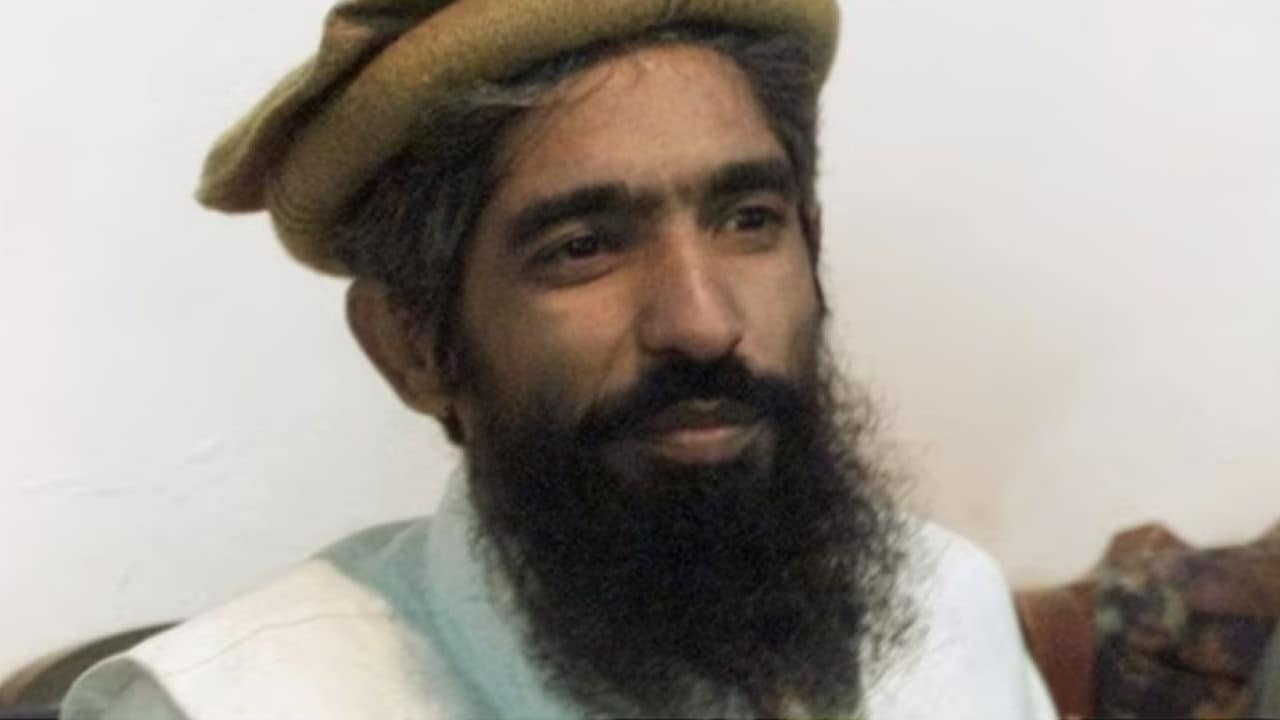
Hamza isn't some low-level street recruiter. He’s a founding member of Lashkar-e-Taiba (LeT) and a guy who has spent decades operating in the highest echelons of the Jamat-ud-Dawa (JuD). He's been the editor of their propaganda rag and a key ideologue. Now, he’s in a hospital bed in critical condition, and the "unknown gunmen" trope is back in the headlines.
Let's be clear about what’s happening. This isn't an isolated incident. It’s part of a brutal, systematic pattern of high-profile hits across Pakistan that’s leaving the old guard of the 1990s jihadist movement terrified.
The Anatomy of the Lahore Shooting
The attack happened near the Lari Adda area. Reports indicate that gunmen on motorcycles—the classic tool of the trade for urban hits in Pakistan—intercepted Hamza’s car. They didn't spray and pray. They hit him with precision. Police sources confirmed he was rushed to the hospital with multiple gunshot wounds.
The security around these guys is usually tight. You don't just "stumble" upon a founding member of LeT in traffic. This took surveillance. It took intelligence. It took a level of audacity that suggests the attackers knew exactly what the response—or lack thereof—would be from the local authorities.
You have to look at the timing. We’re seeing a surge in these "mysterious" killings. Whether it’s in mosques, busy markets, or residential neighborhoods, the people who once felt untouchable are being picked off.
Who is Amir Hamza and Why Does He Matter
If you haven't followed the history of the LeT, Hamza might just seem like another name. He isn't. He was there at the beginning. While Hafiz Saeed was the face and the orator, Hamza was the intellectual engine. He wrote the books. He shaped the narrative that justified their operations in Kashmir and beyond.
He was a bridge between the old-school jihadists and the modern propaganda machine. His influence wasn't just about bullets; it was about the ideology that convinced thousands of young men to pick up rifles. Seeing someone of his stature targeted in the heart of Lahore—the very city where JuD has its strongest roots—is a massive psychological blow to the organization.
It’s basically a message. The message is that the protection once afforded to these figures is either thinning out or being bypassed entirely by a new, more aggressive player.
The Pattern of the Unknown Gunmen
I've watched this play out for the last couple of years. We saw it with Zahoor Mistry in Karachi. We saw it with Shahid Latif in Sialkot. We saw it with Bashir Ahmad Peer. The list of LeT and Jaish-e-Mohammed (JeM) affiliates ending up dead in Pakistani streets is growing fast.
The Pakistani state usually blames "foreign hands"—a thinly veiled reference to India’s RAW. India, predictably, says nothing or points to internal rivalries. Honestly, the "who" matters less to the average observer than the "how." These hits are professional. They’re clean. They leave behind very few clues and a lot of dead bodies.
- Surgical Precision: Most of these hits involve close-range fire from motorcycles.
- Target Selection: The victims are almost always mid-to-high-tier leaders involved in logistics or ideology.
- Zero Accountability: Almost none of these cases lead to an arrest or a conviction.
Why the Old Guard is Terrified
For years, these men lived in a bubble. They were the "non-state actors" who were treated like VIPs. They had security details, they moved freely, and they held rallies in public squares. That bubble has burst.
If you're a former LeT commander right now, you're looking over your shoulder every time a bike slows down near your car. You realize that the "safe havens" aren't safe anymore. The state's ability—or willingness—to protect its old assets is under question.
Some argue this is a "clearing of the decks." Maybe it’s internal power struggles. Maybe it’s a foreign intelligence agency finally taking the gloves off. Or maybe it’s a shift in Pakistan’s own internal security policy as they try to exit the FATF gray list shadows for good. Whatever it is, the result is the same: the 1990s-era militant infrastructure is being dismantled, one leader at a time.
The Regional Fallout of the Hamza Attack
This doesn't stay inside Pakistan's borders. Every time a guy like Hamza gets hit, it shifts the balance of power in the region. It disrupts the chain of command for groups that have been active for decades.
It also puts the Pakistani government in a bind. If they admit it’s a foreign intelligence agency, they look weak—incapable of protecting people on their own soil. If they say it’s internal, they admit to a brewing civil war among extremist factions. They usually choose a middle ground of vague "terrorism" charges, but nobody’s buying that anymore.
The reality is that Lahore is no longer a sanctuary. The city is becoming the frontline of a shadow war that shows no signs of slowing down.
What Happens When the Ideologues Fall
When you kill a foot soldier, you lose a rifle. When you hit an ideologue like Amir Hamza, you disrupt the factory that produces those soldiers. Hamza’s role as a writer and editor meant he was responsible for the "soft power" of the LeT.
His removal from the board—whether he survives this or not—creates a vacuum. Younger, perhaps more radicalized elements might step up. Or, the organization might continue its slow slide into irrelevance as its founding fathers are picked off.
It's a messy, violent transition. You can't just expect these groups to vanish quietly. But the "unknown gunmen" are certainly speeding up the process.
The Security Vacuum in Punjab
Punjab was always considered the stable heartland. While the KP province and Balochistan were burning, Lahore stayed relatively quiet. That’s changing. The fact that gunmen could operate so freely in a high-security urban environment tells you everything you need to know about the current state of law enforcement.
It suggests one of two things. Either the police are completely outclassed, or there’s a deliberate "hands-off" approach being taken. Neither option is particularly comforting if you live in Lahore.
Moving Forward in a Shadow War
If you're following this, don't look for a neat resolution. There won't be a press conference where the "unknown gunmen" are paraded in front of cameras with a full confession. That’s not how this works.
Instead, watch for the next name. Watch for the next "cleric" or "activist" who gets targeted in a drive-by. The pattern is the story. The hit on Amir Hamza is just the latest chapter in a book that’s being written in blood across Pakistan’s major cities.
The old rules are dead. The players are being hunted. And the "unknown gunmen" are just getting started. If you want to understand where the region is heading, stop looking at the official diplomatic statements and start looking at the police reports from the streets of Lahore and Karachi. That's where the real history is being made right now.
Keep an eye on local Urdu media reports over the next 48 hours. They often leak the details that the official English-language outlets are too scared to touch. Check for reports on the specific caliber of weapons used; it’s a massive tell for who’s actually pulling the triggers. Don't expect the police to provide clarity—expect them to provide a smokescreen.