The medal is a cold, heavy thing. It is forged from bronze, but it carries a weight that no scale can measure—the weight of a nation’s pride, the expectations of a military lineage, and the unspoken pact between a soldier and the state. For years, Ben Roberts-Smith was the face of that weight. He was the Victoria Cross recipient, the towering figure of Australian valor, the man whose silhouette against the Afghan sun defined an entire generation’s understanding of heroism.
Then the silence broke.
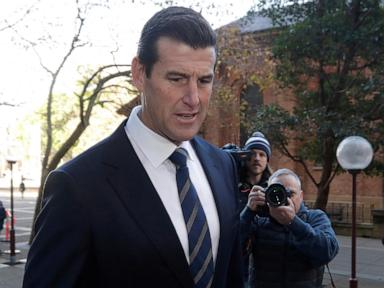
The air in a Sydney courtroom doesn’t smell like the dust of Uruzgan province. It smells of floor wax, old paper, and the frantic energy of lawyers whispering over high-stakes maneuvers. In this sterile environment, the myth of the "invincible soldier" met the grinding gears of the Australian justice system. Roberts-Smith, the most decorated living veteran in the country, stood before a magistrate not to receive another commendation, but to face the most serious accusation a soldier can encounter: the unlawful killing of civilians during his deployment in Afghanistan.
He has been granted bail. But for the Australian public, and for the families of those lost in the valleys of the Hindu Kush, the concept of "freedom" is currently a very complicated thing.
The Shadow of the SASR
To understand how a national icon ends up in a bail hearing, you have to look past the uniform. You have to look at the culture of the Special Air Service Regiment (SASR). We often speak of elite forces in whispers, as if they are modern-day Spartans, detached from the messy morality of the civilian world. We want them to be shadows when they fight, but we expect them to be saints when they return.
The Brereton Report, a harrowing document that remains the bedrock of these charges, stripped away that mystique. It didn't just point to individual failings; it pointed to a "warrior culture" that had curdled into something unrecognizable. It spoke of "blooding"—the alleged practice of junior soldiers being pressured to execute prisoners to achieve their first kill.
Imagine a young trooper. Let’s call him Elias—a hypothetical composite of the dozens of witnesses who have come forward. Elias joins the SASR because he wants to be the best. He looks up to the giants like Roberts-Smith. He is taught that the mission is everything. But one afternoon in a dusty compound, the mission changes. He is told to look away. He is told that a farmer is actually a combatant. He is told that justice is whatever the man with the most medals says it is.
When Elias returns home, he doesn't just bring back sand in his boots. He brings back a fracture in his soul. That fracture is the invisible stake in this trial. It isn’t just about one man’s guilt or innocence; it is about whether the Australian military can survive the truth of what it allowed to happen in its name.
The Machinery of Bail
The legal proceedings have been a slow, agonizing drumbeat. Roberts-Smith was arrested in Perth, a move that sent shockwaves through the veteran community. The charges relate to the alleged murder of an Afghan man during a 2010 mission. This isn't the civil defamation case he lost against the media—this is the criminal division. This is the state vs. the individual.
Granting bail in a war crimes case is a delicate calculation. The prosecution argued that the gravity of the alleged crimes—crimes that carry a maximum penalty of life imprisonment—should keep him behind bars. They spoke of the risk of flight, the potential for interference with witnesses who have already endured years of intimidation.
But the magistrate saw it differently. Bail was granted under strict conditions. A multimillion-dollar surety. The surrender of passports. A requirement to report to police.
The legal logic is sound: everyone is entitled to the presumption of innocence. But the emotional logic is far more volatile. For those who served alongside him, the sight of their former leader in the dock is a betrayal of the highest order—either a betrayal by the man himself, or a betrayal by a government they feel has turned its back on its warriors.
The Cost of the Long War
Australia’s involvement in Afghanistan lasted twenty years. It was a war of hearts and minds that often felt like it had neither. We sent men into a Meat-Grinder of ambiguity. We asked them to distinguish between a shepherd and a sniper in the blink of an eye, often under the crushing heat and the constant threat of IEDs.
When we talk about "war crimes," we often do so with a clinical detachment. We use terms like collateral damage or rules of engagement. But the reality is far more visceral. It is a scream in a mud-walled hut. It is a family left without a father. It is a soldier sitting in a darkened room in a Perth suburb, unable to reconcile the hero he sees on the news with the person he became in the mountains.
The pursuit of justice in these cases is not an attack on the military. It is an act of preservation. If the rules of war are ignored, then war is just state-sanctioned murder. If the most decorated among us are not held to the highest standard, then the medals themselves become worthless. They become just pieces of bronze, hollow and cold.
A Nation in the Mirror
This trial will be long. It will be ugly. It will involve testimonies that challenge our fundamental belief in the "Anzac spirit." We like to believe our soldiers are different—humane, laconic, fair. We don't want to believe they are capable of the atrocities we associate with other, "lesser" regimes.
But the mirror doesn't lie.
The charges against Roberts-Smith are a reflection of a failure that goes all the way to the top. It is a failure of oversight, a failure of leadership, and a failure of the national imagination. We wanted the glory of the Victoria Cross without the discomfort of the scrutiny that must come with it.
Consider the Afghan victims. Their names rarely make the headlines. They are the background noise in our national drama. But for justice to be served, their humanity must be the focal point. A life taken unlawfully in a village in Afghanistan is of the same value as a life taken in the streets of Sydney. If we do not believe that, then we have already lost the war, regardless of what the court decides.
The legal battle is about evidence, statutes, and cross-examinations. But the human story is about the fragility of honor. It is about how easily a hero can become a ghost, haunting the very country that once cheered his name.
Ben Roberts-Smith walked out of that courtroom and into the sunlight, a free man for now. But the shadow he casts has never been longer. It stretches across the Indian Ocean, over the graves of the fallen, and deep into the heart of a nation that is finally, painfully, starting to wake up.
The weight of the bronze is still there. But the shine is gone. Only the weight remains.