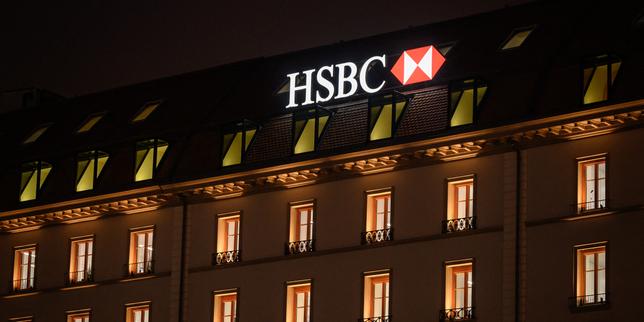
The financial press is running its favorite familiar script. HSBC has been placed under formal investigation in France for allegedly helping Riad Salamé, the disgraced former governor of Lebanon’s central bank, launder hundreds of millions of dollars. The headlines scream of corporate greed, systemic failure, and the urgent need for harsher penalties.
They are missing the entire point.
The lazy consensus treats this indictment as a failure of anti-money laundering (AML) protocols. The narrative suggests that if we just give compliance departments more teeth, implement sharper algorithms, and issue bigger fines, we can stop the flow of dirty money.
This is a delusion.
The HSBC indictment doesn’t prove that banking compliance failed. It proves that the global financial compliance apparatus is working exactly as intended: as an expensive, bureaucratic smoke screen that protects institutions while facilitating the exact capital flight it claims to prevent.
The Fallacy of the Rogue Banker
Mainstream reporting loves a villain. Riad Salamé is an easy target—a man who oversaw the collapse of Lebanon’s economy while allegedly siphoning off a fortune through a shell company called Forry Associates to buy luxury European real estate. When a mega-bank like HSBC gets dragged into the mud alongside him, observers assume the bank’s compliance systems were asleep at the wheel.
I have spent decades analyzing institutional capital flows and advising on cross-border financial structures. Let me tell you how this actually works. Megabanks do not miss hundreds of millions of dollars because of a glitch in their software. They do not miss it because a junior compliance officer forgot to check a box.
They process it because the money comes with a stamp of institutional legitimacy.
Salamé wasn’t a back-alley warlord trying to deposit duffel bags of cash at a retail branch in Paris. He was the head of a sovereign central bank. He was the architect of Lebanon’s financial architecture, lauded for decades by the International Monetary Fund and Western governments as a financial wizard.
When a central banker transfers funds, the compliance infrastructure treats that money as sovereign-adjacent. The system is fundamentally incapable of stopping high-level corruption because the system is designed to defer to official authority. To expect a bank’s compliance department to flag the head of a central bank as an illegitimate actor before his political protection evaporates is to fundamentally misunderstand the hierarchy of global finance.
Why AML Fines are Just an Operating Expense
The public demands blood, usually in the form of massive fines. The French judiciary might eventually hit HSBC with a penalty worth hundreds of millions of euros. The media will celebrate it as a victory for accountability.
It isn’t. It is a line item.
Let's look at the math. In 2012, HSBC paid a record $1.9 billion fine to US authorities for allowing Mexican drug cartels to launder hundreds of millions through its branches. Did the bank collapse? No. Its stock price barely flinched. The fine was absorbed into the cost of doing business.
+-------------------------------------------------------------------+
|               The Corporate Compliance Calculus                   |
+-------------------------------------------------------------------+
|  [Fee Revenue from High-Net-Worth/Sovereign Clients]             |
|                                                                   |
|              Minus:                                               |
|                                                                   |
|  [Cost of Compliance Software + Salaries of Paper-Pushers]       |
|                                                                   |
|              Minus:                                               |
|                                                                   |
|  [Amortized Cost of Eventual Regulatory Fines (Paid Decades Later)]|
|                                                                   |
|              Equals:                                              |
|                                                                   |
|  Positive Net Profit                                              |
+-------------------------------------------------------------------+
When the potential profit from managing the wealth of an entire nation’s ruling elite outweighs the discounted present value of a future regulatory fine, the rational economic choice for a financial institution is to accept the client.
To change this behavior, penalties must target individuals, not corporate balance sheets. Until chief compliance officers and regional executives face actual prison time rather than deferred prosecution agreements, nothing changes. But governments rarely jail top bankers because doing so risks destabilizing the systemic plumbing of the international financial network.
The Know Your Customer Illusion
Go into any bank today to open a simple business checking account. You will be subjected to an interrogation. You will provide tax returns, utility bills, articles of organization, and beneficial ownership declarations. This is the Know Your Customer (KYC) regime.
The industry spends over $200 billion annually on compliance software, identity verification tools, and transaction monitoring systems. This massive burden falls almost entirely on ordinary citizens, small businesses, and legitimate entrepreneurs. It is a regime of friction.
Yet, for all this friction, the United Nations Office on Drugs and Crime estimates that less than 1% of global illicit financial flows are ever intercepted.
Think about that metric. A system with a 99% failure rate is not an effective system. It is a compliance theatre designed to give regulators a paper trail to audit after a scandal breaks, rather than a shield to prevent the crime in the first place.
While a local bakery gets its account frozen over an unverified $10,000 international wire, hundreds of millions flow through complex webs of offshore entities in Panama, the British Virgin Islands, and Luxembourg. These entities are managed by prestigious law firms and accounting agencies that provide a layer of plausible deniability to institutions like HSBC. The bank can honestly state that it verified the immediate corporate entity making the deposit, even if the ultimate beneficial owner was a corrupt politician hiding behind a nominee director.
The Dark Truth About Capital Flight
Here is the counter-intuitive reality that Western governments will never openly admit: Developed economies want this capital.
When Riad Salamé or any other elite figure from an emerging market extracts wealth from their home country, that money doesn’t sit in a vault. It enters the European and American banking systems. It buys luxury penthouses in Paris, commercial real estate in London, and government bonds in New York.
Illicit wealth extraction acts as a massive, permanent wealth transfer from the developing world to Western financial capitals.
The French investigation into HSBC looks righteous now, but where was this regulatory scrutiny during the twenty years Lebanon’s economy was being hollowed out? The capital flight was welcomed because it inflated real estate values and provided liquidity to European asset managers. Regulatory outrage only occurs when the political situation in the origin country deteriorates so violently that the client becomes a public relations liability.
Dismantling the Premium Client Exemption
If you want to understand how a sovereign country gets looted with the complicity of global banks, you have to look at the "Wealth Management" division.
Every major bank has a tier of service completely segregated from ordinary operations. If you have $50 million or more, you do not interact with standard banking protocols. You are assigned a dedicated relationship manager whose entire career progression depends on keeping your funds within the bank.
These relationship managers act as internal advocates for the client against the bank’s own compliance department. If a transaction monitoring system flags a suspicious transfer from a Lebanese shell company, the relationship manager simply calls the client, secures a vague "investment advisory agreement" or a "consulting invoice," and uploads it to clear the alert.
The paperwork matches. The box is checked. The compliance software is satisfied.
This is how hundreds of millions move without triggering alarms. The system is designed to look for anomalies. But when your entire account history consists of massive, irregular, multi-million dollar movements, those movements are the baseline. The software doesn’t flag them because they are normal behavior for that specific tier of client.
Stop Rewriting the Rules; Enforce the Laws of Physics
The standard fix proposed by experts after every banking scandal is to write more regulations. The European Union will draft a new directive; the French financial regulator will issue new guidelines.
This is a waste of time. The problem is not a lack of rules. The problem is that the existing rules are written by the very people who benefit from the loopholes.
If we genuinely wanted to stop the weaponization of the global financial system by corrupt elites, the solution requires tearing down the structural anonymity that the banking sector relies upon.
- Abolish Private Corporate Registries: Any entity holding an account at a regulated financial institution must have its ultimate human beneficiary published in a globally accessible, searchable database. No nominees. No trusts. No exceptions.
- Absolute Liability for Executives: If a bank facilitates the laundering of stolen state funds, the executives who signed off on the regional risk profile must face mandatory, non-commutable prison sentences. Financial penalties must be extracted from the executive bonus pools, not the shareholders' equity.
- The Sovereign Risk Penalty: Any transaction originating from or directed by an official of a country scoring below a specific threshold on the Transparency International Corruption Perceptions Index must be subjected to an automatic, independent third-party audit before execution, completely bypassing the internal wealth management team.
Of course, none of this will happen.
The current system serves its purpose perfectly. It allows Western banks to collect billions in fees from global elites, allows Western cities to absorb trillions in foreign wealth, and provides a convenient scapegoat whenever the public demands a sacrifice.
HSBC will hire top-tier legal counsel. They will negotiate a settlement. They will pay a fine that looks massive to the public but represents a fraction of their quarterly revenue. They will issue a press release stating they have "significantly upgraded their compliance infrastructure and remain committed to fighting financial crime."
Then, they will get back to business.