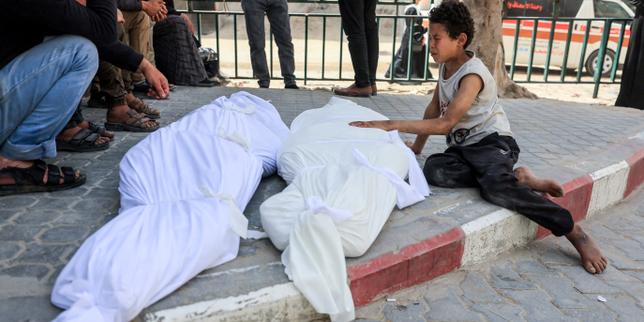
Four lives ended yesterday in Gaza. One was a child. They died under a rain of fire and metal. The Civil Defense in Gaza confirmed these deaths, marking yet another day where the casualty count isn't just a number, but a set of families destroyed. We see these headlines daily. They blend together. But the reality on the ground is far from repetitive for those living it. It's a relentless, suffocating cycle of violence that doesn't care about your morning plans or your child's future.
Israeli shelling and gunfire targeted specific zones, hitting civilians who were simply trying to exist in a high-conflict zone. The Civil Defense teams, who operate with dwindling resources and under constant threat themselves, pulled the bodies from the wreckage. They aren't just responders anymore; they're witnesses to a systematic erasure of safety. You've got to wonder how much more a society can take before the word "infrastructure" becomes a memory. For another view, see: this related article.
Understanding the Impact of Targeted Strikes
When we talk about "strikes," we often think of clinical, precise military actions. The reality in Gaza is much messier. Shrapnel doesn't discriminate. Gunfire in densely populated areas doesn't just hit "targets." It hits kitchens. It hits bedrooms. It hits children. This latest incident, where a child was among the four killed, highlights the impossible situation for families. There's no "away" to go to.
The Civil Defense reported that the victims were killed by a combination of artillery fire and direct shooting. This suggests a multi-layered military operation in areas that were supposedly being monitored for "suspicious activity." But when the result is a dead child, the military justification feels hollow to the people burying their kin. It’s a pattern we've seen throughout the conflict, and it shows no sign of slowing down. Similar coverage on the subject has been shared by NBC News.
The Struggles of the Civil Defense
Imagine trying to save a life while the sky is literally falling. That's the daily reality for Gaza's Civil Defense. They're working with old equipment. They're low on fuel. Often, they’re digging through concrete with their bare hands. When they report four deaths, it usually means they've spent hours trying to find survivors first.
These workers aren't combatants. They're firefighters, medics, and neighbors. Their reports are often the first look we get into the immediate aftermath of a strike. They provide the names and the ages that the official military reports often leave out. Without them, these four people would just be "collateral" in a briefing room.
The Geographic Reality of the Attacks
Most of these incidents happen in the northern and central sectors of the strip. These are areas where the "buffer zones" are constantly shifting. One day a street is safe; the next, it’s a kill zone. The fluidity of the frontline means civilians are caught in a lethal game of musical chairs.
- North Gaza remains a flashpoint for heavy artillery.
- The Central Camps see frequent drone activity and localized shelling.
- Khan Younis continues to face sporadic but intense raids.
The four deaths reported yesterday occurred amidst this chaotic backdrop. It wasn't a massive, coordinated offensive that made global breaking news for twelve hours. It was a "routine" day of conflict. That’s the tragedy. We've normalized the death of four people to the point where it barely moves the needle on international stock markets or political discourse.
Why Small Scale Incidents Matter
Large-scale bombings get the cameras. But the steady drip of two, three, or four deaths a day is what hollows out a population. It creates a state of permanent trauma. You don't need a massive blast to ruin a neighborhood. A few well-placed shells or a burst of gunfire does the job. It keeps everyone in a state of terror.
The International Reaction and the Silence
World leaders often issue the same recycled statements. "We urge restraint." "We are monitoring the situation." Honestly, those words mean nothing to a father holding his dead son in a Gaza hospital. The gap between diplomatic language and the visceral horror on the ground is a canyon.
There's a lot of talk about "proportionality" in international law. But how do you calculate the proportion of a child's life? You can't. The data from human rights organizations suggests that the civilian-to-combatant death ratio in Gaza is among the highest in modern urban warfare. These four deaths are just another data point in a trend that many experts call a failure of international oversight.
Challenging the Official Narratives
Every time a strike like this happens, there's a PR battle. One side claims they targeted a command center. The other points to the dead child. The truth is usually found in the rubble. If a command center was the target, why is the primary victim a minor? This isn't just a "unfortunate accident." It's the predictable outcome of using high-yield explosives and heavy caliber weapons in one of the most crowded places on Earth.
What You Can Actually Do
Following the news is exhausting. It feels like shouting into a void. But staying informed is the bare minimum. You need to look past the sanitized headlines.
Seek out direct reports from organizations on the ground like the Palestinian Red Crescent or Médecins Sans Frontières (Doctors Without Borders). They see what the drones don't. Support agencies that provide direct medical aid and search-and-rescue equipment. The Civil Defense needs more than our sympathy; they need tools, fuel, and the political pressure that forces a ceasefire.
Pressure your local representatives to move beyond "monitoring" and toward actual accountability. The cycle of "strike, report, mourn, repeat" has to break. Four people died yesterday. It could be more today. Don't let the numbers make you numb. Demand the specifics. Ask the hard questions about where the weapons are coming from and why the "safe zones" aren't safe.
Check the updates from verified humanitarian feeds every morning. Don't rely on a single news source that might be softening the blow of the reality on the ground. Use your platform to share the names of the victims when they are released. Make it personal, because for the people in Gaza, it’s as personal as it gets.