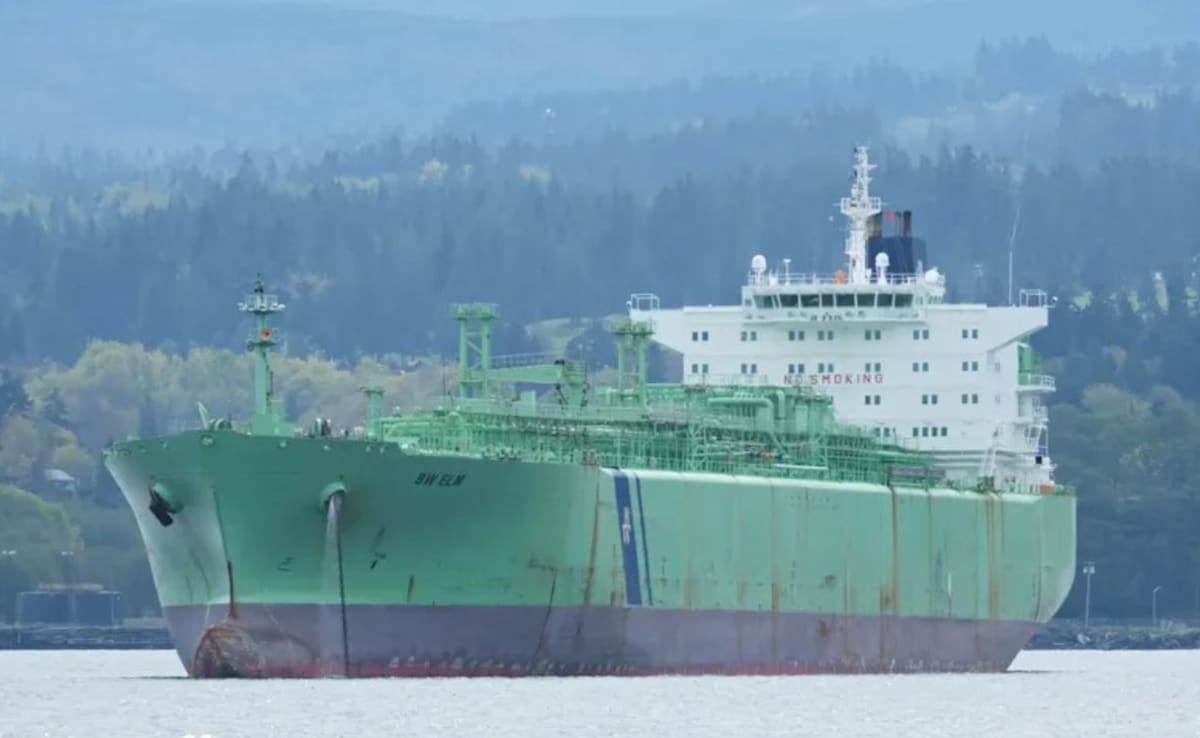
The transit of two India-bound Liquefied Petroleum Gas (LPG) tankers through the Strait of Hormuz represents more than a routine logistical movement; it is a live stress test of India’s energy security architecture. While news cycles focus on the specific coordinates of vessels, the underlying reality is a complex calculation of maritime insurance premiums, sovereign strategic reserves, and the inelasticity of residential fuel demand. The Strait of Hormuz remains the world’s most sensitive chokepoint, with approximately 20% of global liquefied natural gas (LNG) and a significant portion of LPG passing through a channel only 21 miles wide at its narrowest point.
The Mechanics of Chokepoint Dependency
India’s reliance on Middle Eastern LPG is a function of geography and refinery configuration. Domestic production through oil refineries and fractionators accounts for roughly 45-50% of total consumption, leaving a massive deficit that must be met through imports, primarily from Qatar, the UAE, and Saudi Arabia. The movement of these two tankers highlights three critical variables in the Indian energy cost function:
- The War Risk Surcharge (WRS): When tankers enter the Persian Gulf during periods of regional friction, insurers apply a WRS. This is not a static fee but a floating percentage of the hull and machinery value, often recalculated every seven days. For a Very Large Gas Carrier (VLGC), even a 0.1% increase in the premium can add hundreds of thousands of dollars to the landed cost of the cargo.
- Inelasticity of the Ujjwala Program: The Indian government’s push for clean cooking fuel has transitioned millions of households to LPG. Because this demand is non-discretionary, any disruption in the Hormuz transit translates directly into a fiscal burden for the state, which must either absorb the price hike via subsidies or risk inflationary shocks to the consumer price index (CPI).
- Vessel Deadweight and Draft Constraints: The physical limitations of the Strait, combined with the draft requirements of Indian ports like Mundra or Visakhapatnam, dictate the type of vessels used. The concentration of cargo on fewer, larger VLGCs increases the "single point of failure" risk. If one tanker is delayed or seized, the volume lost represents a significant percentage of the weekly national requirement.
Structural Vulnerabilities in the LPG Supply Chain
The passage of these tankers occurs against a backdrop of shifting maritime security protocols. The "Tanker War" logic of the 1980s has evolved into a sophisticated game of electronic warfare and grey-zone tactics. Modern risks to these India-bound vessels include:
GPS Spoofing and AIS Manipulation
Vessels in the Strait often report "dark" or erratic Automatic Identification System (AIS) signals. This is frequently a defensive measure to prevent targeted harassment, but it creates a secondary risk of navigational errors and collisions in the high-traffic separation schemes. The data-driven analyst must look beyond the "arrival" and examine the "deviation." If these tankers increased their speed or altered their heading significantly, the fuel burn rate increases, further compressing the margins for the importing oil marketing companies (OMCs).
Sovereign Guarantee vs. Commercial Insurance
As private insurers retreat or hike rates during regional escalations, the Indian government is forced to consider sovereign guarantees to keep the tankers moving. This effectively shifts the risk from the commercial market to the national balance sheet. The transit of these two vessels is a proxy measurement of the Indian government’s willingness to self-insure its critical energy inputs.
Mapping the Alternate Energy Architecture
The current dependence on the Strait of Hormuz reflects a historical infrastructure bias that is becoming a strategic liability. To elevate the analysis beyond the specific arrival of these two tankers, one must evaluate the three pillars of India’s potential energy decoupling:
- The Strategic Petroleum Reserve (SPR) vs. LPG Storage: While India has invested in three SPR facilities for crude oil (Visakhapatnam, Mangalore, and Padur), its LPG storage capacity is far more limited. LPG is more volatile and requires specialized atmospheric or pressurized tanks, making high-volume, long-term storage technically more demanding and capital intensive.
- The East Coast Pipeline Expansion: By shifting more import volume to the East Coast from sources like Australia or the United States (via the Cape of Good Hope), India could theoretically reduce its exposure to the Hormuz bottleneck. However, the Cape route adds 15 to 20 days to the voyage and increases the carbon footprint per tonne of LPG delivered.
- Refinery Configuration and Domestic Natural Gas: The long-term solution lies in the increased production of natural gas from domestic blocks like the KG Basin. This would reduce the reliance on imported LPG for domestic heating and cooking. However, the capital expenditure required to transition millions of households from LPG cylinders to Piped Natural Gas (PNG) is a multi-decade project.
The Cost Function of Energy Insecurity
The movement of these tankers is a high-stakes calculation of landed cost vs. strategic risk. If we break down the cost components of the LPG on these two vessels, the structure is:
- FOB Price (Free on Board): The price of the gas at the loading port in the Middle East.
- Freight Rate: The daily hire rate for a VLGC, which fluctuates based on global tanker availability.
- Insurance (H&M + P&I): Hull and Machinery (H&M) covers the physical vessel; Protection and Indemnity (P&I) covers the liability.
- Chokepoint Surcharge: A premium added for transit through high-risk zones.
- Demurrage: The cost of delays if the vessel is held at the Strait for inspections or security reasons.
Tactical Reality of Maritime Security
The presence of the Indian Navy’s "Operation Sankalp" in the Gulf of Oman and the Persian Gulf is the silent variable in the transit of these vessels. This deployment provides "escort by presence," where Indian warships maintain a visible footprint to deter non-state actors and state-sponsored harassment. This is a direct state subsidy to the energy sector, as the operational costs of these naval assets are not factored into the retail price of the LPG cylinders sold to the public.
The arrival of these two tankers at their destination port will momentarily lower the pressure on the national inventory, but it does not resolve the structural vulnerability of the Hormuz transit. The geopolitical volatility in the region remains the primary driver of India's energy risk profile. Any shift in the diplomatic relations between the major powers in the Gulf can immediately close the Strait, effectively or legally, leading to a supply shock that no amount of SPR can mitigate beyond a few weeks.
The strategic play for India is a diversification of the "supply origin" and a shift toward "infrastructure-heavy" energy distribution. This means prioritizing the development of deep-water ports on the East Coast and incentivizing long-term supply contracts from the Atlantic Basin. Relying on the periodic, high-risk transit of VLGCs through the Strait of Hormuz is a tactical necessity that must be phased out in favor of a geographically distributed energy import strategy.