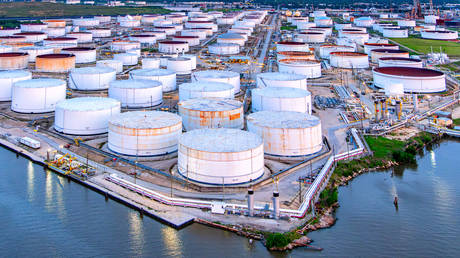
The global aviation industry operates on a razor-thin margin dictated by the spread between Brent Crude and the crack spread for Jet A-1 fuel. When geopolitical friction in the Middle East—specifically involving Iranian maritime influence—shocks the energy market, jet fuel prices do not merely rise; they decouple from standard inflationary trends. This price surge exposes a fundamental vulnerability in traditional turbine propulsion. Sustainable Aviation Fuel (SAF), derived from Used Cooking Oil (UCO) and other bio-feedstocks, is frequently proposed as the primary mitigation strategy. However, the transition from fossil kerosene to bio-based synthetic paraffinic kerosene is not a simple commodity swap. It is a complex reconfiguration of global supply chains, chemical refining capacities, and thermodynamic realities.
The Trilemma of Aviation Energy
To evaluate whether "cooking oil" can insulate the industry from geopolitical price shocks, we must analyze the problem through three distinct constraints: Energy Density, Scalability of Feedstock, and the Infrastructure Lock-in.
1. The Energy Density Constraint
The physics of flight are unforgiving regarding the mass-to-energy ratio. Liquid hydrocarbons are the gold standard for long-haul aviation because of their high energy density.
- Jet A-1 Density: Approximately 43.1 MJ/kg.
- HEFA-SPK (Bio-Jet): Approximately 44 MJ/kg.
While SAF meets the energy requirements—and in some cases slightly exceeds the specific energy of fossil fuels—it must be "dropped in." Current ASTM international standards limit SAF blends to 50% for commercial use. This is because bio-based fuels lack aromatics—specific hydrocarbons that cause elastomer seals in older engine models to swell and create a tight seal. Without these aromatics, or a synthetic equivalent, a 100% SAF flight risks fuel system leakage. Therefore, SAF is currently a dilution strategy for fossil fuel reliance, not an immediate replacement for it.
2. The Feedstock Supply Gap
The "cooking oil" narrative centers on HEFA (Hydroprocessed Esters and Fatty Acids). This is the most mature SAF technology, utilizing used cooking oil, tallow, and vegetable oils. The logic is enticing: turn waste into thrust. The reality is a massive deficit in raw material.
Total global jet fuel demand in a standard operational year sits near 360 million tonnes. The global supply of UCO is estimated at roughly 20-30 million tonnes. Even with 100% collection efficiency—which is geographically impossible—UCO could only satisfy a fraction of the industry's requirements. This creates a "Feedstock War" where the aviation sector must outbid the road transport sector (biodiesel) and the chemical industry for the same waste fats. As demand for SAF increases, the price of UCO rises proportionally, potentially erasing the cost-benefit gained from avoiding expensive crude oil.
3. The Infrastructure Lock-in
Aviation operates on 30-year asset cycles. The planes flying today were designed for the fuel chemistry of the 1990s. Unlike the automotive industry, which can pivot to electrification for short-haul trips, long-haul aviation is "locked in" to liquid combustion. This makes the industry a price-taker in the energy market. When Iranian tensions spike, airlines cannot switch to an alternative power source overnight; they can only hedge their fuel costs or pass the expense to the consumer through fuel surcharges.
The Cost Function of Synthetic vs. Fossil Fuels
The primary barrier to SAF adoption is the price premium. Historically, SAF has traded at 2x to 5x the price of fossil jet fuel. To understand the economic viability of switching to "cooking oil" during a war-induced price spike, we must look at the Cost Function $C_{total}$:
$$C_{total} = (P_{fossil} \times V_{f) + (P_{SAF} \times V_{s}) + C_{logistics} + C_{compliance}$$
Where:
- $P_{fossil}$ is the price of Jet A-1 (highly volatile based on geopolitics).
- $P_{SAF}$ is the price of SAF (high but stable, driven by feedstock and refinery CAPEX).
- $V_{f}$ and $V_{s}$ are the volumes of each.
When war makes $P_{fossil}$ double, the delta between fossil fuel and SAF narrows. However, SAF production is itself energy-intensive. Most SAF refineries use hydrogen in the hydrotreating process. If the energy used to create that hydrogen is tied to the natural gas market—which often correlates with oil prices during global conflicts—the price of SAF may rise in tandem with fossil kerosene. This correlation breaks the "hedge" that SAF is supposed to provide.
The Three Pillars of SAF Scalability
For cooking oil and other biofuels to become a legitimate strategic buffer, the industry must solve for three specific variables:
1. Feedstock Diversification
Relying on UCO is a dead end for total decarbonization. The industry must move toward:
- Cover Crops: Non-food crops like Camelina or Carinata that can be grown on fallow land.
- Alcohol-to-Jet (AtJ): Converting ethanol from agricultural waste into jet fuel.
- Power-to-Liquid (PtL): Using captured $CO_2$ and green hydrogen to synthesize hydrocarbons. This is the only truly scalable long-term solution, though it currently costs significantly more than HEFA-based SAF.
2. Refining Parity
Most current refineries are optimized for crude oil. Converting a traditional refinery to a bio-refinery requires significant capital expenditure (CAPEX). The "Green Premium" will persist until there is a sufficient network of multi-feedstock refineries capable of switching between different biological inputs based on seasonal and regional availability.
3. Regulatory Mandates and Incentives
In the absence of a global carbon tax, SAF cannot compete on price alone. The EU’s RefuelEU Aviation initiative mandates a specific percentage of SAF in the fuel mix (starting at 2% in 2025 and scaling to 70% by 2050). These mandates create a "guaranteed demand" floor, which allows financiers to fund the construction of new plants. Without these mandates, airlines would revert to fossil fuels the moment geopolitical tensions ease and oil prices drop.
The Hidden Mechanics of the "Cooking Oil" Market
The transition to UCO-based fuel introduces a new set of risks that the aviation industry is ill-equipped to handle: fraud and traceability. As SAF mandates increase, the value of "waste" oil skyrockets. This has already led to instances of "virgin" palm oil (which has a high carbon footprint) being illicitly sold as "used" cooking oil to capture the green premium.
For an airline, the reputational risk of using fraudulent SAF is higher than the financial risk of expensive fossil fuel. Therefore, any shift toward "cooking oil" requires a robust blockchain-based chain of custody. This adds a layer of administrative cost—the "Transparency Tax"—that is rarely factored into the "Should we switch?" debate.
The Logistics of the Transition
Fueling a plane with cooking oil is not a localized activity. It requires a massive midstream infrastructure shift. Fossil fuel is typically moved via pipelines from coastal refineries to inland hubs. SAF, often produced in smaller, decentralized batches near feedstock sources, must be trucked or railed to blending facilities.
This logistical friction means that even if the raw material (the oil) is available, the "into-wing" cost at the airport may remain prohibitively high. Airports like LHR (London Heathrow) or SIN (Singapore Changi) are beginning to integrate SAF into their main hydrant systems, but for the vast majority of the world's 40,000+ airports, SAF remains a niche product delivered by specialized bowsers.
Strategic Recommendation for Global Carriers
The current geopolitical instability serves as a stress test for airline fuel strategies. Relying on "cooking oil" as a short-term escape from high oil prices is a tactical error; the supply is too thin and the price correlation is too high.
Airlines must instead move toward a Tri-Tranche Fuel Strategy:
- Direct Equity in Production: Large carriers must move upstream, taking equity stakes in SAF refineries rather than just signing Offtake Agreements. This secures supply and provides a window into the actual cost of production, shielding them from middleman markups during crises.
- Synthetic aromatics R&D: To reach 100% SAF capability and break the 50% blend wall, carriers must fund the development of synthetic aromatics. This allows for the total removal of fossil kerosene from the supply chain, rendering the "Iran War" price spikes irrelevant to their operational model.
- Aggressive Hub-Based Blending: Focus SAF utilization at "fortress hubs" where infrastructure can be centralized, reducing the logistical "Transparency Tax" and ensuring that the highest-volume routes are the first to be insulated from crude oil volatility.
The shift is not about "saving the planet" in a vacuum; it is about de-risking the balance sheet from the volatility of the Strait of Hormuz. The technology exists, the chemistry is proven, but the scale remains the final frontier of aviation strategy.
The primary bottleneck is no longer the engine; it is the land and the lab. The winners in the next decade of aviation will be those who stop viewing fuel as a commodity to be bought and start viewing it as a chemical asset to be managed.
Direct investment in Power-to-Liquid (PtL) technology, despite its current cost, is the only hedge against the eventual exhaustion of the global "cooking oil" supply. Carriers that fail to secure non-biological synthetic pathways will find themselves trapped in a secondary price spike once the UCO market reaches its ceiling.
The era of cheap, stable fossil energy is over. The era of complex, managed synthetic energy has begun.