India’s recent formal notice to Pakistan seeking a fundamental review of the 64-year-old Indus Waters Treaty (IWT) represents a shift from passive adherence to active hydrological management. This move is not a mere diplomatic skirmish; it is a recalibration of the "Upper Riparian Advantage" in response to persistent cross-border security failures and the technical obsolescence of the 1960 framework. The core of the current tension lies in the structural mismatch between the treaty’s original engineering assumptions and the modern reality of climate-induced flow variability and regional geopolitical shifts.
The Architecture of Hydrological Partitioning
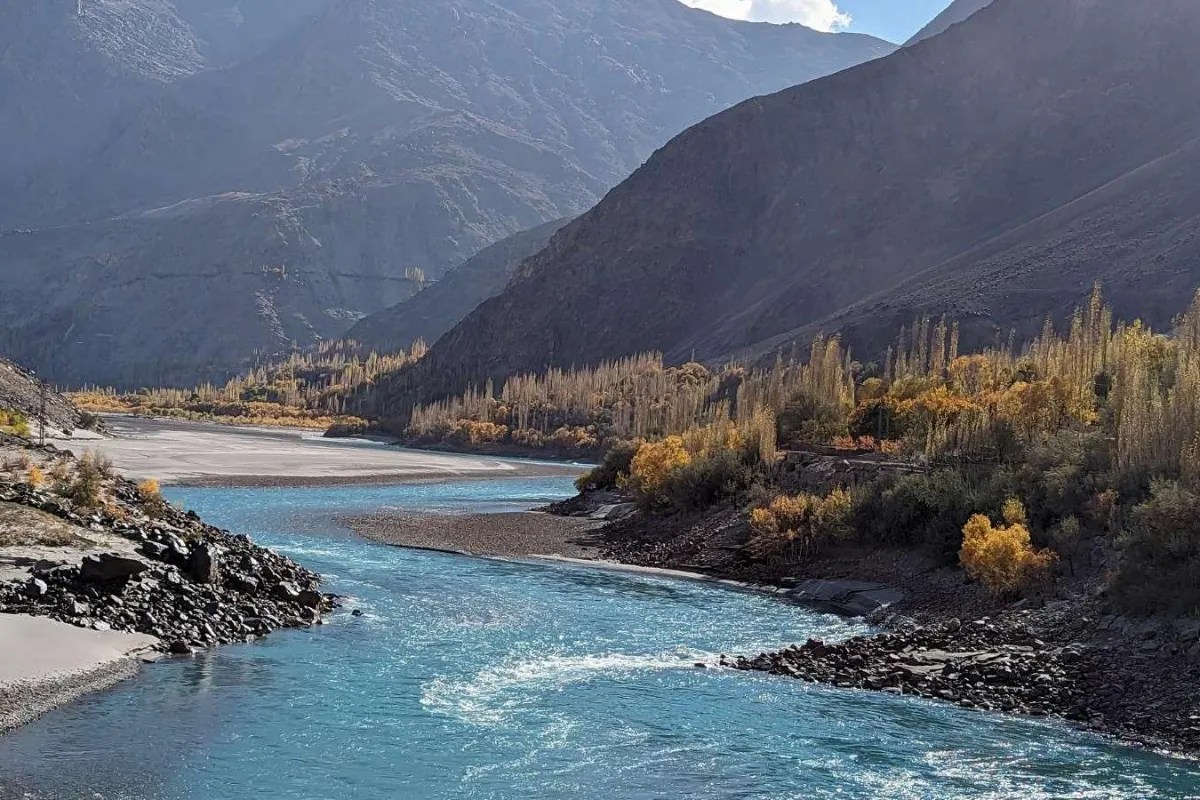
The Indus Waters Treaty is unique in international law because it does not provide for the shared management of water; instead, it partitions the river system. The geography of this partition is defined by the allocation of the "Eastern Rivers" (Sutlej, Beas, Ravi) to India and the "Western Rivers" (Indus, Jhelum, Chenab) to Pakistan.
India’s rights over the Western Rivers are limited to "non-consumptive" uses, which include domestic use, run-of-the-river hydroelectric power generation, and restricted agricultural use. However, the technical specifications for these projects—specifically the storage and sediment flushing mechanisms—have become the primary theater of dispute. Pakistan’s consistent invocation of the "Neutral Expert" and "Court of Arbitration" mechanisms regarding the Kishanganga (330 MW) and Ratle (850 MW) projects has forced India to conclude that the treaty’s dispute resolution process is being weaponized to create "construction paralysis."
The Mechanism of Treaty Revision: Article XII (4)
The legal lever India is currently pulling is Article XII (4) of the IWT. This clause allows for the modification of the treaty through a subsequent ratified agreement between the two governments. India’s argument for revision rests on three analytical pillars:
- Fundamental Change of Circumstances (Rebus Sic Stantibus): The 1960 treaty did not account for the impact of global warming on Himalayan glaciers, which are the primary source of the Indus. The shift from stable glacial melt to erratic precipitation patterns has rendered the original flow allocations ecologically unsustainable.
- The Nexus of Security and Hydrology: A core tenet of modern international relations is that a treaty cannot function in a vacuum. India’s position is that the "goodwill" required to maintain a water-sharing agreement is incompatible with state-sponsored militancy. If the "Indus Basin" is viewed as a single integrated system, the security of the infrastructure is as vital as the volume of the water.
- Technological Obsolescence: The 1960 technical annexures prescribe specific dam designs that are inefficient for modern sediment management. By blocking updated designs, Pakistan inadvertently forces India into using older, less environmentally friendly technologies, which increases the risk of dam failure or siltation—a negative outcome for both nations.
Quantifying the Cost of Stalemate
The economic burden of the current treaty deadlock is asymmetrical. For India, the cost is measured in "Foregone Energy Potential." The Western Rivers have an estimated hydroelectric potential of nearly 18,600 MW, of which only a fraction has been realized. Every year of delay in commissioning projects like Ratle results in billions of rupees in lost revenue and a continued reliance on carbon-intensive energy for the Jammu and Kashmir region.
For Pakistan, the risk is "Food Security Volatility." As the lower riparian state, Pakistan is almost entirely dependent on the Indus for its irrigation network—the largest contiguous system in the world. Any shift in India’s management of the Western Rivers, even within the bounds of the treaty (such as filling allowed storage volumes at specific times), can have cascading effects on Pakistan’s agricultural output during the Kharif and Rabi seasons.
The Neutral Expert vs. Court of Arbitration Conflict
A critical failure in the treaty’s current execution is the parallel activation of two distinct dispute resolution tracks. In 2016, Pakistan requested a Court of Arbitration regarding the Kishanganga project, while India requested a Neutral Expert. The World Bank’s decision to allow both processes to proceed simultaneously created a legal paradox.
- The Neutral Expert track focuses on technical engineering questions (e.g., Is the pondage level within the 1960 limits?).
- The Court of Arbitration track deals with broader legal interpretations of the treaty itself.
This "graded" approach to dispute resolution was intended to be linear, not concurrent. By running both, the World Bank has inadvertently allowed for the possibility of contradictory rulings, which would render the treaty legally unenforceable. India’s demand for a review is a direct response to this systemic breakdown.
The Strategy of Incremental Hydrological Leverage
India is transitioning from a policy of "generous adherence" to "strict technical compliance." This involves three specific operational shifts:
1. Maximizing Permissible Storage
Under the IWT, India is permitted to store up to 3.6 million acre-feet (MAF) of water on the Western Rivers for various purposes (0.4 MAF for general storage, 1.25 MAF for power, and 1.95 MAF for flood control). Historically, India has not utilized this storage. By initiating construction on storage-heavy projects, India can regulate flow timing without violating the treaty’s prohibition on consumptive use.
2. Diversion of the Eastern Rivers
India has already moved to ensure that every drop of the Eastern Rivers (Sutlej, Beas, Ravi) is utilized domestically. The completion of the Shahpur Kandi barrage and the Ujh multipurpose project are designed to stop the "unallocated flow" that previously escaped into Pakistan due to a lack of Indian infrastructure. This is a legitimate exercise of sovereignty that reduces Pakistan’s "bonus" water.
3. Redefining "Run-of-the-River"
The technical definition of a run-of-the-river plant in the 1960s did not account for the necessity of "peaking" power. Modern grids require hydroelectric plants that can ramp up production during peak hours. This requires small amounts of storage (pondage). India’s analytical push is to redefine these technical parameters to reflect 21st-century energy needs, which Pakistan currently views as a violation of the treaty’s spirit.
Data Constraints and Monitoring Gaps
A primary obstacle to any successful renegotiation is the lack of transparent, real-time data sharing. The Permanent Indus Commission (PIC) is mandated to meet annually, but the exchange of hydrological data is often delayed or contested.
- Variable Flow Rates: The Indus flow is highly seasonal, with nearly 80% of discharge occurring in the summer months.
- Sedimentation: The Indus carries one of the highest sediment loads of any river system in the world. Treaty restrictions on "low-level orfices" (outlets) make it difficult for India to flush sediment, leading to reservoir aging and reduced efficiency.
The Geopolitical Risk Profile
Renegotiating the IWT carries significant risks. If the treaty collapses, there is no secondary framework to govern the waters. This could lead to a "Hydrological Cold War" where water becomes a primary instrument of statecraft. China, as the ultimate upper riparian (the Indus originates in Tibet), remains a silent but potent variable. While China is not a party to the IWT, any Indian move to assert absolute sovereignty over the Indus could prompt China to take similar actions on the Brahmaputra or the Indus headwaters.
Furthermore, the World Bank’s role as a guarantor is weakening. India has signaled that it views the Bank’s recent handling of the Kishanganga dispute as biased or, at best, ineffective. Without a credible third-party mediator, the two nations are moving toward a bilateral showdown where power dynamics, rather than legal precedents, will dictate the outcome.
Strategic Forecast: The Shift to Bilateralism
The most probable path forward is not the immediate termination of the treaty, but a prolonged period of "Hydrological Assertiveness" from New Delhi. India will likely continue to issue notices and build infrastructure that tests the limits of the 1960 definitions. The goal is to force Pakistan to the table for a comprehensive renegotiation that links water sharing to broader regional stability and an end to the "dispute for the sake of dispute" strategy.
Pakistan faces a choice: continue the legalistic obstructionism that delays infrastructure and worsens its own water crisis, or accept a modernized IWT that allows for efficient, cooperative management of a dwindling resource. The era of India ignoring its own hydrological rights to maintain a lopsided peace is over. The new status quo will be defined by an uncompromising link between water flow and regional conduct.
The immediate tactical move for stakeholders is to prepare for a "treaty-plus" environment, where supplemental agreements on climate data sharing and joint sediment management are integrated into the existing framework, or risk the total disintegration of the most successful water treaty in history.