The ink on a voter’s thumb dries quickly, but the stain of uncertainty lasts for years.
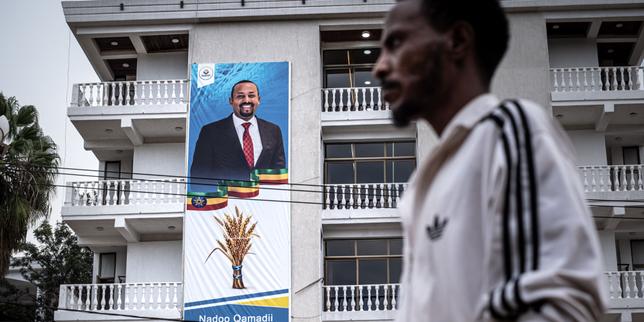
In Addis Ababa, the morning air carries the scent of roasting coffee beans and diesel exhaust. On election days, the capital often wears a mask of quiet order. Queues form outside polling stations. Armed federal police stand at street corners, their presence a silent reminder of where true authority resides. To a casual observer, the scene looks like democracy in motion.
But look closer at the hands holding the voting cards. Notice the slight tremor in a young man's fingers. Watch how an elderly woman glances over her shoulder before entering the cardboard booth. They know what the official international press releases often smooth over. A vote is a choice, but in a nation fractured by regional bloodlines and tightly managed from the top, choosing can be a dangerous act.
Ethiopia’s political reality operates on two distinct tiers. On the surface, there is the theater of federal elections, designed to legitimize the Prime Minister’s grip on power and satisfy foreign donors. Beneath that surface lies a volatile mosaic of ethnic rivalries, regional militias, and deep-seated historical grievances that a mere ballot cannot resolve.
The Weight of the Fragmented Land
To understand why a tightly controlled election happens, we must look beyond the capital to the regional borders. Ethiopia is not a monolith. It is a federation of distinct ethnic regions, each with its own language, pride, and, increasingly, its own armed security forces.
Consider a farmer in the Amhara region, waking up to the sound of distant gunfire instead of birdsong. For him, the political debates broadcast from Addis Ababa are a distant echo. His immediate reality is defined by the shifting front lines of local Fano militias clashing with federal troops. In Oromia, the country's most populous region, the story repeats with different actors but the same tragic script. Discontent simmers, occasionally exploding into violence that makes regular governance impossible.
The federal government faces a perpetual paradox. To maintain the image of a unified, modern state, it must hold elections. Yet, to allow truly open, competitive elections in the current climate would risk tearing the country apart along ethnic seams.
The state response to this dilemma is absolute control. Political opposition is not merely campaigned against; it is systematically dismantled. High-profile dissidents find themselves behind bars or tied up in endless legal battles. Independent journalists learn to measure their words with microscopic precision. When the state controls the media, the electoral board, and the security apparatus, the outcome of the vote is decided long before the first ballot box is sealed.
The Architecture of a Managed Vote
How do you run an election when entire swaths of the country are active conflict zones? You do it by redefining what an election means.
During these tightly managed polls, voting simply does not take place in regions deemed too unstable. Millions of citizens are quietly disenfranchised because the state cannot guarantee security—or perhaps because the state fears how those regions would vote. In the areas where voting does proceed, the atmosphere is heavy with coercion. Local administrative chiefs, known as kebele officials, hold immense power over daily life. They distribute fertilizer, manage food aid, and approve business permits. When a kebele official strongly suggests which party you should support, a farmer thinks of his children’s next meal before he marks his ballot.
This is not the crude ballot-stuffing of the twentieth century. It is a sophisticated, bureaucratic suffocating of opposition.
The Prime Minister presents himself as the sole guarantor of Ethiopian unity, a modernizer holding back the forces of ethnic chaos. It is a compelling narrative, especially for an international community terrified of a state collapse in the Horn of Africa. The message to the public and to foreign allies is simple: support the current leadership, or face total disintegration.
But this stability is a fragile construct built on suppression rather than consensus.
The Human Toll of Invisible Borders
The true cost of this political stagnation is paid by ordinary people whose lives are disrupted by the constant threat of violence. Internal displacement has turned millions of Ethiopians into strangers in their own land. Families flee their homes with nothing but what they can carry, moving from one regional state to another to escape ethnic targeting.
Imagine a schoolteacher who spent his entire career in a multi-ethnic town, only to find himself hiding in a makeshift camp because his ethnicity matches the local militia's current enemy. For him, the political speeches about economic growth and national sovereignty ring completely hollow. The state has failed in its primary duty to protect its citizens, yet it demands their participation in a ritual of democratic validation.
This disconnect creates a profound sense of political cynicism. Among the youth, who make up the vast majority of the population, the enthusiasm that once greeted promises of reform has curdled into apathy or radicalization. When peaceful political change through the ballot box feels impossible, the allure of regional militias grows stronger.
The Breaking Point of Centralized Power
The federal government continues to bet that economic development and infrastructure projects can outpace ethnic grievances. They point to new highways, industrial parks, and the massive concrete wall of the Grand Ethiopian Renaissance Dam as symbols of a prosperous, united future.
But infrastructure cannot fill a vacuum of trust.
The real problem lies in the fundamental design of the system. A centralized authority attempting to dictate terms to deeply entrenched regional identities creates a pressure cooker environment. Every tightly controlled election acts as a temporary lid, screwed down tighter and tighter, while the pressure underneath continues to build. The regional conflicts are not peripheral issues that can be managed indefinitely; they are symptoms of a systemic failure to share power equitably.
True stability will not be found in the neatly tallied percentages of a managed vote. It requires a difficult, painful process of national dialogue that addresses the root causes of ethnic division, historical injustice, and the centralization of authority. Until that happens, the elections will remain a carefully choreographed performance, played out on a stage surrounded by flickering fires.
The polling stations close as dusk falls over Addis Ababa. The ballots are counted, the victory speeches are prepared, and the international observers write their nuanced, cautious reports. On paper, the government secures its mandate. But out in the rural hills, past the military checkpoints and beyond the reach of the state television cameras, the embers of unresolved conflicts continue to glow in the dark, waiting for the next shift in the political wind.