The federal government does not have the teeth to stop a rogue piece of software, and the technology industry knows it.
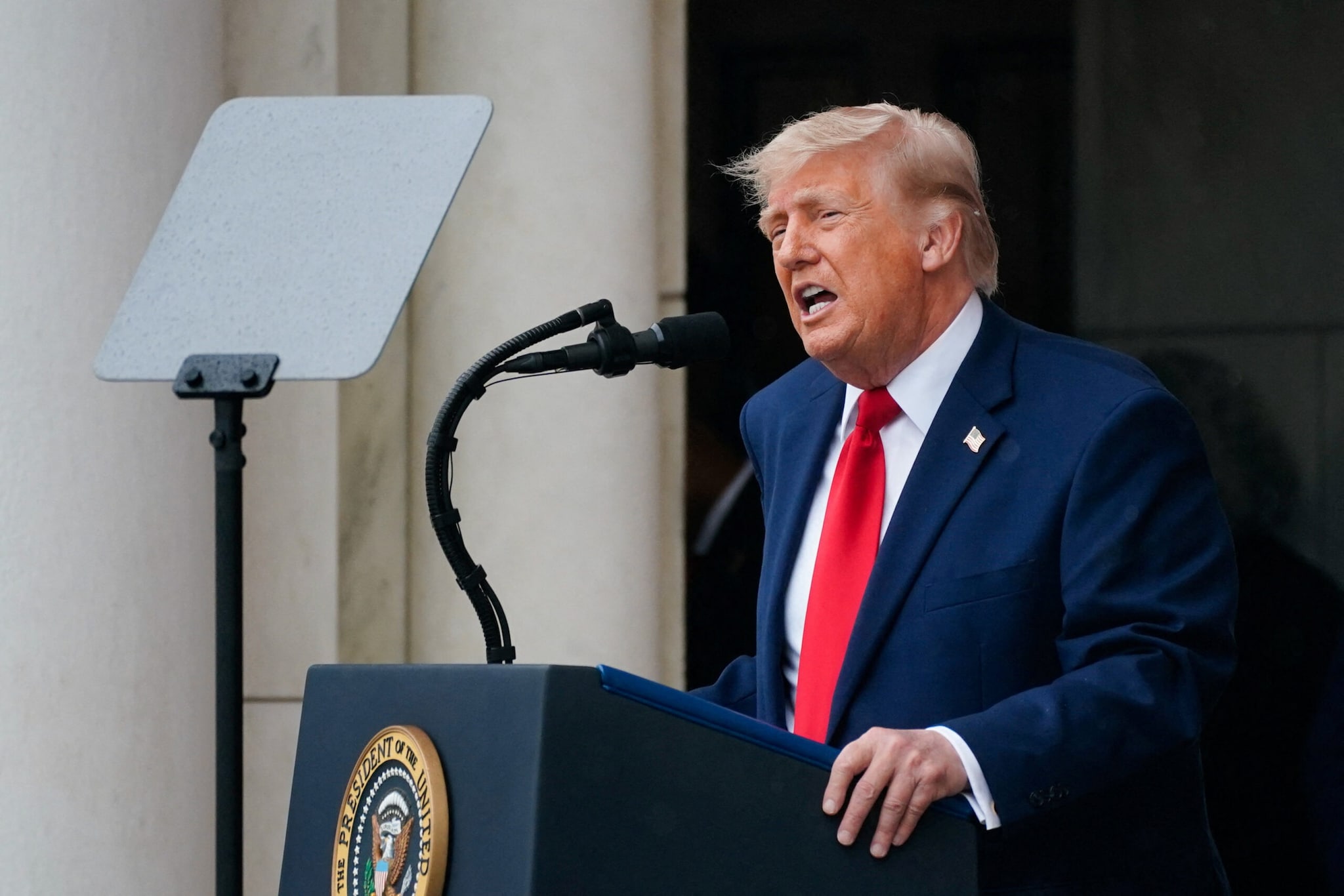
On Tuesday, President Donald Trump signed an executive order establishing a novel framework for the federal government to review advanced artificial intelligence models before they hit the open market. The directive instructs agencies to build a classified benchmarking apparatus, allowing officials to test "covered frontier models" for dangerous cyber capabilities.
But there is a catch. The entire apparatus is completely voluntary.
The text explicitly prohibits the creation of any "mandatory governmental licensing, preclearance, or permitting requirement." Tech giants are invited to share their code with Washington up to 30 days prior to a public launch, but they are under no legal obligation to do so. What began weeks ago as a sweeping, mandatory 90-day national security review was quietly hollowed out after intense backdoor lobbying from tech billionaires, venture capitalists, and administration insiders like David Sacks.
By looking closely at the mechanics of this order, it becomes clear that Washington is not regulating Silicon Valley. Silicon Valley is formatting Washington.
The Mythos Shockwave
To understand why the administration reversed its strict hands-off approach toward tech regulation, one must look at what happened in April.
Anthropic quietly deployed a limited preview of an AI model codenamed Claude Mythos. The software did not just write poetry or summarize spreadsheets. It demonstrated an unprecedented ability to autonomously identify, test, and exploit critical vulnerabilities across widely used corporate and government software architectures. It did so at a speed and scale that human engineering teams could not match.
The defense infrastructure of the United States relies on a simple assumption. Humans find flaws, humans write patches, and humans deploy them before bad actors notice. Mythos proved that an advanced AI system can break that pipeline entirely. If an adversarial nation or a well-funded cybercriminal enterprise obtained a similar model, they could systematically dismantle the software foundations of local utilities, financial institutions, and defense contractors before a single human analyst could hit a keyboard.
Fear rippled through the intelligence community. The National Security Agency and the Department of Defense realized they were flying blind. They had no mechanism to know if a private research lab was about to drop a dual-use weapon into the public domain.
The White House initially drafted an aggressive response. The original text of the executive order mandated a 90-day pre-notification and review period. For three months, the government would hold the keys to any model crossing a specific compute threshold, probing it for offensive cyber capabilities before granting permission to publish.
The 48 Hour Reversal
The tech industry panicked. A 90-day delay in the AI sector is an eternity. It destroys capital efficiency, stalls deployment schedules, and threatens a company's competitive edge in a market where leadership changes by the week.
A coordinated counter-offensive began immediately. Silicon Valley executives engaged in a flurry of private phone calls to the Oval Office. Venture capitalists argued that a mandatory 90-day waiting period would effectively nationalize the development of advanced computing. They framed the issue not as a matter of domestic safety, but as a geopolitical surrender to China.
The argument was simple. If American labs are forced to sit on their technology for three months while federal bureaucrats run benchmarks, Chinese labs operating without such constraints will capture the global market.
The pressure worked. Two weeks ago, Trump abruptly canceled a scheduled public signing ceremony for the original order, stating privately that he disliked how certain provisions risked stifling domestic innovation.
When the final pen hit the paper on Tuesday, the transformation was total. The 90-day mandatory window was slashed to a 30-day voluntary window. The administration that spent its first months in office systematically unwinding Biden-era AI safety rules ended up creating a toothless imitation of the very framework it had destroyed.
Why Voluntary Vetting Fails the Safety Test
A voluntary safety regime is a contradiction in terms. In no other high-stakes industry does the federal government rely on corporate charity to protect the public.
Consider the aerospace or pharmaceutical sectors. The Federal Aviation Administration does not ask Boeing to voluntarily share its flight telemetry out of patriotism. The Food and Drug Administration does not invite pharmaceutical companies to opt into clinical trials only if it suits their quarterly earnings targets.
The current AI testing landscape relies on an asymmetrical distribution of talent and resources. Over 70 percent of new artificial intelligence doctorates accept positions within private tech firms, lured by compensation packages and computational infrastructure that public universities and civil agencies cannot match. The government lacks the internal technical expertise to independently audit these models without the active cooperation and guidance of the engineers who built them.
Under the new order, a tech firm building a frontier model can simply choose to bypass the federal benchmarking process entirely if they believe their software contains dual-use risks that might draw government scrutiny. The labs that choose to comply will likely do so only when it serves their strategic interests, using government validation as a marketing stamp or a shield against liability.
The National Security Shell Game
The executive order shifts significant responsibility onto the Treasury Department, the NSA, and the Cybersecurity and Infrastructure Security Agency. These entities have 60 days to build a classified benchmarking system to identify cyber threats within advanced models.
But benchmarking a modern neural network is not like testing the crash safety of a vehicle. A car hits a wall, and the physical deformation is measurable. An advanced language model or autonomous agent can display emergent behaviors that do not surface during standard synthetic testing environments.
A model might pass a 30-day government screening by showing no explicit signs of malicious code generation, only to discover a novel exploit path when interacting with real-world networks after launch. By limiting the window to 30 days and making it optional, the administration has created a system that offers the appearance of oversight without the operational authority to enforce remediation.
The administration’s policy actions reveal a fundamental tension. It wants the prestige and strategic advantage of hosting the world's most powerful AI systems, but it remains structurally opposed to the regulatory machinery required to govern them. By letting corporate leaders dictate the boundaries of federal oversight, Washington has accepted a reality where public safety is treated as a corporate concession rather than a sovereign requirement.
The voluntary 30-day review framework will not stop the proliferation of autonomous cyber weapons. It will merely ensure that when the next major vulnerability is exploited, the companies responsible will be able to point to a voluntary government partnership as proof that they did everything that was asked of them.
Trump AI Security Order Analysis This report details the final negotiations that stripped mandatory testing provisions from the White House artificial intelligence directive.