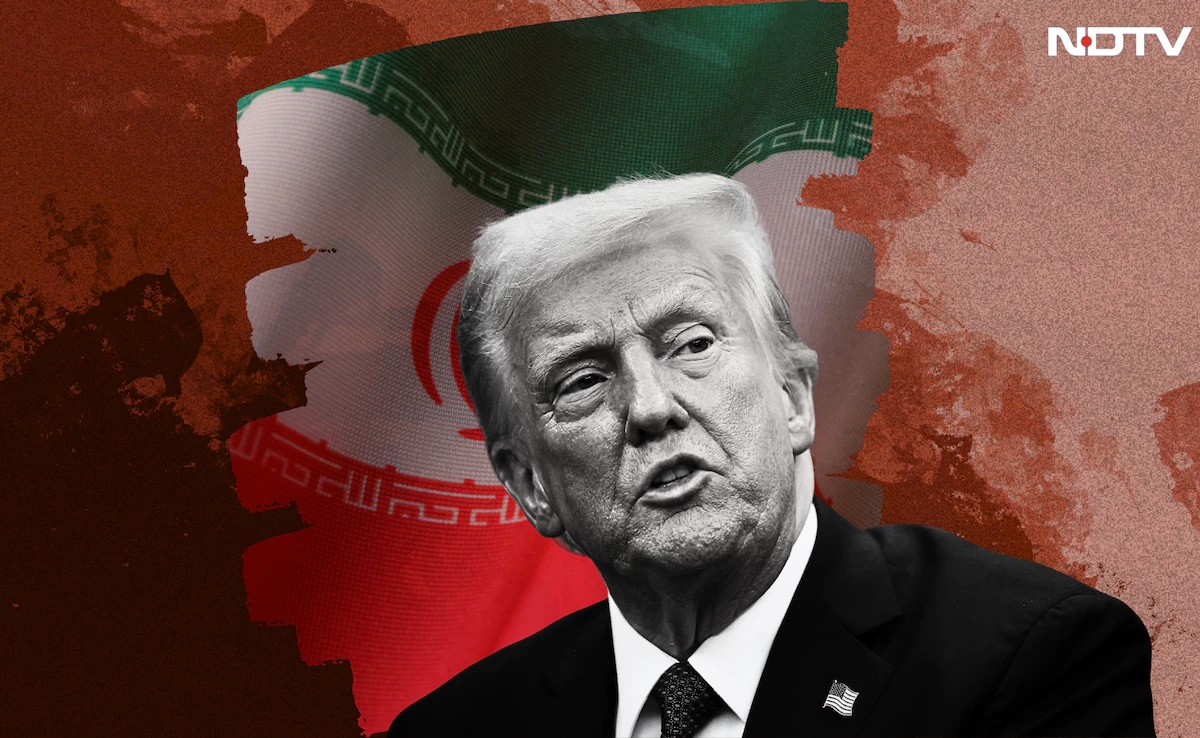
The initial premise of Operation Epic Fury was built on a seductive military fallacy: that a decapitation strike against the Iranian leadership would paralyze the state and force a quick, manageable transition. Instead, three weeks after the February 28 strikes that killed Supreme Leader Ali Khamenei and his inner circle, the conflict has metastasized into a regional war of attrition that defies any single actor’s ability to govern the outcome. While the White House maintains that the campaign remains disciplined and targeted, the reality on the ground is a chaotic sprawl of horizontal escalation that has effectively shuttered the world’s most critical energy artery.
The Strait of Hormuz is no longer a functioning waterway. Despite American and Israeli dominance in the air, the Iranian military has successfully executed a "distributive defense" strategy, delegating strike authority to localized commanders who continue to harass shipping with low-tech drones and mobile missile batteries. This was the scenario the Pentagon hoped to avoid—a war of thousand cuts that cannot be "won" through traditional air superiority because the targets are too small, too numerous, and too integrated into civilian infrastructure.
The Strategy of Unbridled Escalation
Tehran has abandoned the playbook of calibrated retaliation. In previous decades, the Islamic Republic typically responded to provocations with deniable, proportional shadow-boxing. That restraint died with the first wave of B-2 bombers over Tehran. Under the newly appointed Mojtaba Khamenei, the regime’s survival strategy has shifted toward making the entire Middle East a "no-go zone" for global capital.
By hitting targets in nine different countries within the first 24 hours—including the UAE, Qatar, and Kuwait—Iran signaled that it would not be the only party to suffer. This horizontal escalation serves a specific psychological purpose. It forces the United States to stretch its defensive umbrella over an impossible geography, protecting everything from desalination plants in Bahrain to oil refineries in Saudi Arabia.
The military reality is stark. Israel’s Iron Dome and Arrow systems, alongside US Aegis destroyers, have intercepted roughly 92% of the 400+ ballistic missiles fired from Iranian soil. In a vacuum, that is a tactical triumph. However, the 8% that get through, combined with hundreds of loitering munitions, are hitting high-value civilian and economic targets. A single missile landing in an Israeli residential neighborhood or a drone strike on a Qatari LNG terminal does more to shift the political needle than a dozen intercepted salvos.
The Economic Ghost of the 1970s
The closure of the Strait of Hormuz has removed 20% of the world’s oil and 30% of its liquefied natural gas from the market. This isn't just a bump in gas prices; it is a systemic shock that is currently rewiring the global economy in real-time. Brent Crude has already cleared $120 per barrel, and with QatarEnergy declaring force majeure on exports, Europe is facing an energy deficit that makes the 2022 Russian gas crisis look like a minor supply chain hiccup.
The crisis is most acute in the Gulf Cooperation Council (GCC) states. These nations, despite their vast wealth, are fundamentally fragile because they import 80% of their calories. The maritime blockade has triggered a "grocery supply emergency," with food prices in some regional hubs jumping 120% in a fortnight. The narrative of the Gulf as a permanently safe harbor for expats and billion-dollar investments has been shattered.
- Logistics Collapse: Major shipping lines like Maersk are now avoiding the region entirely, rerouting around the Cape of Good Hope and adding weeks to transit times.
- Inflationary Pressure: The International Energy Agency has labeled this the "greatest global energy and food security challenge in history," warning of a global stagflation cycle.
- Capital Flight: Sovereign wealth funds are pivoting from visionary AI ventures to basic survival, securing food and water as the region's "umbilical cord" is severed.
The Succession Crisis and the New Hardline
The death of Ali Khamenei did not lead to a pro-Western uprising or a moderate pivot. If anything, the vacuum has been filled by the IRGC’s most ideological elements. Mojtaba Khamenei’s elevation to Supreme Leader was finalized by a rump Assembly of Experts under the literal shadow of Israeli airstrikes. This has created a "rally 'round the flag" effect, even among Iranians who previously loathed the theocracy.
The killing of Ali Larijani on March 17—the man many hoped would be the pragmatic bridge to a ceasefire—effectively ended the possibility of a negotiated exit in the near term. There is no one left to talk to. The Trump administration’s demand for a "fair and balanced" deal is being met with silence from a Tehran leadership that now views the conflict as existential.
Lebanon as the Second Front
While the world watches the Persian Gulf, the war in Lebanon has reached a tipping point. Hezbollah, seeking to avenge the Iranian leadership, has turned northern Israel into a ghost town. Israel has responded with a ground incursion and a massive air campaign south of the Litani River, but the cost is staggering. Over 1,000 people have been killed in Lebanon since the second front opened on March 2.
The demolition of bridges and houses in southern Lebanon is intended to break Hezbollah’s logistics, but the group’s tunnel networks and decentralized command structure make it a resilient foe. This is no longer a "short excursion." It is a multi-theater conflagration where the US and Israel are finding that while they can destroy any target they can see, they cannot see everything that can hurt them.
The White House continues to project a message of "Peace Through Strength," but the strength required to maintain this level of regional containment is currently exceeding available assets. Every carrier strike group moved to the Gulf is a hole left in the Indo-Pacific. Every Patriot battery deployed to Riyadh is one less available for Eastern Europe.
The strategic oversight was believing that the Iranian regime would play by the rules of conventional deterrence when faced with total destruction. They haven't. They have opted for chaos.
Would you like me to analyze the specific impact of these supply chain disruptions on European manufacturing sectors?