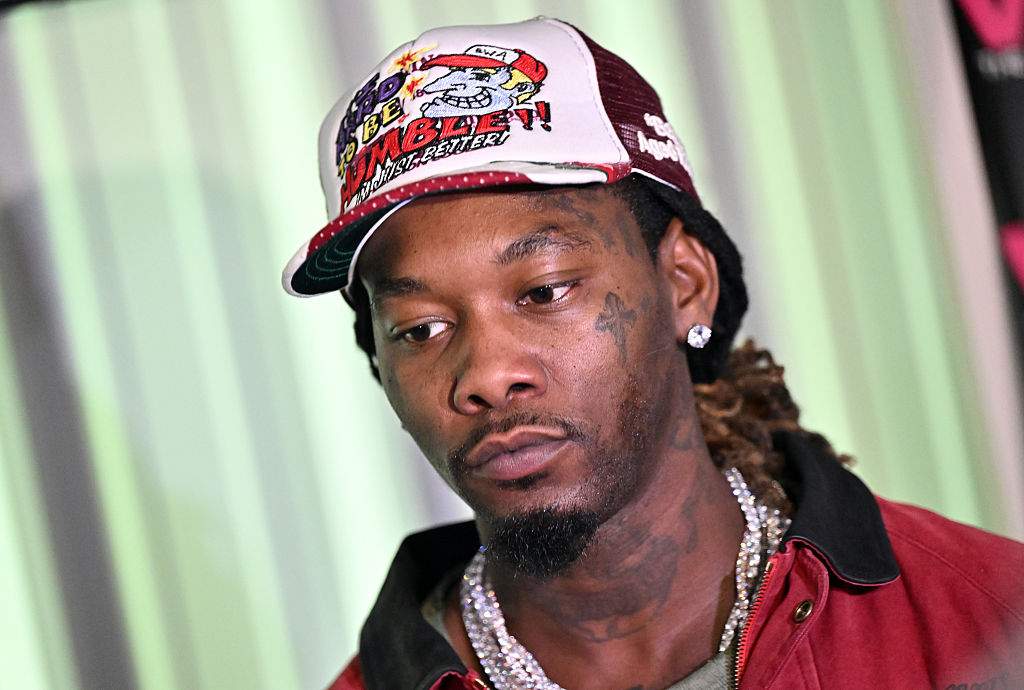
The standard narrative surrounding the attempted robbery and shooting of Offset at a Florida casino is a masterclass in surface-level reporting. Law enforcement points to a botched heist. The media focuses on the proximity of the violence to a luxury venue. They want you to believe this was an isolated lapse in security or a random act of desperation.
They are wrong.
This wasn't a failure of "security." It was a failure of the modern celebrity's understanding of the geography of risk. We live in an era where the digital footprint is a roadmap for extraction, and the physical presence of a high-profile target is a liability that no amount of hired muscle or "luxury" surveillance can fully mitigate. If you think a casino’s gold-plated reputation protects you, you aren't paying attention to how the predator-prey dynamic has evolved in the age of real-time metadata.
The Myth of the Casino Fortress
Most people view a high-end casino as a sovereign state. They see the cameras, the floor bosses, and the plainclothes security and assume they are in a bubble. This is the first and most dangerous mistake.
A casino’s primary directive is to protect its house edge and its cash flow. You are the product, not the client. While they want to prevent violence on their floor to avoid a PR nightmare, their security infrastructure is designed to catch card counters and chip thieves, not to repel a coordinated paramilitary-style robbery attempt targeting an individual’s personal assets.
The FBI’s report on the Offset incident suggests the suspects tracked him to the venue. This isn't just about "being in the wrong place." It's about the predictability of the lifestyle. High-profile targets operate on a loop of luxury hubs. When you broadcast your location to millions, you aren't "engaging with fans." You are providing a live-streamed vulnerability assessment to every crew with enough gas money to get to the parking lot.
Wealth as a Target Vector
In the industry, we talk about "Target Hardening." Most celebrities do the opposite—they engage in Target Softening.
Every piece of jewelry, every stack of cash shown on a social media story, and every announcement of a specific venue appearance acts as a beacon. The FBI suspects weren't looking for a generic victim. They were looking for a specific payout.
The "lazy consensus" says Offset was a victim of circumstance. Logic dictates he was a victim of a systemic failure to understand that visibility is the inverse of security.
Imagine a scenario where a high-net-worth individual moves with the same digital discipline as a mid-level intelligence officer. No live tags. No flex posts until 48 hours after leaving a location. No predictable "luxury" haunts. The robbery attempt wouldn't just fail; it wouldn't even be planned. Predators don't hunt what they can't track.
The Security Theater Fallacy
Most celebrity security details are decorative. I’ve watched entourages of six-foot-five guys who look like they belong in a Marvel movie fold the moment a situation gets kinetic. They are hired for their "presence," which is a polite way of saying they are there to look scary in photos.
Real security is invisible. It’s the advance team that checked the exits two hours before the principal arrived. It’s the driver who knows three different routes out of the casino garage and has already scouted the nearest level-one trauma center.
The Offset shooting highlights the gap between Security Theater and Protective Intelligence. If suspects are able to get close enough to engage in a robbery attempt, the security team has already lost the battle. The fight should have been won during the planning phase. If you're drawing your weapon at a casino valet stand, you've already failed.
The Logistics of the Extraction
Let’s look at the mechanics of the crime. Robbing a high-profile individual at a casino isn't about the money in the vault; it's about the immediate liquidity on the person.
- The Lead Time: The suspects didn't just stumble upon Offset. They monitored his movements.
- The Exit Strategy: Most casino robberies fail because of the escape, not the entry. The suspects in Florida were counting on the chaos of the crowd and the delayed response of local law enforcement.
- The Weaponization of the Crowd: In a high-traffic area, security is hesitant to engage for fear of collateral damage. The suspects knew this. They used the "civilian shield" to their advantage.
The FBI's focus on the "botched" nature of the crime ignores the fact that the suspects were emboldened enough to try it in the first place. That boldness comes from observing a target that believes its own hype about being "untouchable."
Why the "Safe Space" is a Lie
We’ve seen this pattern before—from the Kim Kardashian heist in Paris to the tragic loss of PnB Rock in Los Angeles. There is a persistent, arrogant belief that certain environments are "off-limits" for violence.
The industry likes to pretend that if you pay enough for a table or a suite, you are buying safety. In reality, you are just buying a more expensive cage. The higher the stakes, the higher the incentive for the opposition to take a risk.
A casino is a chaotic environment with high turnover and thousands of moving parts. It is the perfect place for a professional crew to blend in. The "safe space" doesn't exist. There are only zones of varying risk, and a Florida casino on a busy night is a high-risk environment, regardless of the thread count on the sheets.
The Modern Celebrity’s Security Debt
Every time a celebrity post-and-ghosts (posting a location after they've left), they are paying down their Security Debt. Every time they post in real-time, they are taking out a high-interest loan on their own life.
The suspects in the Offset case weren't geniuses. They were just people who understood how to read a map and a clock. The FBI's narrative focuses on the suspects' intent, but the real story is the target's availability.
If you are a high-profile individual, your greatest weapon isn't your bodyguard’s Glock. It’s your own unpredictability. If the world knows where you are going to be tonight at 11:00 PM, you have already surrendered the only advantage you had.
Breaking the Cycle of Reactivity
The standard response to an incident like this is to hire more guards. This is reactive and ineffective. It just creates a bigger target.
The proactive approach—the one nobody wants to talk about because it isn't "cool"—is discretion.
- Audit your digital footprint: If a stranger can find you in fifteen minutes using only a smartphone, your security is a joke.
- Vary your "habitual" locations: If you go to the same three spots every time you’re in Miami or Vegas, you are a sitting duck.
- Demand intelligence, not just muscle: If your security team isn't doing advance work on the venues you visit, fire them.
The FBI says they tried to rob him. I say they were invited to by a lifestyle that prioritizes optics over survival.
The industry will keep writing these stories as if they are tragedies of "bad luck." But luck has nothing to do with it. This is a cold, calculated game of logistics and risk management. If you keep playing by the old rules—believing that wealth buys a shield—you will eventually find yourself at a valet stand looking down the barrel of someone else's reality.
Stop looking for "safety" in the places that sell it to you. Security is an internal discipline, not a service you can outsource to a guy in a suit with an earpiece. The moment you believe you're safe because of where you are is the exact moment you are most in danger.
The house always wins, but you don't have to be the one paying the debt.


