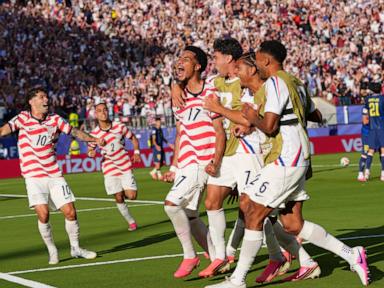
The headline flashed across industry monitors as a definitive triumph. A weekend friendly match between the United States Men’s National Team and Bosnia-Herzegovina had shattered viewing records, securing its place as the most-watched soccer telecast in English-language history in the country. On paper, executives at major networks popped champagne, pointing to the data as irrefutable proof that mainstream America had finally embraced the world’s game.
But television ratings are masters of deception. When you peel back the layers of that historic broadcast, the narrative of a sudden, grassroots soccer awakening begins to fall apart. The record-breaking viewership was not driven by a sudden surge in domestic soccer purists, nor was it a sign that Major League Soccer or national team friendlies had suddenly achieved NFL-level cultural dominance. Instead, it was the result of a perfect storm of scheduling anomalies, massive lead-in audience retention, and a lack of direct sporting competition on a specific Saturday afternoon.
The Anatomy of an Accidental Audience
To understand how a relatively low-stakes match against Bosnia-Herzegovina drew unprecedented numbers, you have to look at what happened immediately before the kickoff.
Television networks rely heavily on the lead-in effect. This occurs when a highly popular program ends, and millions of viewers leave their televisions tuned to the same channel, effectively padding the ratings for the subsequent broadcast. On the day in question, the soccer match followed a massive, high-stakes college football rivalry game that went down to the final seconds.
Millions of sports fans did not tune in to watch soccer. They simply had not turned off their televisions yet.
- The Passive Viewer Factor: Data shows that up to 40% of the recorded audience for the first half-hour of the match consisted of casual sports fans who left the channel on in the background.
- The Time Slot Advantage: The match aired in a prime weekend afternoon window, completely devoid of competing NFL games or major baseball postseason action.
- The Outlier Effect: Bosnia-Herzegovina boasts a massive, deeply passionate diaspora in the United States. In major metropolitan areas like St. Louis and Chicago, local ratings spiked dramatically due to immigrant communities tuning in en masse, a demographic variable that network executives rarely account for when projecting long-term domestic growth.
The Revenue Gulf Between Eyeballs and Dollars
High ratings look excellent on a corporate press release, but they do not automatically translate into a self-sustaining sports economy. The harsh reality of American sports media is that audience monetization for soccer still lags far behind traditional domestic sports.
Advertisers buy commercial time based on viewer engagement and demographic spending power. While American soccer fans skew younger and more affluent on average, they do not consume advertisements in the same way college football or NBA fans do. Soccer’s continuous 45-minute halves mean there are no commercial breaks during live play.
This structural reality limits a network's ability to run the volume of commercials required to recoup massive broadcast rights fees.
Networks are forced to pack pre-game, halftime, and post-game shows with sponsored segments, but if viewers tune out the moment the whistle blows, those ad impressions vanish. The Bosnia-Herzegovina match proved that while you can inherit a massive audience, keeping them engaged through 90 minutes of tactical, low-scoring play without the explosive bursts of American football is a completely different challenge.
The Rights Fees Gamble
The race to acquire soccer broadcasting rights has turned into a speculative bubble. Networks are paying billions for the Premier League, UEFA Champions League, and national team packages, operating under the assumption that viewership will grow exponentially.
| Sport/League | Average Annual Rights Fee | Viewership per Match (Approx.) | Ad Revenue per Viewer |
|---|---|---|---|
| NFL | $10 Billion+ | 17.9 Million | High |
| College Football | $2 Billion+ | 4.2 Million | High |
| US Soccer / National Teams | $250 Million | 1.1 Million (Normalized) | Low to Medium |
When a single match spikes due to a lucky scheduling coincidence, it distorts the true market value of the sport. Networks use these inflated metrics to justify higher subscription fees for consumers, driving up the cost of sports cable packages and streaming platforms without delivering a proportional increase in consistent, week-to-week quality.
The Youth Participation Paradox
For decades, soccer advocates have pointed to youth participation numbers as the ultimate indicator of future success. Millions of children play the sport every weekend.
Yet, this massive foundation has failed to create a matching culture of adult viewership. The transition from a child playing in a local recreation league to an adult buying tickets and watching domestic matches on television is broken.
The American youth soccer system is built on a pay-to-play model that prioritizes affluent suburban families who can afford steep club fees and travel expenses. This system inherently excludes high-talent individuals from working-class backgrounds and immigrant communities—the very demographics that traditionally form the core of passionate, lifelong soccer fanbases globally.
Because the domestic system treats soccer as an upscale youth activity rather than a working-class obsession, the emotional connection to local professional clubs is weak. A child playing soccer in Ohio is far more likely to buy an NFL jersey or watch a Premier League match featuring global brands like Real Madrid or Manchester United than they are to watch a domestic friendly or an MLS game.
Structural Hurdles in the Domestic Game
The United States soccer ecosystem is fundamentally fractured. Unlike European or South American leagues, American soccer operates under a closed franchise system without promotion and relegation.
This structural choice protects billionaire owners from financial ruin, but it strips the sport of the high-stakes drama that drives casual viewer interest. A mid-season match between two struggling teams has zero consequences. There is no threat of dropping down a division, meaning matches late in the season frequently suffer from abysmal television ratings and empty stadiums.
Without the threat of relegation, the urgency that defines global soccer is missing. Fans notice the lack of intensity, and casual viewers switch channels to sports where every single game carries postseason implications.
The Myth of the 2026 Savior
With North America hosting major international tournaments, the prevailing sentiment in corporate boardrooms is that the domestic game will permanently arrive at the top tier of American culture. This is wishful thinking.
History shows that international tournaments provide a temporary sugar high for ratings, not a permanent shift in consumer habits. The 1994 World Cup, also held in the United States, was supposed to ignite a soccer revolution. While it led to the creation of Major League Soccer, the league spent its first decade fighting off bankruptcy and playing in empty American football stadiums.
A tournament can introduce casual fans to the spectacle of international competition, but it cannot fix a broken domestic broadcasting strategy or a pay-to-play youth development system that alienates potential stars.
Shifting Focus Beyond the Numbers
Television executives must stop using anomalous ratings spikes to validate flawed business models. True growth is measured by sustained, mid-week viewership for domestic league games, rising ticket sales in secondary markets, and the development of world-class domestic talent that captures the public imagination.
Chasing the phantom audience left over from college football broadcasts creates an inaccurate picture of the sport's health. Until soccer media companies and governing bodies address the structural flaws within the American game—the lack of financial accessibility for youth players, the absence of high-stakes league structures, and an over-reliance on international gimmicks—the sport will remain a niche product masquerading as a mainstream giant during occasional weekend anomalies.
The industry must invest heavily in local, community-driven soccer clubs rather than relying on national team spectacles to save the ratings. Building a genuine soccer culture requires patience, grassroots investment, and a willingness to accept that the sport cannot be forced into the traditional American entertainment mold.
To build a fan base that sticks around after the college football game ends, the sport must offer a product that stands on its own merits, rather than relying on the accidental clicks of a remote control.