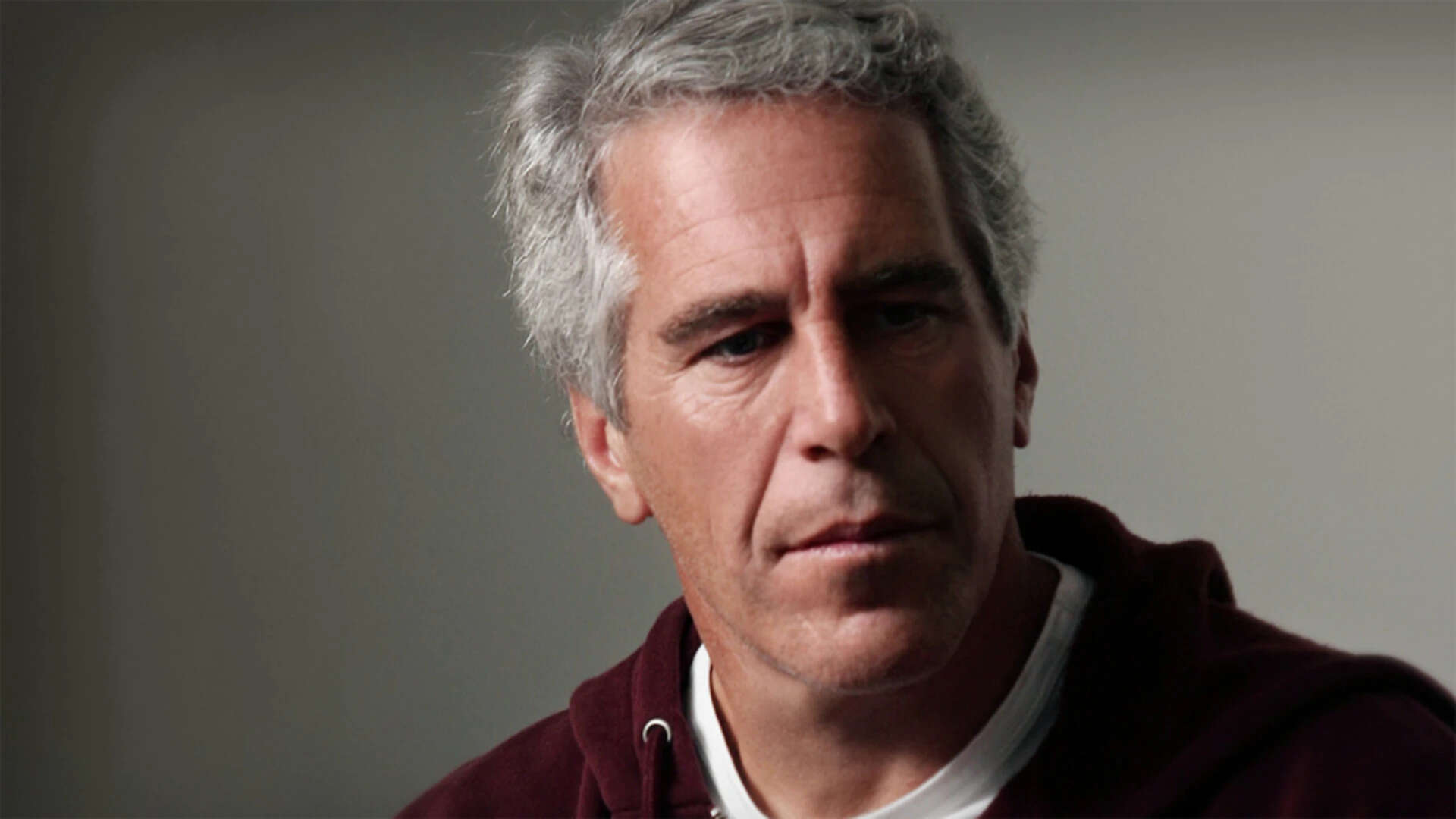
The federal government recently released millions of pages of long-withheld investigative records concerning the late financier and convicted sex offender Jeffrey Epstein. Within the first wave of disclosures, the Department of Justice confirmed what backroom investigators had whispered about for a generation. American presidents were inextricably linked to Epstein's orbit far deeper than previously acknowledged. The newly unsealed documents include internal prosecutors' notes detailing that Donald Trump flew on Epstein’s private aircraft significantly more times during the 1990s than was ever disclosed in prior court proceedings or public flight manifests.
Rather than settling decades of speculation, the massive document dump has exposed the calculated machinery of Washington’s selective disclosure. By dropping millions of pages heavily obscured by black marker, the government has managed to fulfill the letter of a congressional mandate while simultaneously weaponizing the narrative. This is not the clean breakthrough the public was promised. It is an exercise in damage control, orchestrated by an establishment that understands the best way to hide a secret is to bury it under three million pages of data.
The Strategy behind the White House Document Drop
The release was compelled by the passage of the Epstein Files Transparency Act, a rare bipartisan measure pushed through Congress by a discharge petition. Yet the execution of the law tells a far more complicated story about institutional self-preservation. Before the documents were uploaded to the public Department of Justice website, physical binders titled "The Epstein Files: Phase I" were hand-delivered to select political commentators and friendly media influencers at the White House.
This unusual staging allowed the administration to set the initial public relations spin. By control-feeding the information to political allies first, the narrative was immediately fractured along partisan lines. One side focused heavily on unredacted mentions of Bill Clinton, while the other seized on newly unsealed emails from federal prosecutors revealing Trump’s previously unknown travel logs. The reality of the dump was far less revelatory than the theater surrounding it. The initial tranches consisted largely of documents that had already leaked or circulated in public dockets for years, dressed up as fresh transparency.
Redaction as a Weapon of Disinformation
True investigative depth requires looking at what the government chose to hide rather than what it chose to show. Out of the millions of pages processed by the FBI and the Department of Justice, entire blocks of critical evidence have been completely blacked out. A 119-page document under the file name "Grand Jury-NY" remains completely unreadable. Another three-document sequence totaling 255 pages contains nothing but solid black bars.
The official justification for these heavy redactions is the protection of victim identities and ongoing investigative integrity. But the blanket nature of the blackouts has drawn sharp criticism from congressional investigators who point out that the redactions frequently obscure the identities of high-ranking government officials, foreign diplomats, and corporate titans who stayed at Epstein's properties. When the state deletes information on this scale, the redaction itself becomes a form of narrative control. It leaves the public to guess at the blanks, ensuring that the true architecture of Epstein's operation remains shielded behind the wall of state secrecy.
The Disappearing Files of the Justice Department
The chaotic rollout reached a critical point when at least 16 files briefly disappeared from the official Department of Justice portal shortly after being uploaded. Among the temporarily removed items were specific photographic files. This technical anomaly was quickly defended as an administrative error requiring data correction.
The episode illustrated the extreme fragility of digital transparency. When the gatekeeper of the files is the very agency that negotiated Epstein’s highly controversial 2008 non-prosecution agreement in Miami, every digital glitch looks like a deliberate retreat. The Department of Justice later restored the files following intense pushback from independent journalists and oversight committee members, but the incident proved that public access to these records is entirely dependent on continuous scrutiny.
The Problem of Planted Evidence
Buried within the fourth major wave of document releases was an internal FBI file containing a highly controversial postcard allegedly written by Epstein to convicted former sports doctor Larry Nassar. The letter made crude, explicit references to the sexual habits of an American president.
The Department of Justice immediately flagged the document as a verified fabrication following handwriting analysis by the FBI. Yet, under the strict guidelines of the Transparency Act, the government was legally required to release the file anyway because it was part of the active investigative folder. This highlights the inherent danger of unedited document dumps. The files are not a curated list of undisputed facts. They are a raw repository of tips, dead-end leads, intentional disinformation, and unverified raw intelligence. By releasing fake letters alongside genuine investigative leads, the government effectively muddy the waters, allowing skeptics to dismiss the entire archive as a collection of unverified rumors.
The Flight Logs and the Institutional Failure
The most concrete, undeniable revelations within the new tranches belong to the internal emails written by federal prosecutors in January 2020. An assistant U.S. attorney from the Southern District of New York noted that newly obtained flight records showed Trump was on Epstein’s jet "many more times than previously has been reported."
The prosecutor wrote to colleagues that they needed to document these trips carefully so that the legal team wouldn't face any surprises during future court proceedings. The records show specific flights between 1993 and 1996 where Trump, Epstein, and Ghislaine Maxwell were the exclusive passengers. The significance of this finding lies not in immediate proof of criminal behavior, but in the glaring omission of these facts from earlier investigations. For two decades, the public was told that the full passenger manifests of the private aircraft had been disclosed. The discovery of missing logs proves that the initial federal investigations were either incompetent or intentionally limited in scope.
The same institutional blindness applies to the handling of Bill Clinton's ties to the financier. While the former president has repeatedly maintained that he cut ties with Epstein decades ago and had no knowledge of his crimes, unsealed depositions from Epstein’s household staff paint a picture of deep social familiarity. Secret Service logs and internal agency emails show a pattern of elite protection where high-profile figures were insulated from the immediate fallout of the Palm Beach police department's initial 2005 investigation.
The Limits of Judicial Exposure
The uncomfortable truth of the Epstein scandal is that the American legal system was never designed to expose the full scope of a network like this. Criminal prosecutions are narrow by design. They focus strictly on proving specific charges against specific defendants within a set timeframe. When Epstein died in his Manhattan jail cell in 2019, the criminal case against him died with him, effectively halting the judicial machinery that could have forced his associates to testify under oath.
What remains is a historical ledger controlled by political actors. The current document releases are being used as ammunition in an ongoing political war, where each faction selects the pages that damage their opponents while ignoring the systemic corruption that allowed Epstein to operate with impunity for decades under multiple administrations. True accountability cannot be found in a heavily redacted PDF published at midnight on a government server. It requires a permanent, independent commission with full subpoena power, completely detached from the Department of Justice and the political interests of the executive branch. Until that happens, the unsealed files will remain exactly what they are: a carefully managed illusion of transparency designed to give the public the appearance of answers while keeping the real secrets safe.