Experience usually wins in Illinois. If you looked at the 2026 primary results from Tuesday night, you saw a familiar pattern. Even when the noise gets loud and the attack ads turn nasty, the established names in the Democratic party tend to hold their ground. Voters had a chance to flip the script in several key House races, but they largely chose the names they already knew.
It wasn't a total shutout for the new guard, though. The biggest story of the night came from the 7th Congressional District, where the retirement of a legend finally cracked the door open. After nearly 30 years of Danny Davis, change finally arrived, but it arrived in the form of an established state legislator, not a radical outsider.
The End of the Danny Davis Era
For three decades, Danny Davis was the 7th District. He survived countless primary challenges, including a few scares from activist Kina Collins in recent years. But when he finally decided to step aside last summer, it set off a gold rush. Thirteen candidates jumped in. It was a chaotic, expensive mess.
State Representative La Shawn Ford emerged from the pile as the projected winner. Honestly, it wasn't even that close toward the end of the night. Ford had the one thing money can't buy in a 13-person race: the blessing of the man leaving the seat. Davis stood right next to Ford during his victory speech.
Melissa Conyears-Ervin, the Chicago City Treasurer, was supposed to be the heavyweight here. She had the cash and the name recognition, but a $30,000 ethics fine from 2025 regarding the firing of whistleblowers hung around her neck like a stone. You can't run on "integrity" when the Board of Ethics is sending you a bill for violations. She conceded early, leaving Ford to face Republican Chad Koppie in November. In this district, the primary is the real election. Ford is basically headed to D.C.
Bill Foster and the Progressive Wall
Out in the 11th District, we saw a different story. Bill Foster is a former Fermilab physicist who views politics through a very pragmatic, data-driven lens. Progressives hate that. They wanted him out in 2024 because of his stance on Israel, and they tried again this year.
Qasim Rashid, a human rights lawyer who has become a bit of a progressive star on social media, tried to bridge the gap. He talked about Medicare for All, cancelling student debt, and a $17 minimum wage. It sounds great in a stump speech. But Foster has a massive war chest and a deep connection to the suburban voters in towns like Aurora and Naperville.
Foster didn't just win; he dominated. It's a reminder that while the "squad" style of politics gets a lot of clicks, the Illinois suburbs still prefer a "boring" scientist who brings home federal funding. Rashid's loss suggests that the progressive wing of the party still hasn't figured out how to crack the code of the collar counties.
The Chuy Garcia Survival Guide
If you want to know how to beat back a primary challenger, ask Chuy Garcia. In the 4th District, he faced Chicago Alderman Raymond Lopez. This was a clash of cultures. Garcia is a progressive icon; Lopez is a moderate who has openly criticized Chicago's sanctuary city status.
Lopez tried to paint Garcia as out of touch with the "law and order" needs of the district. The campaign got ugly fast. Garcia’s team even accused Lopez’s camp of trying to bribe election judges with coffee and doughnuts. Lopez called it a smear. In the end, the voters didn't care about the doughnuts. They cared about the brand. Garcia cruised to a victory with roughly 70% of the vote.
Why the Challengers Kept Failing
- The Incumbency Perk: In a state with a machine history like Illinois, the "incumbent" label is a shield.
- Outside Spending: Groups like AIPAC and various PACs poured millions into these races to protect the status quo.
- Voter Fatigue: With a rematch between Pritzker and Darren Bailey looming at the top of the ticket, many voters went for the "safe" choice down-ballot.
A New Voice in the 9th
One of the few places where we saw a true "new" face emerge was the 9th District. With Jan Schakowsky retiring after 27 years, the seat was a vacuum. Daniel Biss, the Mayor of Evanston and former state senator, won the primary.
Biss is an interesting figure. He's a math professor who ran for governor in 2018 on a "middle-class" platform. He's progressive, but he knows how to navigate the establishment. He beat out Kat Abughazaleh, a social media influencer who gained a massive following for her media criticism. It was a battle between "old school" legislative experience and "new school" digital reach. Experience won again.
What This Means for November
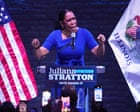
The Democratic primary results tell us the party is playing it safe. They've circled the wagons around established players like Sean Casten and Brad Schneider. Even in the Senate race, Juliana Stratton—the sitting Lieutenant Governor—won the right to try and replace Dick Durbin.
Don't expect a radical shift in the Illinois delegation. The names might change slightly due to retirements, but the ideology is staying firmly in the center-left, pro-establishment camp.
If you're a voter who wanted a revolution, you're probably disappointed this morning. But if you're a party strategist, you're breathing a sigh of relief. The incumbents held the line, the "moderate" challengers were mostly crushed, and the party enters the general election season with a very stable, very predictable roster.
The next step is simple. Watch the fundraising numbers for the general election. While these seats are mostly "safe" Democratic wins, the margin of victory will tell us a lot about how much energy is actually left in the base for 2026. Keep an eye on the 17th and 14th districts specifically—that's where the real Republican pressure will land.