The decision to halt the India-Africa summit didn't happen in a vacuum. It happened because global health systems were failing to contain a crisis. When the Indian government officially called off the New Delhi gathering, it wasn't just a scheduling conflict. It was a direct response to a stark reality on the ground in West Africa, where international aid groups were sounding frantic alarms that the Ebola outbreak was rapidly gaining momentum.
You have to look at the numbers to understand the panic. The World Health Organization (WHO) and Doctors Without Borders (MSF) were tracking an exponential spike in cases across Liberia, Sierra Leone, and Guinea. Local healthcare infrastructure had completely collapsed. Medical workers were dying. The virus was moving faster than the bureaucratic response. Inviting more than 50 African delegations, including heads of state and hundreds of officials, into a dense metropolis like New Delhi suddenly looked like a massive, unnecessary risk.
This delay tells us a lot about how international diplomacy changes when a biological threat takes hold. It shows exactly what happens when political ambitions collide with a public health emergency.
The Breaking Point That Forced the Postponement
Diplomatic calendars are usually set in stone. India spent months preparing for this specific summit, aiming to project economic influence and build stronger trade ties across the African continent. It was supposed to be a major geopolitical moment for New Delhi.
Then the data changed.
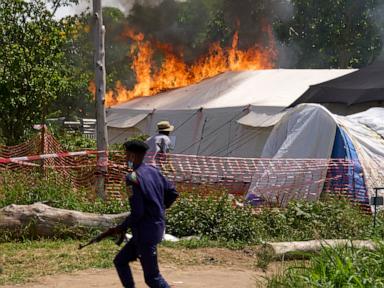
Doctors Without Borders issued a series of blunt statements warning that the international community was losing the race against the virus. The group noted that Ebola was spreading to new geographic areas faster than treatment centers could be built. Entire cities were facing quarantine measures. In Liberia, patients were being turned away from clinics due to a lack of beds, sending them back into their communities to spread the disease further.
Indian health ministry officials faced a logistical nightmare. Screening thousands of international travelers at airports with rudimentary thermal scanners wouldn't cut it. A single undetected case arriving for a high-profile government summit could trigger a domestic outbreak that India’s own crowded public health system was poorly equipped to handle. The risk profile became untenable.
Real Stakes of a Gaining Momentum Outbreak
We often talk about outbreaks in abstract terms, but the ground reality in 2014 was brutal. The virus didn't just cause physical illness. It dismantled the social fabric. Schools closed. Markets shut down. Border crossings became militarized checkpoints.
The warning that the outbreak was gaining momentum wasn't hyperbole. According to historical WHO situation reports from that specific peak period, the death toll had surged past 1,500, with total recorded cases climbing toward 3,000. Public health experts knew those official counts were massive underestimates. People were dying in their homes, hidden away from official surveillance teams out of fear or lack of transport.
Consider what aid workers were actually dealing with daily:
- Treatment centers running at twice their intended capacity.
- A severe shortage of personal protective equipment (PPE) for local nurses.
- Incidents of community resistance and deep mistrust toward foreign medical interventions.
- Disrupted supply chains causing food shortages in quarantined zones.
When an epidemic reaches that level of velocity, domestic containment becomes the only thing that matters for the affected nations. Flying a leadership team to India for economic talks looks horribly out of touch when your capital city's hospitals are running out of body bags.
Geopolitical Fallout of the Delayed Summit
India's strategy in Africa has long relied on building soft power through development assistance, technology transfers, and educational scholarships. This summit was designed to counter the massive infrastructure investments made by rival economic powers in the region.
Postponing the event disrupted that momentum. It put crucial bilateral trade talks on ice. Discussions regarding energy security, maritime cooperation, and agricultural partnerships were shelved indefinitely.
But it also exposed a deeper issue in global governance. When a crisis hits, developing nations are often left to scramble for resources while the rest of the world closes its borders. India's decision, while logical from a domestic safety standpoint, highlighted the isolation felt by West African nations during the peak of the panic. It raised tough questions about solidarity. If partners back away during a health crisis, it changes the nature of the relationship when economic conditions improve.
What Health Ministries Must Do Differently Right Now
We can't keep reacting to outbreaks with the same old playbook of panic, border closures, and delayed meetings. True preparedness requires permanent structural shifts before the next virus emerges.
National governments need to establish regional manufacturing hubs for diagnostic tests and therapeutics so they don't rely on bottlenecked global supply chains. Border agencies must move away from reactive travel bans toward standardized, real-time genomic surveillance at major transit hubs. Most importantly, high-income nations and rising economic powers must fund permanent, well-paid local medical corps in vulnerable zones rather than relying on temporary charity interventions when things spin out of control.
If you are managing organizational travel or international logistics in an era of unpredictable health threats, stop relying on lagging public health declarations. Monitor localized clinical capacity metrics and frontline NGO reports directly. Build automatic cancellation triggers into your event planning budgets based on regional transmission velocity rather than waiting for government edicts. True resilience means making the hard call to pivot before the crisis forces your hand.