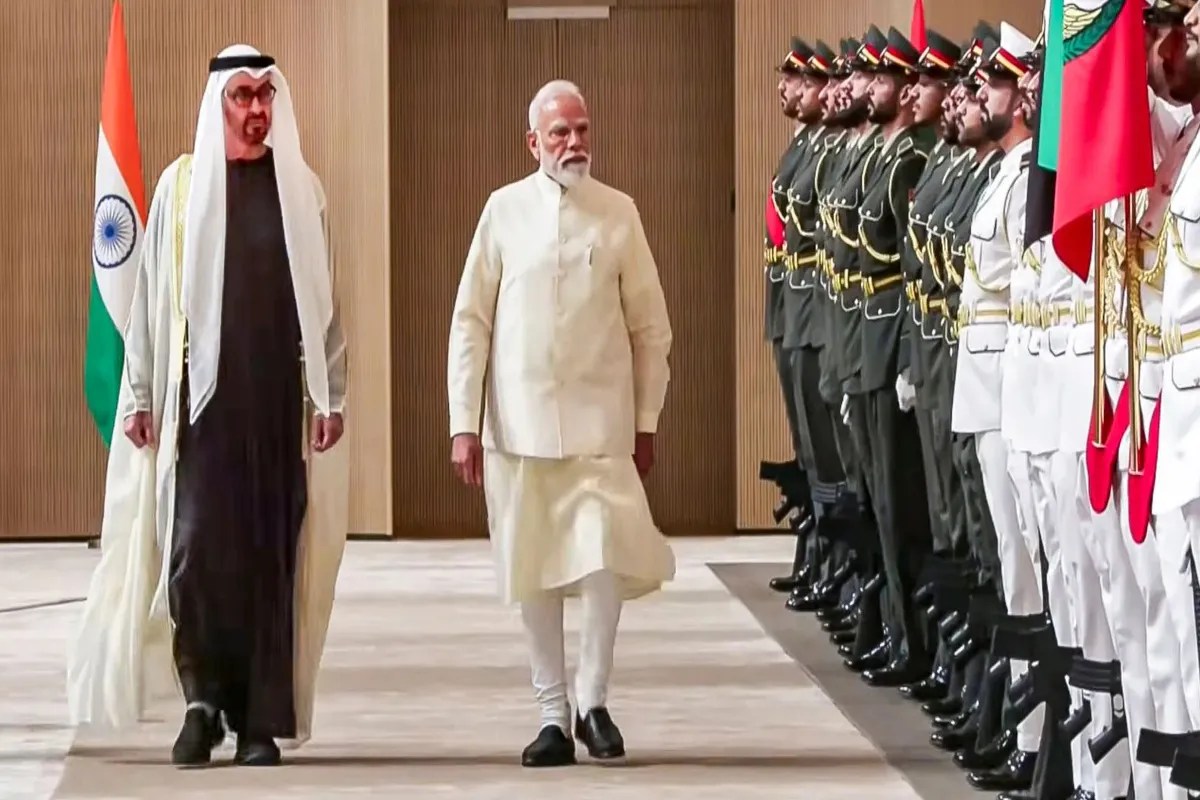
Mainstream media is celebrating the latest liquefied petroleum gas (LPG) agreement between New Delhi and Abu Dhabi as a masterstroke of energy security. Bureaucrats are shaking hands. Headlines are screaming about "strengthened bilateral ties" and "secured supply chains" following high-level meetings with President Sheikh Mohamed bin Zayed Al Nahyan.
It is a comforting narrative. It is also completely wrong. Meanwhile, you can explore similar developments here: Why the US China trade war is getting much worse for your wallet.
The lazy consensus in energy journalism assumes that locking in long-term fossil fuel supply contracts with Gulf partners automatically equals safety. Look closer at the mechanics of global energy trade, the shifting reality of domestic Indian infrastructure, and the actual economics of the Middle East's energy transition. You will quickly realize this deal is a desperate attempt to patch over a sinking ship using an outdated playbook.
We are cheering for a contract that binds India to a volatile, fossil-dependent future precisely when flexibility should be the only priority. To explore the full picture, we recommend the recent report by CNBC.
The Illusion of Energy Security in a Volatile Gulf
The fundamental premise of the India-UAE LPG pact is flawed. Proponents argue that securing a direct line of supply from ADNOC (Abu Dhabi National Oil Company) shields Indian consumers from the brutal price shocks of the spot market.
I have spent years analyzing energy supply chains and watching state-owned enterprises bleed billions on poorly timed hedges. Here is the reality: you cannot contract your way out of geography or geopolitics.
When a crisis hits the Strait of Hormuz, a long-term contract is nothing but a piece of paper. Physical supply disruptions do not care about diplomatic goodwill or royal handshakes. If the maritime chokepoints of the Middle East compromise shipping lanes, India’s supply lines fail regardless of whether the gas was bought on the spot market or via a bilateral treaty.
By tying its ledger so heavily to UAE supply, India is doubling down on geopolitical risk instead of diversifying away from it. True security is not found in a single, massive bilateral friendship. It is found in liquidity, agile purchasing strategies, and the structural capability to switch suppliers within a twenty-four-hour window. This deal does the exact opposite. It anchors India to a single region that is increasingly becoming a geopolitical tinderbox.
The Hidden Economic Drain of Subsidized Imports
Let us talk about the math that the policymakers refuse to put in the press releases. India imports roughly 60 percent of its domestic LPG consumption. The government then distributes this gas through heavily subsidized schemes like the Pradhan Mantri Ujjwala Yojana.
When India signs these massive import agreements, it commits vital capital to foreign state entities to buy a commodity that is immediately sold at a loss domestically.
[Foreign Dollar Outflow] -> [High-Cost LPG Import] -> [Domestic Fiscal Subsidy] -> [Fiscal Deficit Expansion]
This is a structural trap. We are burning foreign exchange reserves to subsidize a fossil fuel that we do not produce, under the guise of helping the poor.
If that capital were diverted directly into scaling localized solar microgrids, upgrading rural electrical infrastructure, and incentivizing induction cooking, the structural dependency would vanish within a decade. Instead, this deal ensures that Indian taxpayers will continue to fund the transition of the UAE economy away from oil, while India remains trapped in the old energy paradigm.
Abu Dhabi's Real Agenda: Dumping Stranded Assets
To understand why this deal happened, you have to stop looking at it from New Delhi's perspective and start looking at it from Abu Dhabi's.
The UAE is highly sophisticated. They know the global energy landscape is shifting. They see the writing on the wall: Western economies are aggressively electrifying, and global demand for fossil fuels will eventually peak and decay. The Gulf states are in a race against time to monetize their remaining hydrocarbon reserves before they become stranded assets buried under the sand.
By locking India into long-term LPG commitments, the UAE is successfully outsourcing its transition risk. They are securing a massive, captive market that guarantees a steady stream of revenue for their state-owned infrastructure, even as the rest of the world moves toward cheaper, cleaner alternatives. India is playing the role of the ultimate buyer of last resort. We are willingly volunteering to hold the bag for the Gulf's legacy carbon assets.
The Flawed Premise of the "Cleaner Transition Fuel"
The most insidious argument used to justify this agreement is that LPG is a necessary "bridge fuel" for India's clean energy journey. This is a corporate myth designed to extend the lifespan of pipeline and extraction infrastructure.
LPG is cleaner than burning wood or coal at the point of consumption, yes. But when you factor in the lifecycle emissions—the upstream methane leakage during extraction in the UAE, the heavy marine diesel burned to transport it across the Arabian Sea, and the energy required for liquefaction and regasification—the environmental ledger looks disastrous.
Calling LPG a transition fuel in 2026 is an anachronism. The cost curve for distributed renewables and battery storage has collapsed so violently over the last five years that the "bridge" has been rendered obsolete. Building out massive, expensive infrastructure to distribute imported LPG across rural India is a multi-billion-dollar misallocation of capital. By the time the distribution networks are fully operational, the economic viability of the gas they carry will have been utterly destroyed by domestic green electrification.
The Hard Truth About Domestic Self-Reliance
India talks endlessly about Atmanirbhar Bharat (Self-Reliant India). Yet, every time the energy sector faces a choice between radical structural reform and the easy fix of an import contract, it chooses the contract.
This UAE agreement is an admission of failure. It is an acknowledgment that India has failed to rapidly scale its domestic bio-CNG production, failed to electrify its rural cooking infrastructure at pace, and failed to build a resilient, decentralized energy grid.
Relying on foreign state-owned giants like ADNOC to keep Indian kitchens running is not a strategy. It is an addiction. And like any addiction, the longer you feed it, the harder it is to break.
Stop celebrating the diplomatic theater. Stop believing that a handshake in Abu Dhabi secures the future of a worker in Bihar or Maharashtra. It does not. It merely guarantees that India’s energy future remains hostage to foreign production quotas, maritime security risks, and an economic model that the rest of the developed world is actively abandoning.
The only way to win the global energy transition is to stop playing the legacy import game entirely. It is time to cancel the long-term fossil treaties, face the pain of structural domestic reform, and build an energy ecosystem that cannot be turned off by a foreign power. Everything else is just a costly delay of the inevitable.