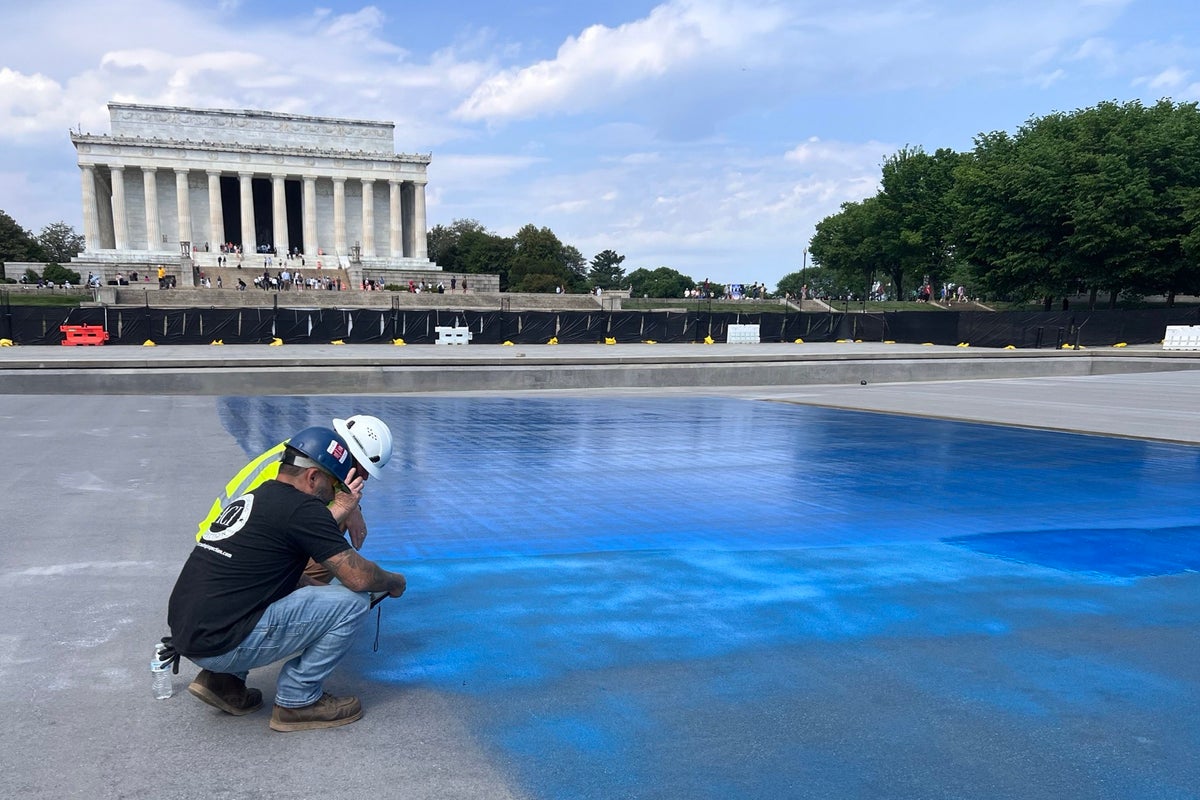
The renovation of the Lincoln Memorial Reflecting Pool represents more than a cosmetic upgrade to a national landmark; it is a complex exercise in civil engineering and hydraulic management within a high-traffic urban environment. While public discourse often focuses on the multi-million dollar price tag and the aesthetic results of the revamp, the real value lies in the transition from an antiquated, leak-prone system to a closed-loop filtration model designed for 21st-century sustainability. This analysis breaks down the technical execution, the economic logic of the renovation, and the long-term maintenance implications of the project.
The Hydraulic Transition from Potable Waste to Closed-Loop Systems
Historically, the Reflecting Pool functioned as a massive, inefficient water sink. For decades, the pool relied on potable water from the city's domestic supply. Because the system lacked a modern filtration and circulation mechanism, the water stagnated, leading to algae blooms and sediment buildup. The solution was "dump and fill"—draining millions of gallons of treated drinking water into the Potomac River and refilling it at a staggering cost to both the municipal budget and the environment.
The current renovation replaces this linear waste model with a circular hydraulic system. Three specific engineering changes define this transition:
- Source Water Diversion: The pool now utilizes non-potable water pumped from the Tidal Basin. This reduces the strain on the District’s drinking water infrastructure.
- Ozone-Based Filtration: Unlike traditional chlorine systems, which can damage the local ecosystem and historical stonework, the new facility uses ozone filtration. This process oxidizes organic matter more effectively and leaves no chemical residue, maintaining the clarity required for the iconic "mirror" effect.
- Active Circulation: A new pump station maintains constant movement. Stagnation is the primary driver of bacterial growth; by ensuring the water remains in a state of flux, the system reduces the need for aggressive chemical interventions.
The Structural Integrity of the Basin
A pool that holds approximately 6.75 million gallons of water exerts immense pressure on the underlying soil. The Lincoln Memorial area is built on reclaimed land, which is prone to settling and subsidence. The "multi-million dollar" investment is largely invisible, residing in the reinforced sub-structure rather than the surface aesthetics.
The renovation addressed the chronic leaking that plagued the original 1920s construction. The engineering team implemented a multi-layered waterproofing membrane and a reinforced concrete slab designed to distribute the water’s weight more evenly. This structural reinforcement prevents the minor fissures that previously led to the loss of hundreds of thousands of gallons of water per week.
The Mechanics of Leak Detection and Prevention
Modern infrastructure management relies on sensor-driven maintenance. The revamped pool integrates flow meters and pressure sensors that allow the National Park Service (NPS) to detect anomalies in real-time. If a drop in pressure occurs that cannot be explained by evaporation rates—which are calculated based on ambient temperature and humidity—the system triggers an alert. This shift from reactive repair to predictive maintenance is the primary driver of the project’s long-term ROI.
Economic Quantification of Capital Expenditure vs. Operational Savings
Critics often cite the total cost of federal renovations as a sign of inefficiency. However, a rigorous financial analysis reveals that the capital expenditure (CapEx) is a strategic move to lower the ballooning operational expenditure (OpEx) of the previous system.
The cost function of the old pool was defined by:
[Cost of Potable Water] + [Cost of Frequent Draining/Cleaning] + [Environmental Non-Compliance Penalties]
The new cost function is defined by:
[Energy Consumption of Pump/Filtration Station] + [Periodic Filter Media Replacement]
By eliminating the purchase of municipal drinking water and the labor-intensive "scrub and fill" cycles, the renovation is projected to pay for itself through utility savings over a 20-year horizon. Furthermore, the reduction in water usage aligns with federal mandates for agency-wide sustainability, mitigating the risk of future regulatory fines.
Strategic Maintenance and the Preservation of Reflective Optics
The primary functional requirement of the Reflecting Pool is its refractive index. To maintain the crisp reflection of the Washington Monument, the water surface must remain exceptionally still and free of surface particulates.
Surface Tension and Particulate Management
The renovation included a redesigned gutter system. In the old configuration, wind-blown debris (leaves, dust, and litter) would settle on the floor of the pool, creating a dark sludge that absorbed light rather than reflecting it. The new perimeter drainage system uses a continuous "skim" effect. As water circulates, surface debris is pulled into the gutters and filtered out before the water is recirculated. This ensures that the albedo of the pool bottom remains consistent, providing the necessary contrast for the reflection to remain visible even in low-light conditions.
Biological Load Management
The Lincoln Memorial is a major habitat for migratory waterfowl. The biological load (waste) introduced by these birds is a significant challenge for any open-air water feature. The ozone filtration system is specifically calibrated to handle high nitrogen and phosphorus levels, preventing the eutrophication that turns public water features green. The engineering team had to balance the filtration rate with the energy costs of the pumps—an optimization problem that requires constant seasonal adjustment.
Operational Limitations and Risk Factors
Despite the sophistication of the revamp, the system is not without vulnerabilities. Three primary risks remain:
- Subsurface Shifting: No amount of concrete can entirely negate the fact that the National Mall is built on soft silt. Continued monitoring of the basin’s level is mandatory to prevent uneven stress on the new slab.
- Power Grid Dependence: The filtration system is energy-intensive. Any prolonged power outage during peak summer months will lead to rapid stagnation and biological growth that can clog the new filters.
- Scale of Tourism: The sheer volume of foot traffic around the pool’s edge leads to "mechanical load" on the coping stones. While the water system is upgraded, the granite surrounds require constant monitoring for chips and cracks that allow water to bypass the waterproof membrane.
The Strategic Path for Urban Water Infrastructure
The Lincoln Memorial Reflecting Pool renovation serves as a blueprint for how legacy cities must approach historical preservation through the lens of modern utility management. The transition from a "resource consumer" to a "resource circulator" is the only viable path for large-scale public water features.
Facility managers and municipal planners should prioritize the installation of independent, non-potable water loops for all monumental water features. This isolates critical historical assets from the volatility of city water prices and the periodic water restrictions common during droughts. The next phase of optimization for this site involves the integration of solar arrays to offset the energy draw of the pump house, moving the Reflecting Pool closer to a carbon-neutral operational profile. Success in this realm is measured not by the completion of the construction, but by the stability of the water's clarity over the next four decades.