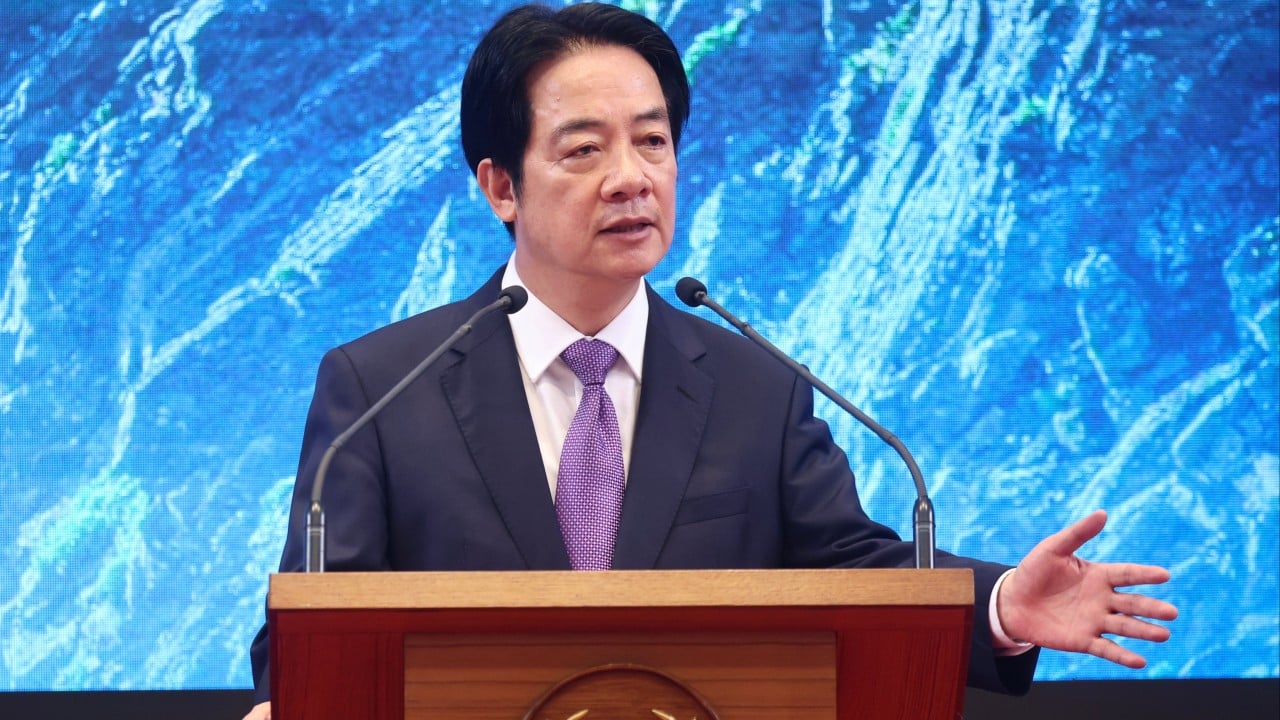
The official rhetorical crossfire between Taipei and Beijing reached a predictable crescendo during Taiwanese President Lai Ching-te’s second anniversary address. Beijing's Taiwan Affairs Office immediately branded Lai a destroyer of cross-strait peace, accusing his administration of hiding behind a veneer of dialogue while entrenching a separatist agenda. Taipei fired back, explicitly naming China as the primary destabilizing force in the region.
But looking strictly at the trading of insults misses the structural shift occurring beneath the surface. The real story is not the predictable anger from Beijing, but how Lai is weaponizing Taipei’s defense procurement budget to force his way into a changing American diplomatic calculus. By explicitly framing U.S. weapon purchases as an active stabilizing tool rather than a provocation, Lai is pitching a transactional security model tailored specifically for Washington. Don't miss our earlier article on this related article.
The Transactional Security Gambit
For decades, Taiwan relied on strategic ambiguity and shared democratic values to secure its relationship with the United States. Lai’s second anniversary speech signaled a departure toward a more transactional posture. Faced with an American administration that views traditional alliances through a cost-benefit lens, Taipei is adjusting its approach.
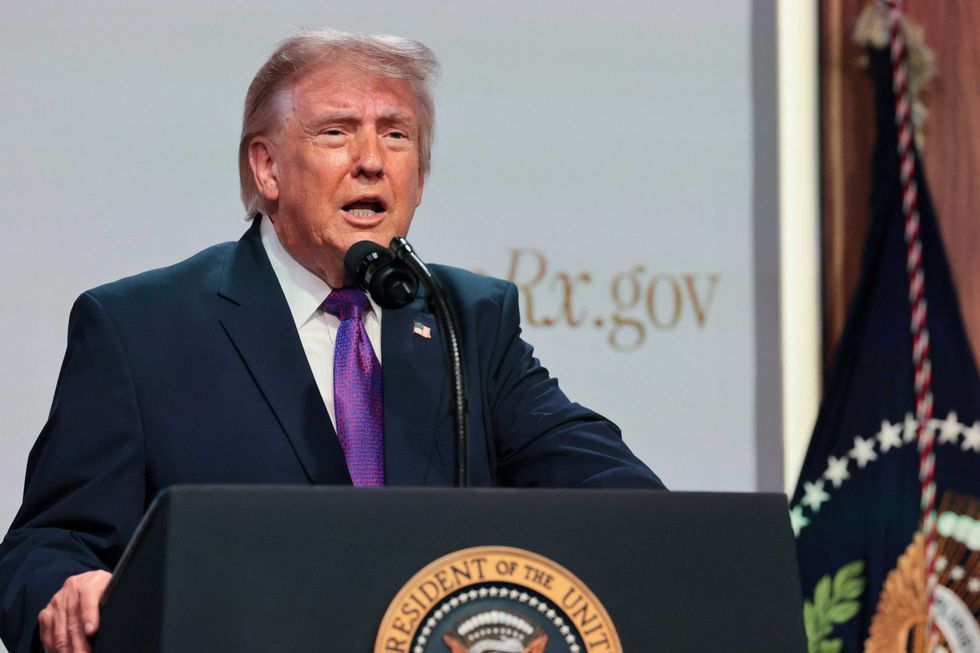
During his address, Lai noted that if given the chance to speak directly with U.S. President Donald Trump, he would pitch Taiwan’s defense budget not as a financial burden to Washington, but as an active investment in global economic stability. He framed Taiwan’s multi-billion-dollar arms purchases as an essential mechanism for safeguarding the world's most critical shipping lanes and semiconductor supply networks. If you want more about the history here, Reuters provides an excellent breakdown.
This is a deliberate pivot. Instead of appealing to ideological solidarity, Taipei is communicating in terms of hard commercial value.
- The Defense Multiplier: Lai highlighted Taiwan's increasing domestic defense spending, signaling that the island is willing to pay its own way rather than asking for a blank check.
- The Semiconductor Shield: By emphasizing that cross-strait instability triggers global market fallout, Taipei ties American economic health directly to the defense of the Taiwan Strait.
- The Chip Asset: Weapon sales are presented as a stabilizing force that prevents a catastrophic disruption to international logistics.
Beijing’s sharp reaction reflects an understanding of this strategy. By labeling Lai a destroyer of peace, China is trying to convince Washington that selling advanced arms to Taipei will trigger the exact conflict the U.S. hopes to avoid. Chinese foreign ministry spokesperson Guo Jiakun urged the U.S. to abide by existing diplomatic frameworks, calling Taiwan’s reliance on foreign military sales a form of wishful thinking.
The War for the Narrative of Provocation
A core mechanism of gray-zone warfare is the manipulation of blame. Every military exercise, economic sanction, and diplomatic statement is designed to make the opponent look like the revisionist actor.
Beijing’s current narrative relies on portraying Lai as a radical departure from his predecessor, Tsai Ing-wen. Chinese state media regularly describes Lai’s rhetoric as an explicit provocation that shatters the fragile status quo. By focusing heavily on Lai’s refusal to accept the principle that both sides belong to a single Chinese nation, Beijing builds a justification for its own escalating military posture.
[Beijing's Narrative] ----> Lai's Rhetoric = Revisionist Provocation
[Taipei's Narrative]  ----> China's Military Expansion = Status Quo Disruption
Taipei’s counter-strategy focuses on shifting the definition of provocation. In his address, Lai argued that choosing democracy and freedom should never be interpreted as an act of aggression. He pointed to China’s expanding military footprint in the East and South China Seas, alongside long-range naval drills extending into the western Pacific, as observable evidence that Beijing is the true revisionist power.
By detailing these specific geographic movements, Taipei grounds its claims in verifiable security data rather than political philosophy. The strategy aims to reassure international partners that Taiwan remains a status-quo actor merely responding to a changing physical reality.
The Domestic Fracture
While Lai attempts to project absolute clarity abroad, his strategy faces significant resistance at home. The political reality inside Taiwan is deeply divided, and the anniversary address exposed widening internal fractures.
A major point of domestic friction centers on how to handle communication with Beijing. Just weeks before Lai’s speech, the opposition Kuomintang (KMT) leadership held high-level meetings with Chinese President Xi Jinping in Beijing. This marked the first significant interaction between the sitting leadership of the KMT and the Chinese Communist Party in nearly ten years.
During his speech, Lai openly criticized this engagement, characterizing it as a compromise of Taiwan’s sovereignty. This blunt approach drew immediate criticism from domestic political analysts.
"If the anniversary speech was an opportunity to unify domestic audiences, it missed the mark," notes James Chen, an assistant professor of cross-strait relations at Tamkang University. "By framing the opposition's dialogue with Beijing as a capitulation, the administration risks deepening partisan divides at a moment that demands internal cohesion."
This domestic split complicates Taiwan's international messaging. Beijing actively uses this internal friction to present Lai’s administration as an isolated minority that does not speak for the entire Taiwanese public. When the Chinese Taiwan Affairs Office accuses Lai of deceiving the local population, they are deliberately playing into these existing domestic political arguments.
The Economic Counterweight
To offset the political risk of cross-strait tension, Lai announced a $3.1 billion economic initiative aimed at upgrading traditional industries and small businesses. The economic plan is designed to use Taiwan’s dominance in high-tech sectors to pull up less competitive parts of the domestic economy.
| Sector | Allocation | Primary Objective |
|---|---|---|
| Small & Medium Enterprises | $3.1 Billion | Technical modernization and supply chain integration |
| Traditional Industries | Integrated Support | Tech-driven automation and efficiency upgrades |
This domestic economic focus serves a dual purpose. It addresses immediate voter anxiety regarding inflation and wage stagnation, while building long-term economic resilience against potential Chinese economic coercion. Beijing has routinely suspended trade concessions on Taiwanese agricultural goods and chemicals to apply political pressure. Strengthening traditional sectors makes the island less vulnerable to these targeted economic maneuvers.
The Reality of the Negotiating Chip
The challenge for Taipei is that its security strategy depends on variables it cannot control. Washington’s perspective on the region is increasingly complex.
American policymakers have explicitly referred to massive arms packages as valuable negotiating chips in broader bilateral discussions with Beijing. This creates an uncomfortable reality for Taipei. If weapons sales are viewed by Washington as leverage for broader trade and diplomatic deals with China, Taiwan's security architecture risks becoming an item on a larger geopolitical balance sheet.
Lai’s insistence that Taiwan's future cannot be decided by external forces is an acknowledgment of this vulnerability. Taipei is fully aware that its survival requires deep integration with Western defense networks, but it must constantly guard against the risk of being sidelined if the superpowers decide to recalibrate their relationship.
The strategy of building a domestic defense industry while purchasing billions in foreign hardware is an attempt to create a self-sustaining deterrent. Taipei is calculating that by making the price of annexation prohibitively high, it can maintain its autonomy regardless of shifting diplomatic winds.
The ongoing war of words over who is the true destroyer of peace is not a simple shouting match. It is a sophisticated struggle to define the terms of deterrence in the Western Pacific. As Beijing increases its military presence and Taipei adjusts its financial and political strategies, the margin for error in the Taiwan Strait continues to shrink.