The white flag raised by Washington over the weekend went largely unnoticed amidst the louder political theater, but its implications for global security and climate intelligence are staggering. The White House quietly abandoned its long-standing, controversial plan to dismantle the world's most critical oceanic observation network. For years, budget architects targeted this matrix of deep-sea floats, moored buoys, and sub-surface sensors as low-hanging fiscal fruit. They miscalculated. The sudden reversal highlights a uncomfortable reality. The modern world relies entirely on a planetary monitoring system that is as indispensable as it is invisible to the average taxpayer.
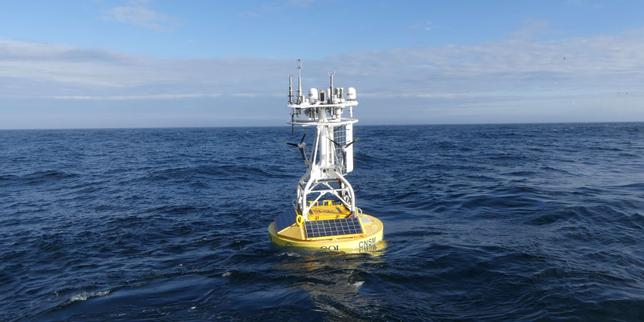
This network, anchored by the international Argo programmatic array and complemented by high-tech tropical moored buoys, does not just track rising tides. It provides the foundational baseline data required for every major weather prediction model, naval deployment strategy, and global agricultural forecast. Stripping it down was never just a matter of cutting bureaucratic fat. It was an intellectual eviction notice served to global science.
The Invisible Architecture of Global Forecasting
To understand why the proposed cuts triggered a quiet panic from NATO naval commands to Wall Street commodity desks, one must look at how modern meteorology actually functions. Satellites capture the skin of the planet. They offer stunning, high-resolution imagery of cloud covers and surface temperatures, but they are functionally blind to the deep ocean.
The real engine of global weather sits hundreds of meters below the surface. This is where immense thermal energy is stored, moved, and transferred to the atmosphere.
The Argo network operates through thousands of autonomous robotic drifters. These devices sink two kilometers into the abyss, drift with the deep currents for ten days, and then slowly rise to the surface, measuring temperature and salinity along the way. Upon breaching, they beam the data to satellites before diving back into the darkness.
Without this continuous stream of physical data points, the predictive power of our best computer models degrades within days. European and American weather agencies would find themselves operating with severe blind spots, transforming localized storms into unpredictable disasters. The cost of maintaining the array is a rounding error in the national budget. The cost of losing it is measured in unpredicted hurricane damage and failed crop cycles.
The Geopolitical Blind Spot
The argument for dismantling these networks usually stems from a short-sighted nationalistic view of data sharing. Cynics ask why a single nation should shoulder a massive portion of the funding for data that is ultimately made public to global competitors. The flaw in this logic ignores how geopolitical influence is wielded in the twenty-first century.
Oceanographic dominance is directly tied to maritime capability. Naval operations, particularly submarine warfare and anti-submarine tracking, depend entirely on highly accurate thermocline data. The thermocline is the transition layer between warmer mixed water at the ocean's surface and the cooler deep water below. Sound waves emitted by sonar bend and distort based on the temperature and salinity of these layers.
Whoever maps the thermocline with the highest degree of accuracy owns the underwater battlespace. By threatening to pull funding from global networks, the administration risked losing its seat at the head of the international scientific tables that dictate data standards, sensor placements, and collaborative research initiatives.
Furthermore, pulling back would create a vacuum. Other global powers are already expanding their own independent observation footprints in the South China Sea and the Indian Ocean. Relinquishing leadership in open-ocean telemetry does not save money. It abdicates strategic positioning.
The True Cost of Public Data
- Commercial Shipping Optimizations: Transoceanic cargo fleets use deep-current data to map fuel-efficient routes, saving billions annually in diesel costs.
- Insurance Underwriting: Actuaries rely on deep-sea thermal anomalies to price catastrophe bonds and coastal property insurance policies.
- Food Security: Marine telemetry predicts El Niño patterns up to a year in advance, allowing global agricultural sectors to shift planting schedules.
The Bureaucratic Battle in the Shadows
The reversal was not born out of a sudden appreciation for marine biology. It was forced by an intense, coordinated rebellion from a coalition of commercial interests, defense officials, and international diplomats.
Internal documents indicate that the defense establishment made it clear that privatizing or defunding these networks would cripple domestic sovereign tracking capabilities. Commercial fishing lobbies, which rely on oceanic data to track migratory patterns of high-value stocks like tuna and swordfish, also applied immense pressure on coastal lawmakers.
The proposal to dismantle the network rested on a flawed premise. Proponents believed that the private sector would naturally step in to fill the gap. That assumption reveals a profound misunderstanding of data economics. Private entities require proprietary monetization. A commercial entity funded to drop ocean sensors would lock the resulting data behind a paywall, selling it to the highest bidder.
Meteorology requires open, standardized, and continuous global data sharing to function effectively. A fragmented, commercialized patchwork of ocean sensors would create data monopolies, leaving poorer nations blind and rendering global forecasting models less reliable for everyone.
The Vulnerability of a Shared Resource
While the immediate threat of defunding has passed, the structural vulnerabilities of our global ocean observation infrastructure remain exposed. The network relies heavily on international goodwill and the logistical support of research vessels from dozens of nations. It is a fragile consensus built on the idea that the ocean belongs to no one and everyone.
Vandalism, accidental damage from commercial fishing trawlers, and the sheer logistical difficulty of replacing aging batteries in thousands of far-flung autonomous devices mean the system requires constant upkeep. A single year of neglected deployments creates data gaps that take a decade to repair.
The political near-miss of the past months demonstrated that these vital scientific assets are dangerously exposed to ideological budget axing. They lack the visible, immediate utility of a new highway or a fighter jet, making them easy targets for accountants who know the price of everything and the value of nothing.
The decision to back down from this dismantlement is a victory for pragmatic governance, but it should serve as a warning. The systems that keep the modern world fed, fueled, and forewarned are far more fragile than we care to admit. Security is not just about patrolling boundaries. It is about understanding the shifting, turbulent reality of the world beneath the waves.


