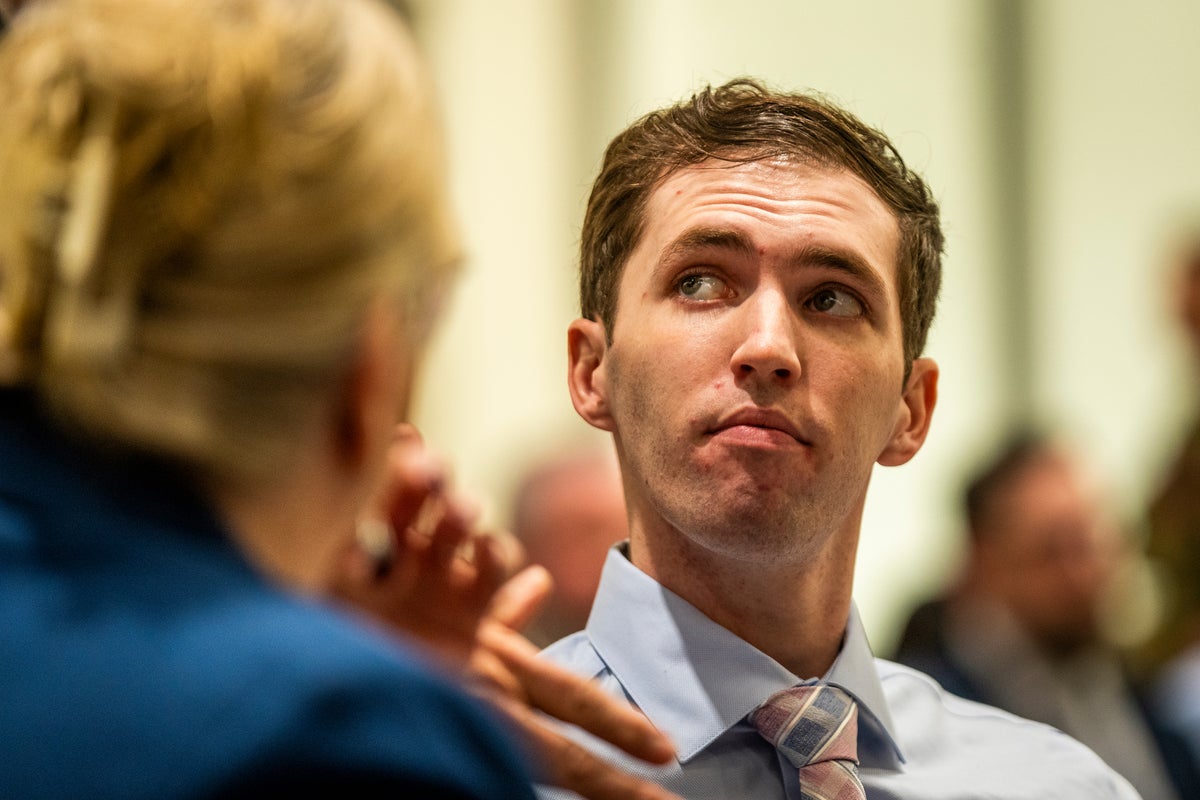
A Utah judge on Monday denied a defense motion to close the preliminary hearing of Tyler Robinson, the twenty-three-year-old accused of assassinating conservative activist Charlie Kirk. The decision ensures that prosecutors will present their foundational evidence, including volatile digital communications and forensic tracking, under full public scrutiny from July 6 to 10. Defense lawyers argued that intense media coverage would contaminate the jury pool and violate Robinson’s right to a fair trial. Judge Tony Graf rejected that argument, establishing that the public interest in a case of political assassination outweighs the potential risks of pretrial publicity.
The legal clash exposes a deeper friction within the American justice system when a crime intersects directly with highly polarized political movements. It highlights the growing tension between constitutional rights to a transparent trial and the modern reality of media saturation. For a different look, consider: this related article.
The Battle for the Courtroom Narrative
Defense attorneys representing Robinson attempted a legal maneuver designed to shield their client from a media circus. They requested that significant portions of the upcoming July hearing be sealed, arguing that the presentation of unvetted evidence could permanently warp public perception. A preliminary hearing requires prosecutors to show probable cause that a crime occurred and that the defendant committed it. It is not a full trial. Because the standard of proof is lower, evidence is often introduced that might later be ruled inadmissible at the actual trial.
The defense team expressed specific anxiety over how local and national media outlets would frame the technical findings. If the public sees bloody crime scene data or read out-of-context text messages months before a jury is selected, finding twelve impartial individuals in Utah becomes nearly impossible. Similar analysis on the subject has been provided by Al Jazeera.
The prosecution resisted the closure. They argued that transparency maintains public faith in the legal system, especially when the victim is a national political figure. Judge Graf ultimately sided with this view, though he did offer a minor concession to the defense. While reporters and citizens can sit in the gallery, certain exhibits, such as specific surveillance feeds and highly sensitive forensic documents, will not be distributed or copied for external broadcast.
The Evidence Slated for Exposure
The decision to keep the doors open means the public will receive an unedited view of the state's case against Robinson. Investigators have spent months building a digital and physical timeline of the events of September 10, 2025, at Utah Valley University. The state intends to present a mountain of physical evidence.
According to court filings, the prosecution plans to introduce DNA analysis linking Robinson directly to the murder weapon. Technicians found genetic material matching Robinson on the trigger mechanism of the rifle recovered near the campus, as well as on a fired cartridge casing and a towel used to conceal the firearm.
- Forensic ballistics reports matching the bullet recovered from Kirk to the rifle found in the woods.
- Surveillance video capturing a figure matching Robinson’s description moving away from the sniper perch.
- Physical impressions of footwear found at the scene that correspond with shoes seized from Robinson's residence.
Beyond the physical evidence, the digital trail is what makes this case particularly explosive. Prosecutors possess Discord messages, text logs, and a written note that they argue demonstrate premeditation. The most damaging piece of communication is an exchange between Robinson and his roommate shortly after the shooting. When the roommate asked if Robinson was responsible for the attack, Robinson allegedly replied with a direct admission of guilt, stating he had enough of Kirk's rhetoric and believed certain types of hatred could not be negotiated away.
Political Violence and the Jury Selection Crisis
Securing a fair trial in a case of political assassination presents a monumental challenge for the Utah judiciary. Kirk was a highly visible ally of Donald Trump and the founder of Turning Point USA, an organization dedicated to organizing conservative students on college campuses. His death instantly became a flashpoint for national outrage and political posturing.
The defense argues that a public preliminary hearing will turn the Orem courtroom into a political theater. When evidence is broadcast nationwide, potential jurors absorb the details through a partisan lens. A conservative voter might view every piece of state evidence as an absolute truth, while a left-leaning voter might look for conspiracy theories to minimize the gravity of the acts.
Legal experts suggest that the real battle will occur during the jury selection process, known as voir dire. Attorneys will have to screen hundreds of candidates to find individuals who can set aside their political biases and evaluate the evidence solely as presented in the courtroom. By opening the July hearing, the judge has guaranteed that those potential jurors will have access to a wealth of information long before they are ever called to the courthouse.
The Death Penalty Stakes
The state of Utah has indicated that it will seek the death penalty if Robinson is convicted of aggravated murder. Capital cases carry a different level of legal scrutiny than standard homicides. Every decision made by the judge, including this open-hearing ruling, will be parsed during future appeals.
Robinson’s defense team is playing a long game. By objecting to the public hearing now, they are preserving a record of potential prejudice. If Robinson is convicted and sentenced to death, his future appellate lawyers will undoubtedly point to the media coverage generated by the July hearing as proof that he never received a fair trial by an indifferent jury.
The prosecution is moving forward with the confidence that their physical and digital evidence is ironclad. They view the open hearing as an opportunity to demonstrate to a tense public that the rule of law operates openly, even under the most volatile circumstances. The upcoming five-day hearing will not determine Robinson’s ultimate guilt, but it will lay bare the strategy and the evidence that will define one of the most politically charged trials of the decade.