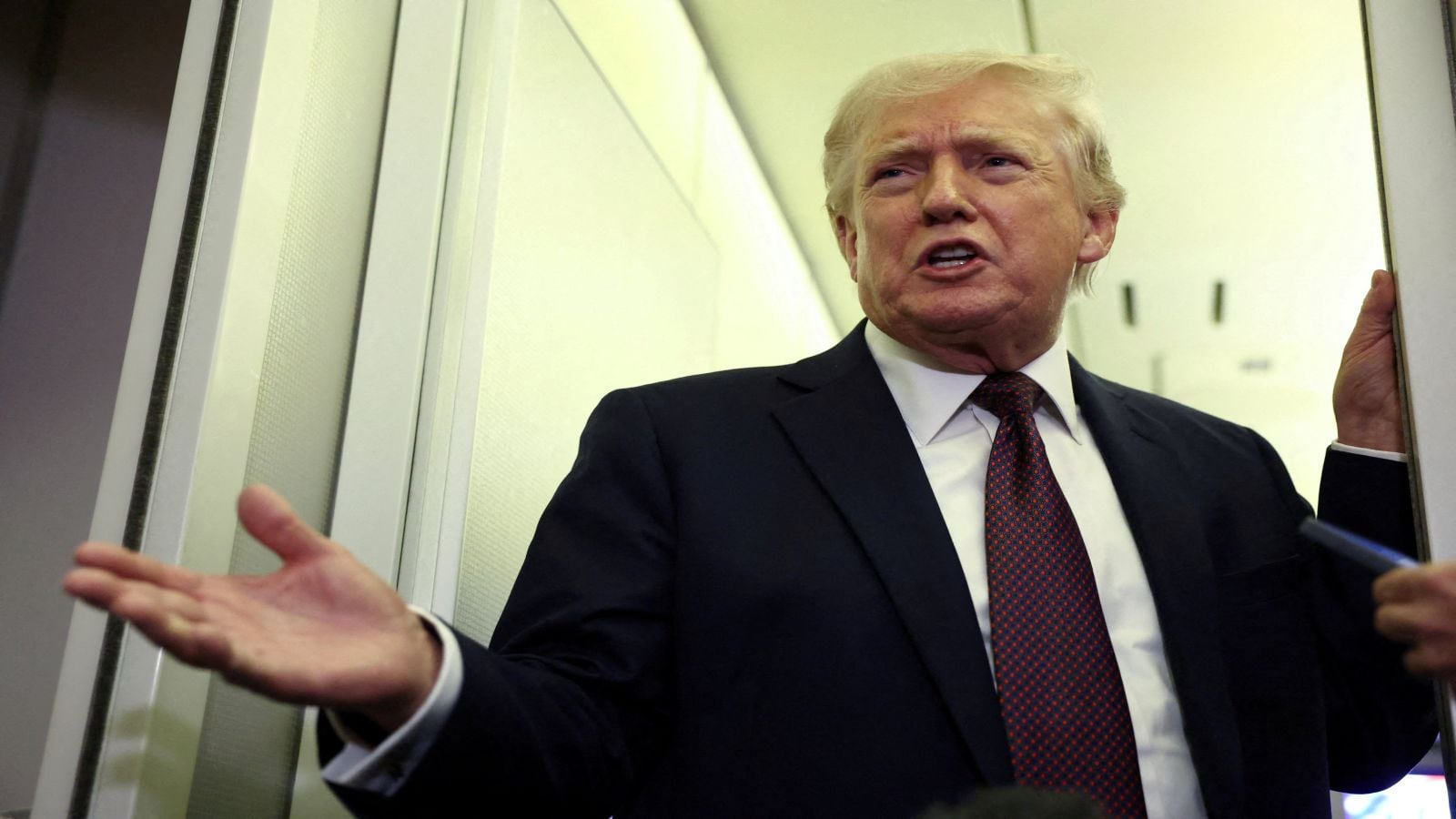
The global energy crisis will not evaporate on Friday when the ink dries in Geneva. While crude prices plunged four dollars a barrel on the mere broadcast of a breakthrough, the declaration by President Donald Trump that the Strait of Hormuz will be "completely open" following a newly minted memorandum of understanding with Tehran ignores the cold, mechanical realities of modern naval warfare.
A 100-day war that choked twenty percent of the world’s petroleum supply cannot be undone by a presidential social media post telling the "Ships of the World" to start their engines. The fundamental mechanism of the agreement relies on an immediate cessation of military hostilities and the mutual lifting of blockades. Yet, the underlying friction points—specifically an non-aligned Israel operating in southern Lebanon and thousands of naval mines littering the world's most critical maritime chokepoint—suggest that this diplomatic breakthrough is less a final settlement and more a high-stakes intermission. Expanding on this topic, you can also read: The Geopolitical Calculus Behind the New India Slovakia Counterterrorism Alliance.
The Physical Reality of Reopening a Chokepoint
A diplomatic signature does not automatically clear a naval minefield. Under the framework negotiated by Pakistani and Qatari intermediaries, the initial thirty days of the 60-day ceasefire are designated entirely for mine clearance.
Iranian forces, having effectively sealed the passage following joint U.S. and Israeli air strikes earlier this year, are tasked with extracting the underwater ordnance they deployed. Naval logistics experts understand that mine sweeping is an inherently slow, high-risk operational procedure. A single missed contact can stall commercial shipping insurance markets for months. Analysts at The Guardian have also weighed in on this matter.
The Insurance Bottleneck: Lloyd’s of London underwriters do not alter risk premiums based on a memorandum of understanding. Until the regional waters are certified clear by independent maritime tracking authorities, freight rates and war-risk premiums will remain elevated, keeping consumer energy prices higher than the raw cost of crude implies.
Furthermore, the physical infrastructure of regional energy production has sustained direct damage. The knock-on effects of three months of intermittent bombardment on processing facilities and coastal loading terminals mean that even if the shipping lanes were perfectly clear tomorrow, returning to pre-war export volumes will require significant engineering repairs.
The Nuclear Gaps in the Geneva Framework
The administration has positioned the deal as a total capitulation by Tehran regarding its atomic ambitions, asserting that Iran has agreed to comprehensive policing powers. The fine print reveals a far more complex, temporary arrangement.
Iran has agreed to a temporary halt in enrichment and has reaffirmed its commitment not to procure nuclear weapons, but the actual dismantling of its program remains unexecuted. The deal establishes a 60-day window to negotiate a permanent framework. The structural divide between the two negotiating teams during these technical talks is profound.
- The Enrichment Disagreement: The United States is demanding a twenty-year verification and dismantlement period for all advanced centrifuges. Iranian negotiators have repeatedly stated they will not accept a restriction longer than ten years.
- The Material Stockpile: Iran currently holds an estimated 9,000 kilograms of enriched uranium. While the majority is low-enriched material, approximately 440 kilograms sits at near weapons-grade purity.
- The Dilution Protocol: The initial commitment requires this material to be diluted on-site under the supervision of the International Atomic Energy Agency. However, international inspectors have not had verifiable access to these facilities since the initial June 2025 cross-border strikes, meaning the baseline data is highly suspect.
Financially, the unfreezing of billions of dollars in overseas Iranian assets is structured as a phased incentive. White House officials have confirmed that exactly zero dollars have been released thus far. The economic relief is tied entirely to verified compliance metrics, a design that leaves the agreement highly vulnerable to political shifts within the Iranian regime, which is currently reeling from a severe domestic financial crisis and heavily downgraded conventional military capabilities.
The Israeli Wildcard and Proxies Offline
The greatest existential threat to this agreement lies in Jerusalem, not Washington or Tehran. Prime Minister Benjamin Netanyahu was pointedly sidelined during the intense 17-hour negotiation sessions conducted by Qatari diplomats in Tehran.
The text of the memorandum calls for an immediate and permanent termination of military operations on all fronts, explicitly intending to encompass the conflict between Israel and Hezbollah in Lebanon. However, Israeli leadership has explicitly informed the White House that it does not consider itself bound by the Lebanese provisions of the agreement.
The operational reality on the ground reflects this defiance. Within hours of the announcement, an Israeli drone strike targeted a vehicle in southern Lebanon, marking the second fatal violation since the temporary terms were established. Israel maintains that its forces will remain in their established "buffer zone" inside Lebanese territory, a position that directly contradicts the absolute cessation of hostilities demanded by Iran as a condition for keeping the Strait of Hormuz open without tolls.
Hezbollah has praised the deal as a major achievement for Iran, framing it as a path toward the reconstruction of war-torn areas. But if the Lebanese army's warnings to civilians to avoid returning to border villages are any indication, the conflict is far from neutralized. Should Israeli operations in Beirut or southern Lebanon escalate, Iran retains the ability to halt its mine-clearing operations and re-impose its maritime blockade, collapsing the entire diplomatic structure.
The Domestic Political Clock
The timing of this breakthrough is not detached from American domestic realities. President Trump faces a highly contested midterm election cycle this November, and intense public dissatisfaction over domestic fuel costs has driven the administration’s urgent push for a diplomatic victory.
The strategy achieved its immediate goal: global markets reacted instantly, giving the illusion of a resolution. Yet, by tying the unfreezing of assets and the permanent lifting of the U.S. naval blockade to short-term markers, the administration has created a highly volatile enforcement mechanism.
If technical talks in Doha fail to establish a mechanism for uranium disposal over the next eight weeks, the conflict risks restarting with a shorter fuse. The international community, led by European partners currently offering to assist in maritime monitoring missions, recognizes that a 60-day pause is not a peace treaty. It is a temporary reallocation of leverage.
Commercial vessels waiting in the Gulf of Oman may spin their propellers come Friday, but their captains will be looking at naval escorts, not diplomatic communiqués, to guarantee their safe passage through the narrow waters of Hormuz.