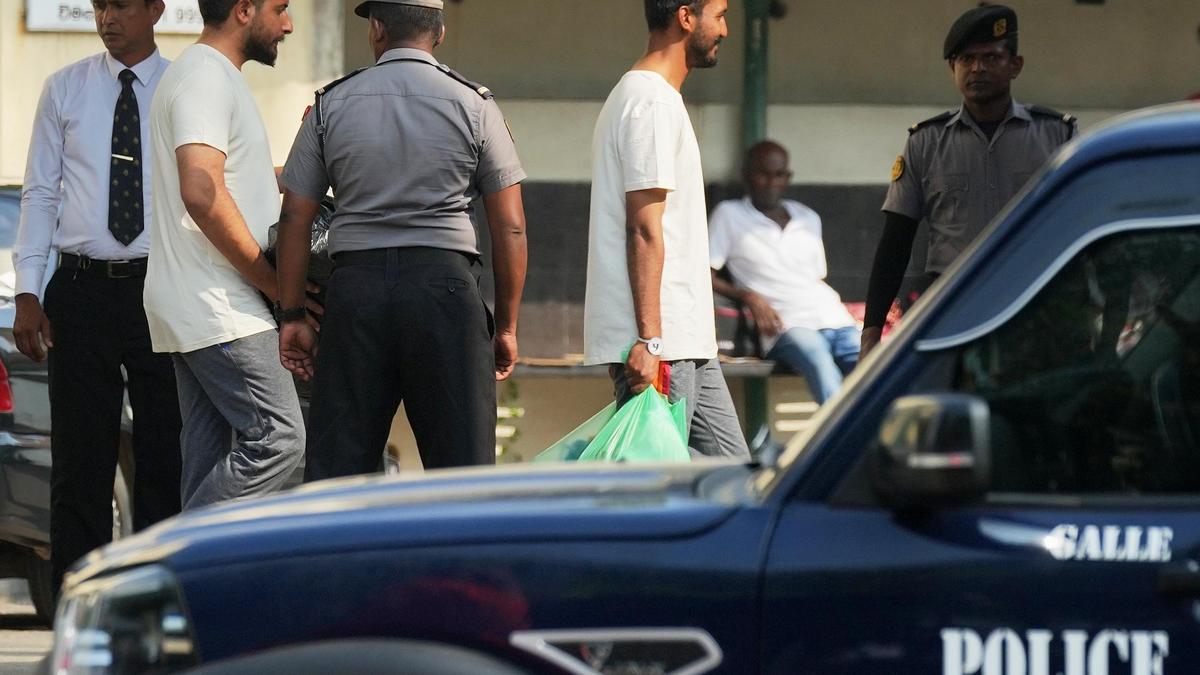
The quiet departure of a Turkish Airlines charter flight from Bandaranaike International Airport on Tuesday night marked the end of a diplomatic nightmare that Sri Lanka never asked for. On board were 238 Iranian sailors, the survivors of a geopolitical collision that has turned the Indian Ocean into a live firing range. For weeks, Colombo has attempted to frame this as a routine humanitarian mission. The reality is far more volatile. By repatriating these men, the Dissanayake administration is trying to scrub a bloodstain from its doorstep, one left by a US submarine attack that claimed 104 lives and brought a hot war into Sri Lanka's backyard.
The group consisted of 32 sailors rescued from the IRIS Dena, a frigate torpedoed on March 4, and 206 crew members from the IRIS Bushehr, which sought sanctuary days later citing engine failure. While the sailors are now headed back to Tehran, 15 Iranian personnel remain behind in Trincomalee to guard the crippled Bushehr. Their presence is a physical reminder that Sri Lanka’s "neutrality" is currently under the most severe pressure it has faced in decades. If you found value in this piece, you might want to read: this related article.
The Torpedo in the Backyard
The official narrative focuses on the rescue, but the investigation into the "why" reveals a terrifying shift in maritime security. The IRIS Dena was not a random target. It was returning from the Milan 2026 naval drills in India, a massive display of regional cooperation. The fact that a US submarine chose to engage and sink the vessel just outside Sri Lankan international waters suggests that the Indian Ocean is no longer a buffer zone. It is a primary theater of conflict.
Sri Lanka found itself caught in a legal and tactical pincer. Under the 1907 Hague Convention, Colombo was obligated to provide aid to distressed sailors. However, by hosting survivors from a ship sunk by the United States, the government risked infuriating its primary Western creditors. The decision to grant one-month gratis visas and house the men at the Welisara and Koggala naval bases was a desperate attempt to thread the needle. For another angle on this event, check out the recent update from BBC News.
A Sanctuary Under Scrutiny
The logistics of the stay were handled with extreme caution. The 32 survivors of the Dena, many of whom required emergency treatment at the Galle National Hospital, were moved to a high-security Air Force facility in Koggala. This was not just for their safety; it was to keep them away from the prying eyes of foreign intelligence agencies and a local press corps eager to know what happened in those final moments before the torpedo struck.
The Bushehr presented a different problem. Unlike the Dena, it wasn't sunk. It essentially "knocked on the door" three days later, reporting engine trouble. Skeptics in the regional defense community have questioned whether the engine failure was a convenient excuse to seek a safe harbor while the US-Iran conflict escalated. By allowing the vessel into Trincomalee, Sri Lanka effectively shielded an Iranian naval asset from potential further strikes.
The internal tension within the Sri Lankan government was palpable. Public Security Minister Ananda Wijepala was quick to state that the move was not "taking sides." Yet, the refusal to allow US warplanes to use Sri Lankan ground facilities during the same period tells a different story. Colombo is terrified of becoming a "stationary aircraft carrier" for any superpower.
The Ghost Ship in Trincomalee
While 238 men have left, the IRIS Bushehr remains anchored off Trincomalee. This is not a simple mechanical delay. The vessel is a logistical support ship, and its continued presence in one of the world's finest deep-water harbors is a massive thorn in the side of Indo-Pacific strategy.
The Trincomalee Factor
- Strategic Depth: Trincomalee is the crown jewel of the Indian Ocean. Any foreign military presence there, even a "distressed" one, triggers alarms in New Delhi and Washington.
- Maintenance or Monitoring: The 15 sailors left behind are supposedly there to operate the ship, but they also serve as a persistent Iranian footprint in a region dominated by the US 7th Fleet.
- Diplomatic Leverage: As long as the Bushehr is in Sri Lankan waters, Tehran has a direct line of communication and a reason to engage with Colombo that bypasses standard diplomatic channels.
The Cost of Neutrality
This repatriation isn't just about moving people; it's about moving a problem. Sri Lanka is currently navigating a fragile economic recovery. It needs the US for IMF support and market access, but it also depends on Iranian oil interests and broader Middle Eastern stability.
The IRIS Dena incident proved that "neutrality" is a luxury for the powerful and a burden for the small. When the US sinks a ship in your waters, you don't get to be neutral; you get to be the cleanup crew. The 84 bodies returned to Tehran on March 14 were a grim testament to this reality.
The Indian Ocean is becoming crowded and angry. What happened off the coast of Galle was a warning. If Sri Lanka cannot find a way to enforce its maritime boundaries or balance the demands of warring superpowers, the next "humanitarian rescue" might involve its own citizens.
The flight to Tehran is a temporary relief. But with the IRIS Bushehr still sitting in the northeast and the US submarine fleet silent and submerged nearby, the crisis has merely entered a new, quieter phase. Sri Lanka has successfully offloaded the sailors, but the war they brought with them hasn't left.
The immediate priority for the Ministry of Defence is now the removal of the Bushehr. Until that ship is gone, Sri Lanka remains an unwilling participant in a conflict that is rapidly outgrowing the borders of the Middle East.