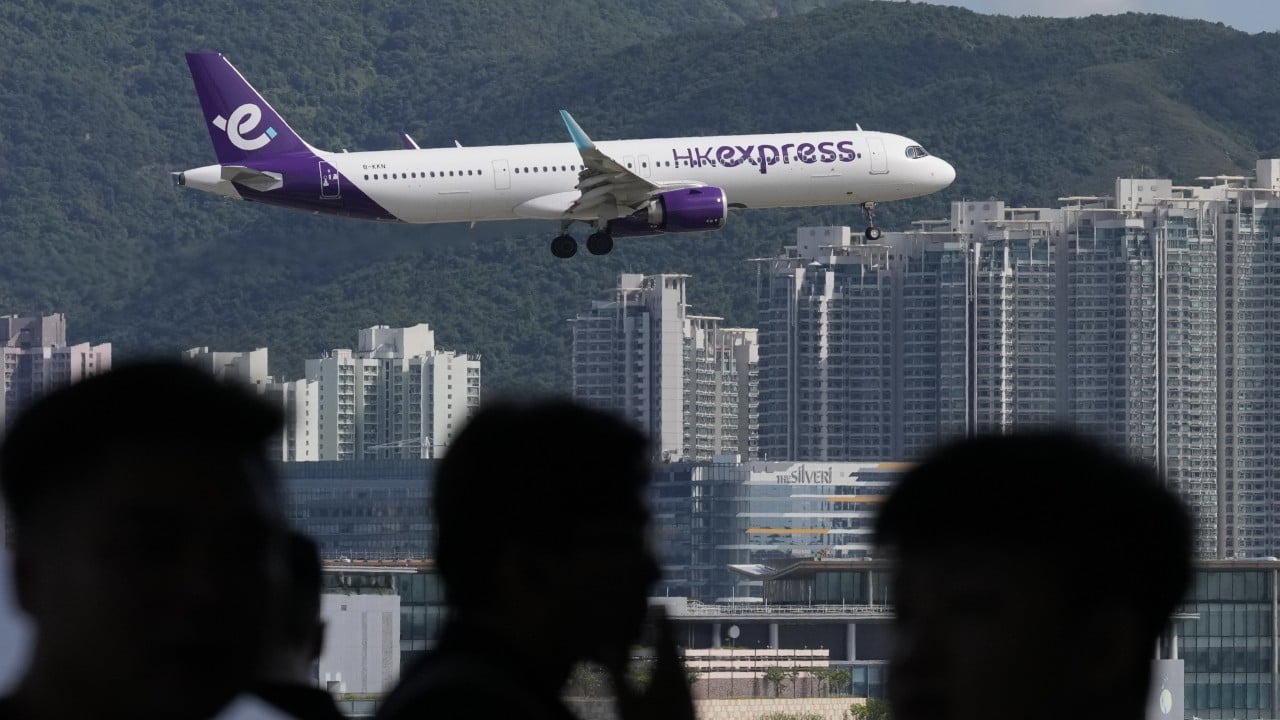
Budget carrier HK Express has canceled six critical flights between Hong Kong and Okinawa scheduled for Monday, June 1, and Tuesday, June 2, due to the rapid approach of Typhoon Jangmi toward Japan’s Ryukyu Islands. The decision directly impacts hundreds of passengers at the start of the week, with flights UO844, UO845, UO824, and UO825 scrapped on Monday, followed by UO842 and UO843 on Tuesday.
While the airline has initiated special ticketing arrangements and refund options, the disruption signals a much larger challenge for regional regional aviation. As extreme weather patterns intensify across North Asia, the traditional buffer zones airlines rely on to maintain tight, low-cost schedules are evaporating. Don't miss our recent article on this related article.
The Micro-Schedules Driving Low-Cost Carrier Vulnerability
To understand why a tropical storm hundreds of kilometers away triggers immediate multi-day cancellations, one must look at the strict economic mechanics of a low-cost carrier (LCC).
Budget airlines do not have the luxury of idle aircraft sitting on the tarmac waiting out a storm. Their profitability hinges on aircraft utilization rates that often exceed 11 hours a day per airframe. A single aircraft might fly from Hong Kong to Okinawa, return, and then immediately depart for Da Nang or Tokyo within a 45-minute ground turnaround window. If you want more about the context of this, Travel + Leisure offers an excellent summary.
When a storm like Typhoon Jangmi disrupts a specific node in this tightly wound network, the ripple effect is immediate. If an aircraft cannot land at Naha Airport in Okinawa, it cannot make the return leg to Hong Kong. That means the subsequent flight to another Asian hub is compromised.
- The Cascading Delay: Proactive cancellation is often less costly for an LCC than letting an aircraft get stuck in a locked-down foreign airport, which leaves flight crews out of position and violates strict digital roster regulations.
- Alternative Realities: Full-service carriers often possess the fleet depth to substitute a larger wide-body aircraft later in the week to clear passenger backlogs. LCCs operating uniform narrow-body fleets simply do not have this capacity.
Why Okinawa is the Ultimate Aviation Bottleneck
Okinawa is uniquely exposed. The island chain acts as a geographic speed bump for tropical systems moving northward from the Pacific toward mainland Japan and the Korean Peninsula.
Naha Airport operates with limited runway capacity relative to its heavy domestic and international traffic. When wind shear and crosswinds exceed safe operating limits for narrow-body aircraft like the Airbus A320s used by HK Express, the airport quickly restricts arrivals.
Hong Kong Airlines has already warned that its flights to Okinawa on Monday and Osaka on Wednesday may face severe delays or late-stage cancellations. This indicates that the operational risk is not isolated to a single budget brand; it is an structural vulnerability for any airline operating through the corridor during an active system.
The Financial Math of Early Cancellations
Pulling the plug on flights 48 hours in advance looks like a customer service failure on the surface, but it is a calculated risk management strategy.
Airlines rely on sophisticated weather modeling to predict target windows where safe landings become statistically improbable. Under international aviation passenger rights and local regulatory frameworks, a cancellation announced before passengers arrive at the terminal significantly reduces an airline's immediate liability for ground care, airport meals, and chaotic hotel vouchers.
"A plane stuck on the ground in a typhoon zone earns zero revenue while racking up out-of-station parking fees and disrupting crew rotation limits across the entire network."
Furthermore, HK Express is currently preparing for a major operational shift, relocating its check-in and bag drop services to Terminal 2 at Hong Kong International Airport on June 10. Managing a massive backlog of stranded, frustrated passengers in a transitional terminal environment is an operational nightmare any executive team would pay to avoid. Canceling early flattens the chaos curve.
Practical Steps for Displaced Travelers
Passengers caught in the Jangmi disruption face a difficult reality. June marks the beginning of the peak summer travel season, meaning alternative seats on competing carriers are exceptionally scarce and expensive.
- Leverage the Digital Rebooking Portal: Rather than calling jammed customer service hotlines, travelers should immediately use the airline's dedicated digital disruption portal to secure the next available inventory before it sells out.
- Document Everything for Insurance: Standard travel insurance policies cover weather-related cancellations, but they require formal statements from the carrier confirming the specific reason for the flight pull. Save the official email notification.
- Verify the Return Leg: Passengers who booked round-trips with separate airlines must manually check the status of their return journey, as sister networks will not automatically sync changes caused by another carrier’s cancellation.
The reality facing modern regional travelers is that weather flexibility is no longer an optional luxury. It is a baseline requirement for flying in an era where severe weather systems regularly rewrite airline schedules with a few hours' notice.