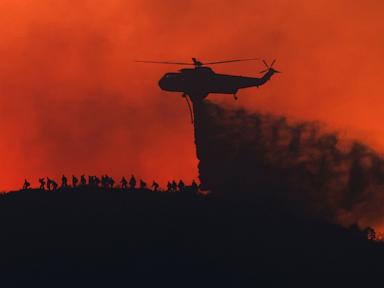
The immediate emergency in Simi Valley, California, appears straightforward on the surface. A fast-moving brush fire, dubbed the Sandy Fire, ignited in the hills northwest of Los Angeles, forcing more than 17,000 residents into immediate evacuation orders as shifting 30 mph winds pushed flames toward suburban neighborhoods. While fire crews took advantage of temporary overnight lulls to establish a minimal 5% containment line, the crisis highlights a much deeper, structural vulnerability. This is not merely a story about a bad wind day in Ventura County. It is the reality of an overlapping, multi-front fire season that is actively outstripping traditional municipal defense strategies across the state.
The Fragmented Front Line
When a major blaze hits the wildland-urban interface, public attention naturally fixes on the sheer volume of displaced people. But the true operational strain lies in how thinly resources must be spread when multiple incidents ignite simultaneously.
As hundreds of personnel poured into the hills above Simi Valley to protect properties, separate emergencies forced incident commanders to split their attention.
- To the southeast, Riverside County officials suddenly had to divert teams to confront the Bain and Verona fires, which rapidly consumed over a thousand acres combined and injured four people.
- Simultaneously, a massive 23-square-mile blaze tore through Santa Rosa Island off the coast, requiring specialized National Park Service coordination and asset deployment.
This multi-front reality means that mutual aid pacts, long the bedrock of California’s firefighting strategy, are being pushed to their absolute limits. When Ventura County relies on strike teams from neighboring Los Angeles to help hold a flank, those assisting agencies are keeping one eye on their own backyard. The luxury of concentrating massive, overwhelming force on a single historic blaze is vanishing. Now, commanders must triage assets across counties, balancing suburban home protection against fast-moving rural ignitions.
The Suburban Fuel Problem
The modern fire threat in places like Simi Valley is fundamentally driven by what lies at the edge of town. For decades, the primary concern was heavy timber forest fires in Northern California. Today, the urban periphery of Southern California faces an entirely different, highly volatile fuel load.
Years of erratic weather patterns, featuring intense rainy periods followed by prolonged dry spells, have created a continuous cycle of fine-fuel growth. Heavy winter rains spark a massive bloom of invasive grasses and light brush. When the heat arrives, this vegetation transforms into a highly combustible carpet.
[Intense Rain] -> [Rapid Grass Growth] -> [Extended Dry Spell] -> [Flash Fuels]
This type of vegetation acts as a flash fuel. It ignites instantly and carries fire at terrifying speeds when fanned by coastal winds. Traditional clearing methods and local defensible space ordinances struggle to keep pace with the sheer volume of this annual growth cycle. When a spark occurs, the fire doesn't creep through the wilderness. It sprints straight toward the cul-de-sacs.
Rethinking Evacuation and Infrastructure
Forcing 17,000 citizens onto asphalt corridors simultaneously creates an entirely separate logistical nightmare. The standard playbook relies heavily on early warnings and orderly exits, but as suburban developments expand deeper into the hillsides, the physical infrastructure of these communities remains bottlenecked.
A single main road leading out of a hillside neighborhood cannot safely handle thousands of vehicles trying to escape at the same moment an influx of heavy fire engines is trying to enter.
Furthermore, the economic and psychological toll of repetitive evacuations is creating a quiet crisis of compliance. When residents are told to pack their lives into a vehicle multiple times over a few seasons, fatigue sets in. Some begin to delay their departure, opting to stay behind to defend their properties with garden hoses, a choice that frequently forces emergency crews to pivot from active fire suppression to dangerous, last-minute rescue operations.
The current strategy of treating every major brush ignition as an isolated weather event is no longer viable. Until regional planning departments tie suburban expansion directly to realistic evacuation capacities and aggressive, year-round fuel management, the numbers of displaced citizens will only grow. The Sandy Fire isn't an anomaly. It is a preview of the structural friction that defines the modern wildland-urban interface.


