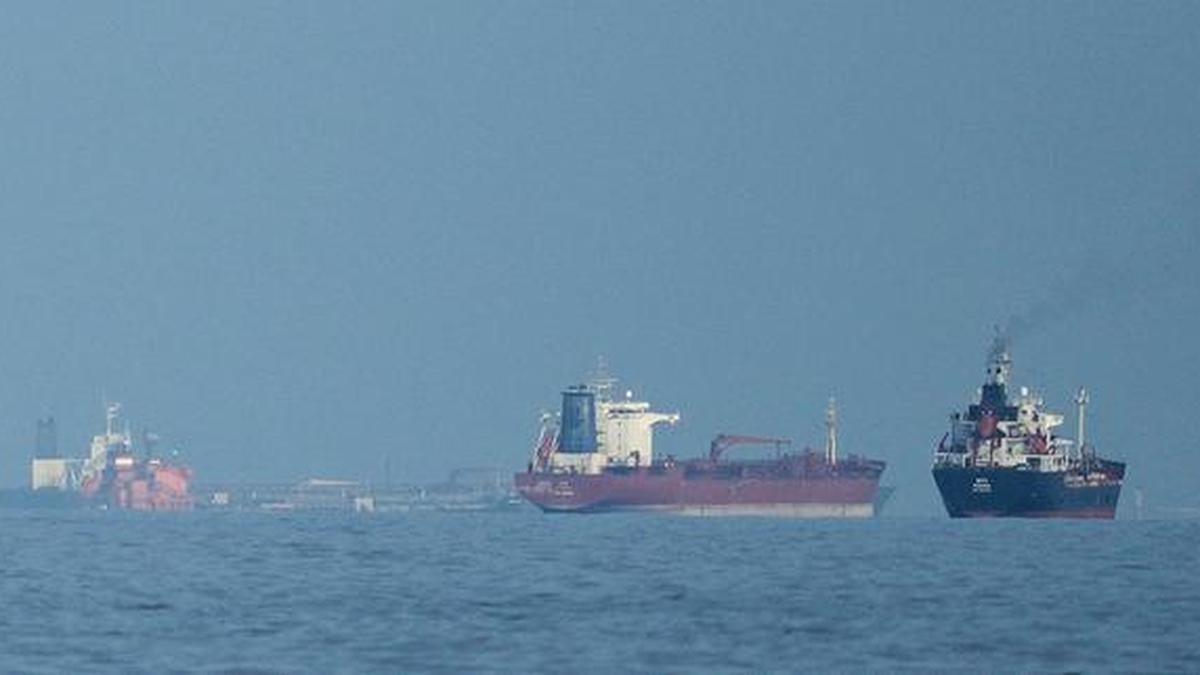
The salt air in the Port of Bandar Abbas doesn't just smell of the sea anymore. It smells of waiting. It is the scent of rusted hulls, stagnant tea, and the quiet desperation of men who watch the horizon for ships that have been told, in no uncertain terms, to stay away.
A few thousand miles away, in a climate-controlled room in Washington D.C., a finger hovers over a keyboard. With a single rhythmic sequence of keystrokes, a fleet of tankers becomes radioactive—not with literal waste, but with legal lethality. The United States has effectively tightened the steel noose around Iran’s maritime trade, a move that feels like a physical blow to the merchants on the ground, even as diplomats continue to trade polite, hollow phrases about the "possibility of future dialogue."
Politics is often discussed as a chess match. This is a mistake. Chess implies two players on equal footing, moving pieces across a visible board. This is something else entirely. This is an invisible architecture of exclusion.
The Ghost Fleets and the Paper Walls
Consider a hypothetical captain named Arash. Arash isn't a politician. He is a man who knows the specific vibration of a diesel engine and how to navigate the Strait of Hormuz in his sleep. To him, the recent tightening of maritime restrictions isn't a headline; it’s a death by a thousand cuts.
When the U.S. Treasury Department adds a vessel to its blacklist, that ship becomes a ghost. It cannot dock at major ports. It cannot secure insurance from the reputable firms in London. It cannot even refuel without the provider risking total financial ruin. To keep the lights on, Iran has relied on what is colloquially known as the "Ghost Fleet"—a ragtag assembly of aging tankers that turn off their transponders, change their names in the middle of the night, and engage in ship-to-ship transfers in the darkness of the open ocean.
But the latest crackdown has targeted the enablers—the small, obscure firms in third-party countries that facilitate these transactions. The paper walls are being reinforced with iron. For Arash, this means his cargo of crude oil, the lifeblood of his nation’s struggling economy, is sitting in a hull that no one is allowed to touch. He is sailing a multi-million dollar paperweight.
The numbers tell a story of attrition. Before the most recent escalation, there was a flicker of hope that the "maximum pressure" campaign might ease to allow for humanitarian corridors or a return to the negotiating table. Instead, the data shows a 15% drop in clandestine maritime exports in a single quarter. That isn't just a statistic. It represents billions of dollars in lost revenue that would have funded everything from infrastructure to the very medicine sitting on a pharmacy shelf in Tehran.
The Illusion of the Open Door
There is a peculiar cruelty in the way global power functions. While the maritime shutdown is absolute, the rhetoric remains open. "We are ready for diplomacy," the officials say. It is a classic bait-and-switch.
Imagine you are locked in a room. Someone outside the door tells you they are perfectly willing to talk about letting you out, but while you wait for the meeting, they are slowly pumping the oxygen out of the space. You can’t focus on the conversation because your lungs are burning.
This is the reality for the Iranian trade sector. The "talks" are the carrot, but the maritime blockade is a heavy, unrelenting stick. By shutting down the sea lanes, the U.S. is stripping away Iran’s primary leverage before they even sit down at the table. It is a strategy of forced surrender disguised as an invitation to chat.
The stakes are invisible until they aren't. We see the price of oil tick up by a few cents at a gas station in Ohio and think nothing of it. We don't see the ripple effect in the bazaars of Isfahan, where the price of imported grain skyrockets because the shipping companies are terrified of being caught in the American net.
The logic of the blockade is simple: if you cannot sell what you produce, you cannot survive. But the human heart doesn't respond to logic with compliance. It responds with resentment. Every time a tanker is turned away, the narrative of "Western aggression" becomes less of a propaganda talking point and more of a lived reality for the common citizen.
The High Seas as a Battlefield
We often think of war as something involving boots and bayonets. In the 21st century, the most effective weapons are ledgers and sanctions. The U.S. doesn't need to fire a shot to paralyze a nation's economy; it just needs to control the digital infrastructure of global trade.
The maritime industry is the backbone of civilization. 90% of everything you own arrived on a ship. When a superpower decides to "shut down" a country's maritime trade, they are essentially deleting that country from the global ledger.
Consider the logistical nightmare of a "sanctioned" ship.
- Insurance: No major insurer will cover a vessel marked by the U.S. Office of Foreign Assets Control (OFAC).
- Flagging: Countries like Panama or Liberia, where most ships are registered, will revoke the "flag" of a ship under pressure, leaving it stateless.
- Maintenance: Spare parts for engines become impossible to source legally, leading to dangerous, mechanical failures in the middle of the sea.
This is the "invisible anchor." It doesn't hold the ship in place; it drags it down.
The irony is that this pressure often breeds the very shadow economy the world fears. When you block the front door, people build tunnels. We are seeing an explosion in "dark" shipping maneuvers—risky, unregulated, and environmentally catastrophic transfers of oil between crumbling vessels. It is a desperate gamble. One major spill in the Persian Gulf would be an ecological disaster that knows no borders, yet the current policy makes such a disaster almost inevitable.
The Sound of a Closing Door
Optimism is a cheap commodity in international relations. There was a brief window where it seemed the gears of diplomacy might turn. The rhetoric was softer. The backchannel messages were frequent. But the maritime shutdown acts as a definitive "no."
It is a signal to the world's markets that regardless of what is said in a press briefing, the policy of strangulation remains the primary tool. It tells the Iranian leadership that their primary source of hard currency is a tap that Washington can—and will—turn off at any moment.
So, we return to the docks.
The sun sets over the water, casting long, orange shadows across the silent cranes. A merchant stands on the pier, his hands tucked into his pockets. He has crates of saffron and rugs that should be halfway to Europe by now. Instead, they sit in a warehouse, gathering dust. He hears the news of "optimism for talks" on a transistor radio, and he laughs. It is a dry, bitter sound.
He knows what the diplomats don't want to admit. You can't shake hands with someone while you’re standing on their throat.
The ships stay in the harbor. The paint continues to peel. The ocean, usually a symbol of infinite connection and freedom, has become a wall. And in the silence of the stalled trade, the only thing growing is the distance between two worlds that used to think they could find a way to talk.
The anchor is down. The chain is short. The tide is coming in.