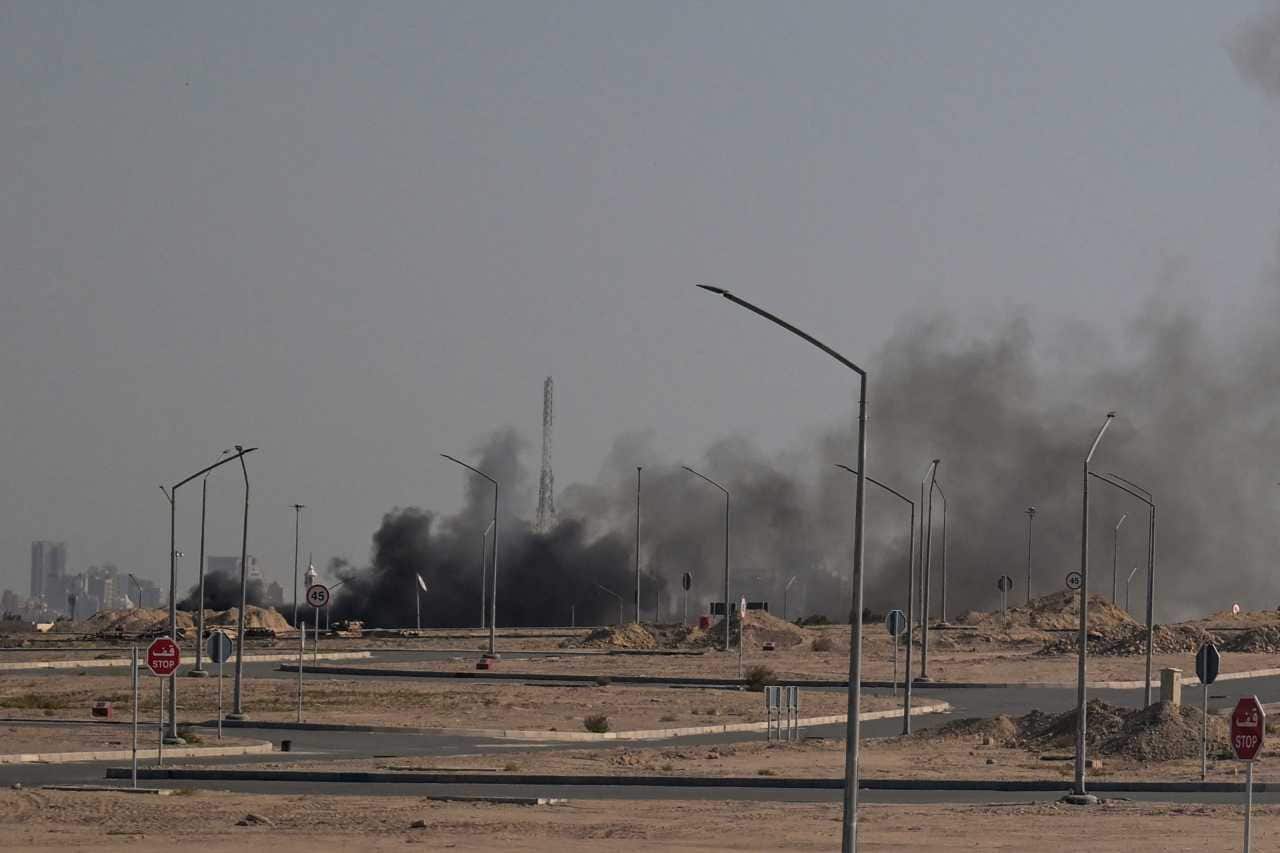
The physical borders separating NATO’s eastern flank from Russia and Belarus have become the backdrop for an unprecedented, low-altitude crisis that air defense systems were never designed to handle. Strikingly, the dozens of military drones penetrating Lithuanian, Latvian, Estonian, and Finnish airspace since March 2026 are not a direct Russian invasion fleet, but rather the chaotic runoff of a massive Ukrainian long-range campaign targeting Russian oil infrastructure. Caught in the crossfire of aggressive Russian electronic warfare, these automated weapons are losing orientation and veering deep into allied territory. The resulting fallout has shuttered Baltic schools, forced a Lithuanian government into underground bunkers, and collapsed a Latvian ruling coalition, exposing a gaping vulnerability in Western defense strategy.
This is not a hypothetical scenario of future conflict. It is a live, grinding security emergency. The crisis reached an inflection point when a Romanian F-16, operating under the NATO Baltic Air Policing mission, intercepted and shot down a stray drone over Estonia’s Lake Võrtsjärv. This marked the first time in NATO’s history that an allied fighter jet engaged an aerial platform over Baltic territory.
Western military doctrine has spent decades preparing for supersonic missiles and high-altitude bombers. It is wholly unprepared for a barrage of cheap, low-flying, carbon-fiber lawnmowers carrying high explosives at 90 miles per hour.
The Mechanics of the Drift
The root of the crisis lies hundreds of miles away in the ports of Ust-Luga and Primorsk, Russian oil hubs that handle nearly 40 percent of Moscow’s national hydrocarbon exports. Desperate to choke off the Kremlin’s war machine, Ukraine has launched long-range, indigenous attack drones—like the AN-196—from deep within its own territory, charting paths that hug the narrow geographical corridors along the Baltic borders.
The strategy is intentionally precise, yet highly volatile. Ukrainian flight planners deliberately plot paths close to the frontier, betting that Russian air defense units will hesitate to fire interceptor missiles so close to NATO airspace for fear of a geopolitical catastrophe.
Russia’s countermeasure has not been kinetic fire, but an invisible wall of electronic suppression.
Deep within the Kaliningrad exclave and along the borders of Belarus, Russian military units have deployed massive Shtora-type jammers and highly dense Global Navigation Satellite System (GNSS) spoofing arrays. When a Ukrainian drone enters these zones, its GPS and GLONASS connections are entirely severed.
Despite advanced Western-supplied anti-jamming antennas and localized inertial navigation systems, the sheer volume of broadband noise frequently overwhelms the drones' guidance computers. Deprived of their digital maps, the aircraft enter a fail-safe state, drifting blind on their last known heading.
The results have been devastatingly random. In Estonia, a rogue drone slammed into the concrete chimney of the Auvere power station just two kilometers from the border. In Latvia, two stray platforms crashed into an oil storage facility in Rēzekne, detonating against fuel tanks.
The geopolitical architecture of the region collapsed under the strain. Latvian Prime Minister Evika Siliņa was forced to resign following public fury over her administration's inability to detect or stop the low-altitude incursions, triggering snap national elections. Days later, Vilnius ground to a halt when an air raid alarm—the first since the restoration of Lithuanian independence—sent President Gitanas Nausėda and his entire cabinet rushing into the parliament's underground bunker while schools and transport networks were evacuated.
The Shield and the Blame Game
Moscow has seized upon the crisis with practiced diplomatic cynicism. The Kremlin has publicly accused the Baltic states of active collusion, asserting that Latvia and Estonia are allowing Ukrainian forces to launch operations directly from NATO soil. Russian representatives at the United Nations have warned that any drone originating from Baltic territory will justify immediate retaliatory strikes against those nations.
The reality on the ground is far more complex, characterized by a quiet friction between the Baltic capitals and Kyiv. Outwardly, European Commission President Ursula von der Leyen and NATO leaders have maintained a unified front, placing ultimate responsibility on Moscow for creating the conflict. Privately, intelligence officials are demanding that Ukraine alter its flight paths.
A senior European defense official, speaking on the condition of anonymity, summarized the tension bluntly.
"We recognize Ukraine’s right to self-defense, and their strikes on Russian energy are highly effective. But when a weapon carrying 40 kilograms of military-grade explosives shuts down a European capital's schools and forces a government into a bunker, the line between an ally’s war and our immediate peril disappears."
The technical reality is that NATO's multi-million-dollar radar infrastructure is largely blind to these platforms. Traditional air defense systems, such as the Patriot or traditional long-range early warning arrays, are optimized to look upward at the horizon. They routinely filter out small, slow-moving objects flying just above the tree line to prevent flocks of birds or civilian commercial drones from cluttering the screens of radar operators.
The drones are exploiting this technical blind spot. They slip through river valleys and behind hills, undetected until they are spotted by civilian onlookers or local border guards using binoculars.
Building the Drone Wall
The sudden realization that Western air space is porous has catalyzed a panicked procurement sprint. What years of diplomatic lobbying by Ukraine could not accomplish, the spring 2026 incursions have forced through sheer necessity.
The European Drone Defence Initiative, colloquially dubbed the "Drone Wall," was originally envisioned as a mid-term capability goal for late 2027. It has now been compressed into an immediate emergency procurement cycle.
The Baltic states are not waiting for traditional, slow-moving European procurement programs to deliver heavy missile systems. Instead, they are turning to specialized, agile defense tech firms to construct a dense, layered web of low-cost sensors and autonomous interceptors along the entire eastern border.
| Country | Key Defense Integration Strategy |
|---|---|
| Estonia | Deploying DefSecIntel EIRSHIELD AI-assisted tracking towers along the Russian frontier. |
| Latvia | Mass-producing Origin Robotics BLAZE autonomous interceptor drones. |
| Poland | Layering Wisła Patriot batteries with short-range Pilica+ automatic cannon systems. |
The technical philosophy underpinning this new defensive line marks a permanent shift in modern warfare. Rather than firing a $1 million interceptor missile at a $20,000 drone, the Drone Wall utilizes autonomous interceptor aircraft. These small, defensive drones are launched automatically from automated pods when a border intrusion is detected. Guided by onboard computer vision rather than GPS signals, these interceptors are completely immune to Russian electronic jamming, physically ramming or detonating next to incoming targets before they can penetrate inland.
The Danger of the Next Strike
The current sticking point is NATO's strict, highly restrictive rules of engagement. Under current protocols, a commander cannot authorize the kinetic downing of an unidentified aerial object unless it demonstrates clear hostile intent or enters a designated free-fire zone. Waiting to confirm the identity of a drone drifting at low altitude leaves a window of just a few minutes before the object reaches civilian infrastructure.
The incident over Estonia's Lake Võrtsjärv required direct coordination with NATO’s Supreme Allied Commander Europe before the Romanian F-16 was permitted to fire. In a faster, more intense saturation environment, this bureaucratic chain of command is dangerously slow.
The geopolitical reality is that this low-altitude border war will not subside as long as the conflict in Ukraine continues to demand deep, industrial attrition. The Baltic states find themselves in an agonizing position: supporting a Ukrainian victory while praying that the next errant guidance computer doesn't steer an explosive warhead into a crowded civilian apartment complex in Tallinn or Helsinki, forcing an Article 5 confrontation that no one is prepared to initiate.
The illusion of a hard, impenetrable NATO border has been thoroughly dismantled by pieces of stray fiberglass and modified lawnmower engines. Security is no longer measured by the size of a nation's conventional army, but by the density of its electronic airspace control.