The neon pulse of Sham Shui Po never truly stops. It is a rhythmic, mechanical heartbeat—the sound of heavy shutters sliding up, the hiss of industrial steamers, and the frantic clicking of sewing machines in rooms that the sunlight never reaches. In these narrow corridors, tucked behind the glitzy facade of the world’s most expensive real estate, a shadow economy breathes.
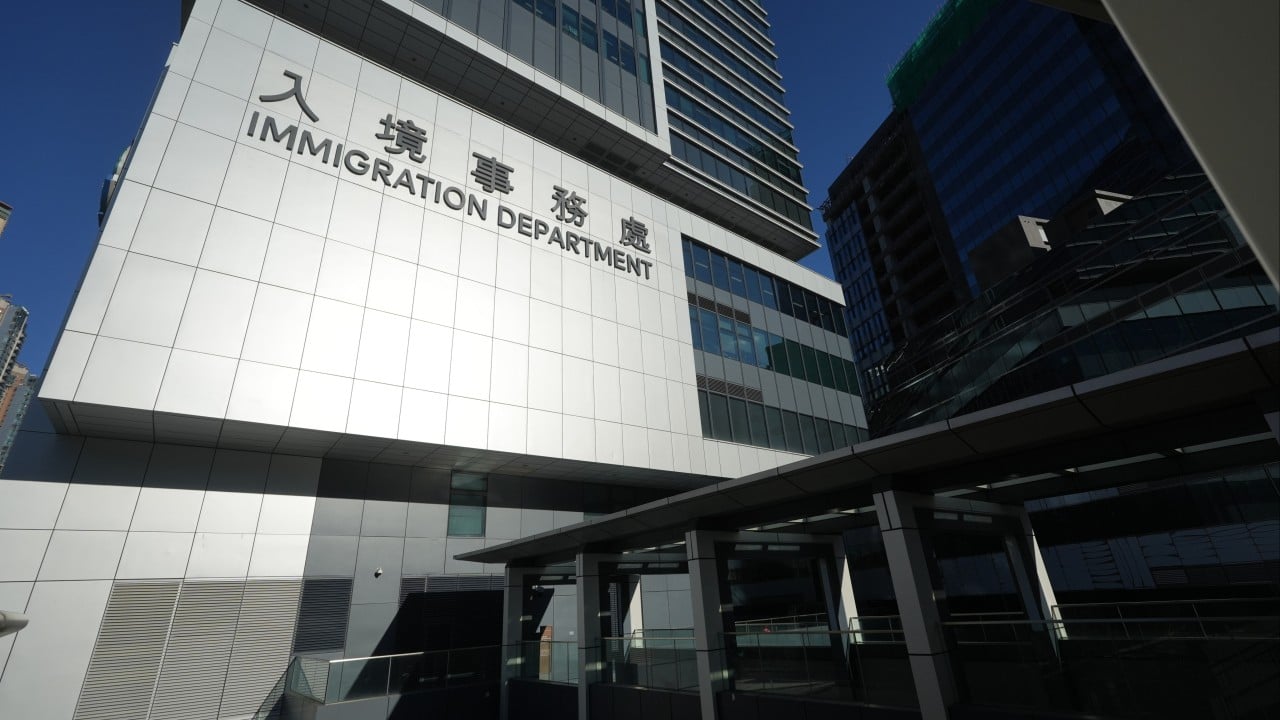
Most people walking down Nathan Road don't see it. They see the dim sum being served or the construction scaffolding rising like bamboo skeletons against the clouds. They don’t see the status of the hands performing the work. But the Hong Kong Immigration Department does.
Last week, that shadow world collided with the cold reality of the law.
The numbers released by the authorities read like a ledger of broken dreams: five people sent to prison, twenty others swept up in a coordinated dragnet. It was a crackdown designed to send a message, a blunt-force reminder that the right to work in this city is a privilege guarded by iron gates. Yet, behind the sterile "illegal employment" labels lies a complex human machinery fueled by desperation, demand, and a relentless pursuit of a better life.
The Knock at the Door
Imagine a man we will call Aris. He is hypothetical, but his story is a composite of a thousand others etched into court records. Aris arrived on a visitor’s visa, his pockets light and his heart heavy with the debt he owed back home. For three months, he lived in a subdivided flat no larger than a coffin. Every morning, he walked to a back-alley kitchen where he scrubbed floors for a fraction of the minimum wage.
He knew the risks. Every time a siren wailed in the distance, his breath hitched. He wasn't a criminal in the traditional sense; he hadn't stolen or harmed. He was simply selling the only thing he had left: his sweat.
When the officers arrived during the recent "Operation Twilight" and "Powerpeak" raids, there was no dramatic chase. There was only the quiet resignation of someone who knew the clock had finally run out. For the five individuals who received jail sentences, the "Fragrant Harbour" has turned into a concrete cell.
The law is clear. Under the Immigration Ordinance, it is an offense for anyone to take up employment—paid or unpaid—without the requisite permission. The consequences are staggering. Visitors who overstay or violate their conditions face fines of $50,000 and two years in prison. Those who are already "prohibited persons"—such as those with outstanding removal or deportation orders—face even harsher penalties: up to three years behind bars and a $50,000 fine.
The Economics of the Underground
Why does this happen in a city as sophisticated as Hong Kong?
It is a matter of supply and demand, a market force that ignores borders. Hong Kong’s service and construction industries are voracious. They need labor that is cheap, flexible, and, most importantly, invisible. When a restaurant owner looks at a pile of dishes and a razor-thin profit margin, the temptation to hire someone "off the books" becomes a gravitational pull.
But this isn't a victimless shortcut.
The authorities are increasingly focusing their sights not just on the workers, but on the architects of this system: the employers. During the latest operations, several bosses were hauled away alongside their staff. The logic is simple: if you cut off the oxygen, the fire goes out.
An employer who hires someone without a valid work visa faces a maximum fine of $500,000 and 10 years in prison. The court’s stance has shifted from mere administrative wrist-slapping to genuine deterrence. They are no longer just looking for a permit; they are looking for "due diligence." It is no longer enough for an employer to say, "I didn't know." The law demands they verify. They must look at the HKID card, check the visa status, and ask the hard questions.
The Hidden Stakes
There is a visceral tension between the need for border integrity and the reality of human migration. To the state, an illegal worker is a statistical anomaly that threatens the social fabric and the labor market. To the worker, the law is a barrier to survival.
Consider the ripple effect of a single arrest. When those 20 people were detained, 20 families across Southeast Asia or Mainland China stopped receiving the remittances that pay for school fees, medicine, and corrugated tin roofs. The "illegal" status doesn't just impact the individual; it vibrates through an entire ecosystem of poverty and hope.
Conversely, the presence of an unregulated workforce drives down wages for the poorest legal residents. It creates an environment where safety standards are ignored because a worker who doesn't officially exist cannot complain to the Labor Department about a frayed wire or a missing harness.
The crackdown wasn't just about checking papers in the street. It spanned across recycling centers, residential buildings, and even massage parlors. It was a holistic sweep of the places where the city’s "dirty, dangerous, and difficult" work gets done.
The Weight of the Sentence
The five people who were jailed aren't just names on a charge sheet. They represent the finality of the system. In Hong Kong’s judicial history, the courts have consistently ruled that immediate custodial sentences are the "norm" for immigration offenses. There is very little room for "I was desperate" or "I didn't understand the rules."
The law is a machine. It does not feel the heat of the kitchen or the weight of the debt. It only sees the stamp in the passport.
The recent raids highlight a sharpening of the tools. Modern enforcement uses data analytics and targeted intelligence to map out where these workers congregate. The "twilight" in Operation Twilight refers to that period of vulnerability—the change of shifts, the early morning deliveries, the moments when the city thinks it isn't being watched.
But the eyes are everywhere now.
The Mirror in the Glass
We often treat the news of arrests as something happening to "other" people. We read about the jailings with a sense of detached curiosity. Yet, the existence of this shadow labor force is a mirror held up to our own consumption.
The cheap lunch, the quickly renovated apartment, the package delivered at lightning speed—these conveniences are often propped up by a labor chain that we prefer not to inspect too closely. When the Immigration Department pulls back the curtain, we are forced to see the human cost of the "efficiency" we take for granted.
The twenty people arrested last week are currently being processed. Some will be deported. Some will wait in detention centers, staring at the white tiles, wondering where it all went wrong. They will return to their home villages with stories of a city that was paved with gold but guarded by dragons.
The city continues to move. The lights in Central flicker on. The construction cranes swivel. Somewhere, in a hidden room in Kowloon, a door closes, and another person picks up a tool they aren't legally allowed to hold. They know the risk. They've heard about the five who went to jail. But the hunger in their belly is louder than the warning in the newspaper.
The shadows are never truly gone; they just shift as the sun moves across the harbor.
The clink of a cell door closing is a very specific sound. It is heavy. It is final. It is a sound that five people are listening to right now, while the rest of the city orders its coffee and complains about the rain.
Would you like me to look into the specific penalties for employers in these cases or perhaps explore the different types of work visas currently available in Hong Kong?