The Price of a Spark
Somewhere in a coastal town in northern England, a woman named Elena stares at a digital readout on her gas meter. It isn't a dramatic moment. There are no sirens, no flickering lights, and no immediate signs of catastrophe. But as the numbers tick upward, the quiet dread in her chest tightens. She is performing a mental dance that millions are now forced to master: calculating whether a warm house in February is worth the cost of fresh protein in March.
Elena doesn't follow the intricacies of Middle Eastern geopolitics. She couldn't tell you the names of the various factions currently vying for control over the Strait of Hormuz. To her, the tension between Iran and its neighbors feels like a headline from another world—static on the radio while she drives the kids to school. Yet, the International Monetary Fund (IMF) has just drawn a direct, jagged line from a potential explosion in the Persian Gulf to the balance of Elena’s bank account.
War is loud where it happens. It is silent everywhere else, manifesting as a slow-motion erosion of the life we took for granted.
The Choke Point
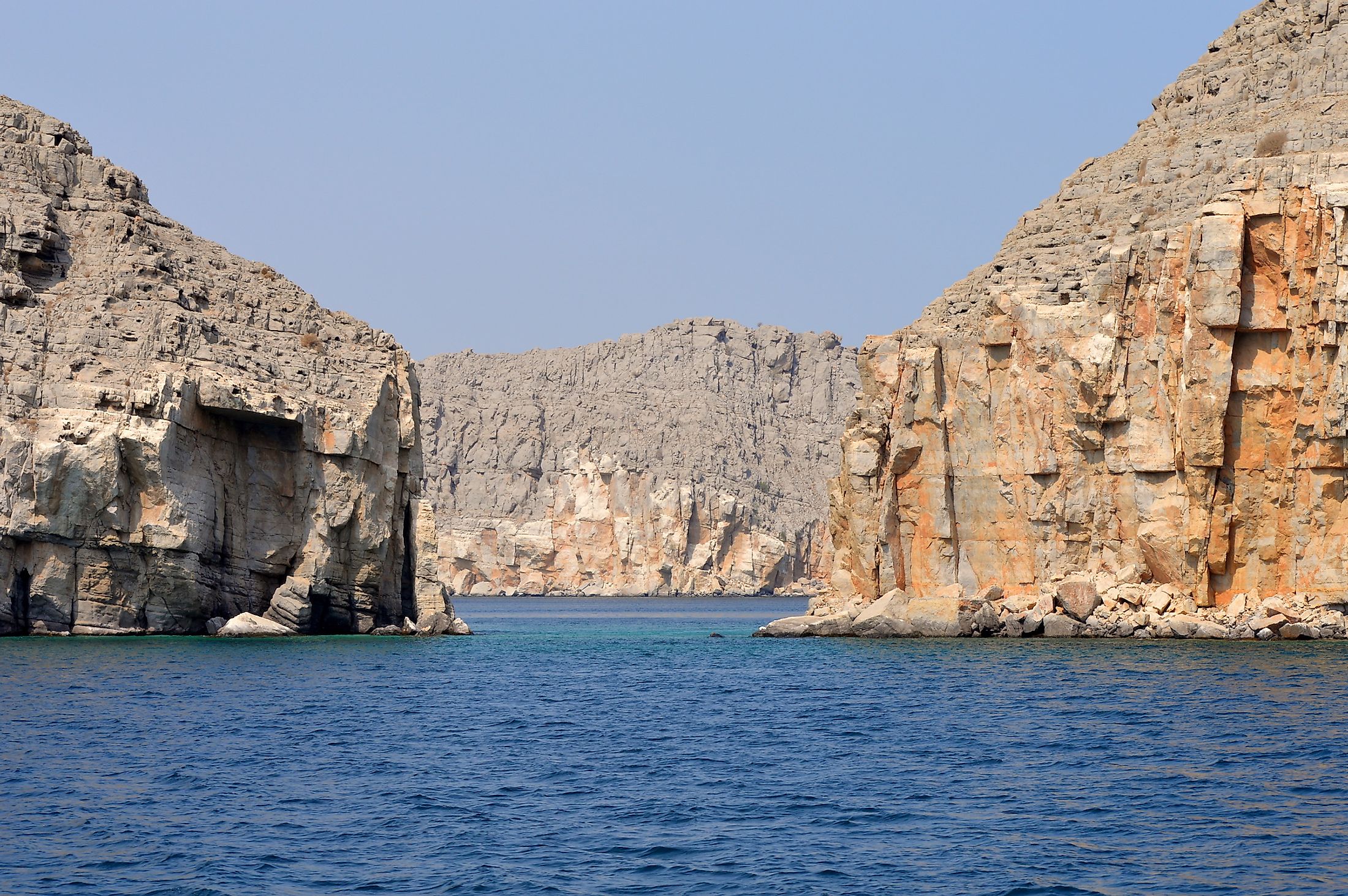
To understand why a regional war would stall the entire planet, we have to look at the world’s throat. The Strait of Hormuz is a narrow strip of water, barely twenty-one miles wide at its narrowest point. It is the most vital artery in the global energy system. Imagine a funnel through which a third of the world’s liquefied natural gas and a fifth of its total oil consumption must pass.
If that funnel is squeezed, the laws of physics take over. Not the physics of motion, but the physics of markets.
When the IMF warns of slowing growth and rising inflation, they are talking about a shockwave. If conflict breaks out involving Iran, shipping lanes don't just become dangerous; they become uninsurable. Tankers stop moving. The supply of energy doesn't just dip—it vanishes for a period of weeks or months.
Consider the immediate math. Standard economic models suggest that a sustained disruption in this region could send crude oil prices soaring toward $150 per barrel. For a world economy still limping away from the scars of recent global shocks, this is more than a setback. It is a cardiac event.
The Great Deceleration
The term "economic growth" is often treated as an abstract score on a leaderboard, something for politicians to argue over. But growth is actually the heartbeat of human progress. It is the reason a small business owner decides to hire a second employee. It is the reason a developer breaks ground on a new apartment complex.
When growth slows, the future shrinks.
The IMF’s projections aren't just numbers on a spreadsheet; they represent the collective hesitation of eight billion people. If energy costs double, a logistics company in Ohio has to cancel its order for five new electric delivery vans. The manufacturer of those vans then sees its revenue dip, leading to a freeze on wage increases for the workers on the assembly line. Those workers, sensing the chill, stop eating out at the local diner. The diner owner, seeing fewer tables filled, decides not to renovate the kitchen.
This is the "slow-motion" part of the IMF’s warning. It is a chain reaction of caution. In a world interconnected by trade, no one is an island. A missile over the Gulf is a pink slip in a suburb of Des Moines.
The Inflationary Ghost
We spent the last few years fighting a ghost. Inflation, once thought to be a relic of the 1970s, returned with a vengeance, devouring the purchasing power of the middle class. We were finally starting to see the light at the end of the tunnel. Central banks were preparing to lower interest rates. The cost of borrowing was supposed to become manageable again.
A war in Iran changes that script entirely.
Energy is the "input of all inputs." It is the cost of moving a head of lettuce from a farm in California to a grocery store in New York. It is the cost of the plastic packaging that keeps that lettuce fresh. It is the cost of the electricity that keeps the store’s lights on.
When oil prices spike, inflation doesn't just rise in the "gasoline" category. It bleeds into everything. It becomes "sticky." If the IMF's fears are realized, the progress made by central banks will be erased overnight. Interest rates will have to stay high—or go higher—to combat the rising costs, making it even harder for people like Elena to pay off their mortgages or for young couples to buy their first home.
The invisible stakes are the dreams deferred. The wedding that gets pushed back another year. The retirement that moves from age sixty-five to seventy. These are the human costs that dry financial reports struggle to capture.
The Geography of Vulnerability
The impact won't be felt equally. While wealthy nations will feel a painful pinch, the developing world will face an existential crisis. Countries that rely heavily on imported energy and food will see their currencies collapse.
In places where the margin for survival is measured in cents, a 30% increase in the price of fuel is a death sentence for small-scale commerce. We are looking at a potential wave of instability that spans continents. Hunger and economic desperation are the primary drivers of migration and social unrest.
The IMF is effectively sounding a whistle in a crowded theater. They are telling us that the "global" in global economy means we have lost the luxury of being bystanders.
The Friction of Uncertainty
There is a psychological element to this that often goes unmentioned. Markets hate uncertainty more than they hate bad news. If a war begins, we don't know how long it will last. We don't know if it will involve direct strikes on oil refineries or if it will remain a naval skirmish.
This fog of war creates "friction."
Friction is the enemy of efficiency. It is the extra $5,000 a shipping company pays for "war risk" insurance. It is the premium a factory pays to stockpile parts because they no longer trust the just-in-time delivery system. This friction adds up to trillions of dollars in lost productivity. It is wealth that simply evaporates, leaving everyone poorer.
We often talk about the "global village," a cozy term that suggests we are all neighbors. But a village is only as stable as its common resources. If the well at the center of the village is poisoned or blocked, it doesn't matter how beautiful your individual house is. You will eventually get thirsty.
The Weight of the Unseen
Elena sits down at her kitchen table and opens a letter from her energy provider. She doesn't see the IMF report. She doesn't see the warships in the Gulf. She just sees a number that is higher than the one she saw last month.
She feels a strange sense of helplessness, a feeling that her life is being steered by invisible hands across an ocean she has never seen. And she is right.
The world is currently a complex machine with too many moving parts and too little oil in the gears. We have built a system of incredible efficiency, but that efficiency has come at the cost of resilience. We are optimized for peace, but we are terrifyingly fragile in the face of conflict.
The warning from the IMF is a reminder that the price of gasoline is not determined by the pump. It is determined by the fragility of our peace. It is a reminder that in a globalized world, there is no such thing as a "local" war.
Every explosion has an echo. Every barrel of oil that stays in the ground is a choice that someone, somewhere, will have to make between heating and eating.
The tragedy of modern economics is that we have become experts at measuring the cost of everything while losing sight of the value of stability. We watch the tickers and the charts, waiting for the line to go up or down, forgetting that the line is made of people. It is made of Elena’s anxiety, the business owner’s hesitation, and the student’s debt.
The shadow of a conflict in Iran is already stretching across the globe, reaching into pockets and pantries, long before the first shot is even fired. It is a cold, dark shadow, and it is growing longer by the hour.
We are all waiting, holding our collective breath, hoping that the spark never catches, because we finally understand that we are all standing in the same room, and the floor is covered in gasoline.